
Sleep and comfort are the most valuable things that one should never overlook since they are responsible for repairing the body and influencing our growth and immune system. A good mattress is essential for establishing a regular sleep routine because it gently supports your entire body and maintains the natural alignment of your spine. However, excellent quality foam that offers a mattress a solid texture and adaptability is necessary for a good mattress. The majority of modern mattresses are constructed from many layers of foam. The density and stiffness differences within each foam category, especially foam density in mattresses, may make it difficult to buy a mattress.
PU foam density is one of the most important quality indicators used in mattress manufacturing. It refers to the weight of polyurethane foam per cubic meter and directly impacts durability, comfort, and load-bearing capacity. Higher PU foam density generally means better structural stability and longer mattress life, making it a critical parameter for both manufacturers and buyers.
In polyurethane mattresses, PU foam density is measured in kilograms per cubic meter (kg/m³) and helps differentiate between low-density, medium-density, and high-density foams used in various mattress layers.
Formation Of Foam – How And Where?
Let us first start with the basics of the formation of foam to get a better understanding of foam density.
How Is PU Foam Prepared?
Polyurethane foam is one of the four fundamental product types created from unprocessed, liquid polyurethane. They are made of two chemicals that, when combined and heated, create liquid polyurethane, which is then processed further. These chemicals include diisocyanate, a petroleum waste that combines aggressively with alcohol, and polyol, a form of complex alcohol. When the two are combined, a stable long-chain molecule is created.
Site Of Foam Production
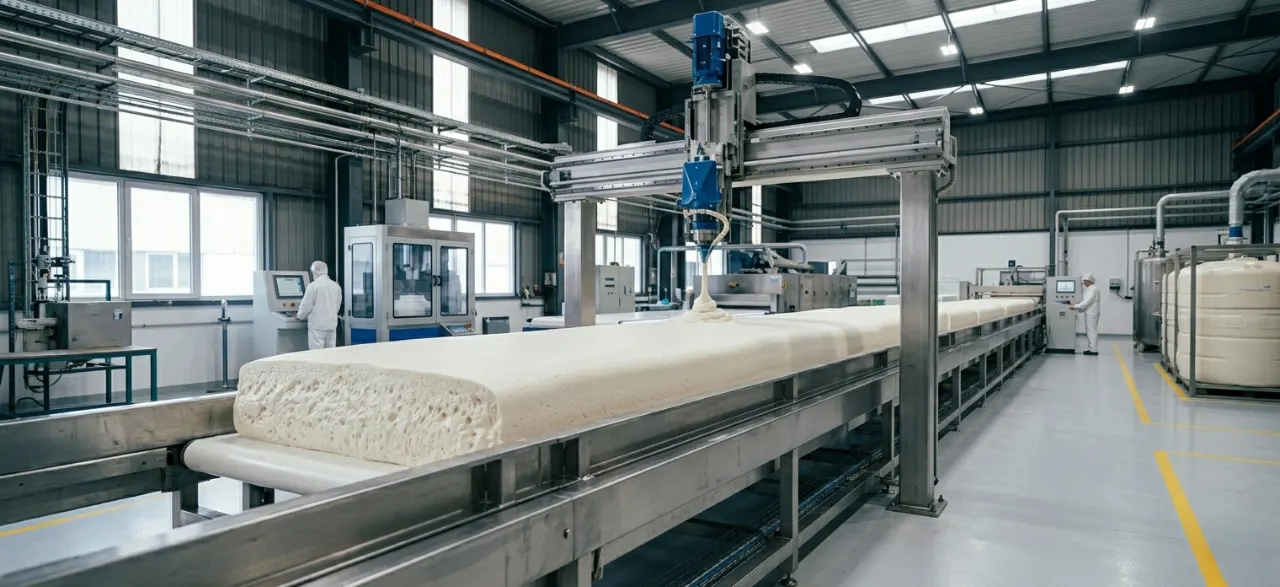
The components are blended in the foaming machines and mixed using a mixing head or in a master batching system during the creation of the polymer system. Polyols, diisocyanates, and chemical blowing agents are the principal reactive elements. The ingredients for the polymerization process are polyols and diisocyanates. On the other hand, the ingredients for the gas production process are diisocyanates and chemical blowing agents (water). The way these components are combined varies between distinct types of polymer system preparation.
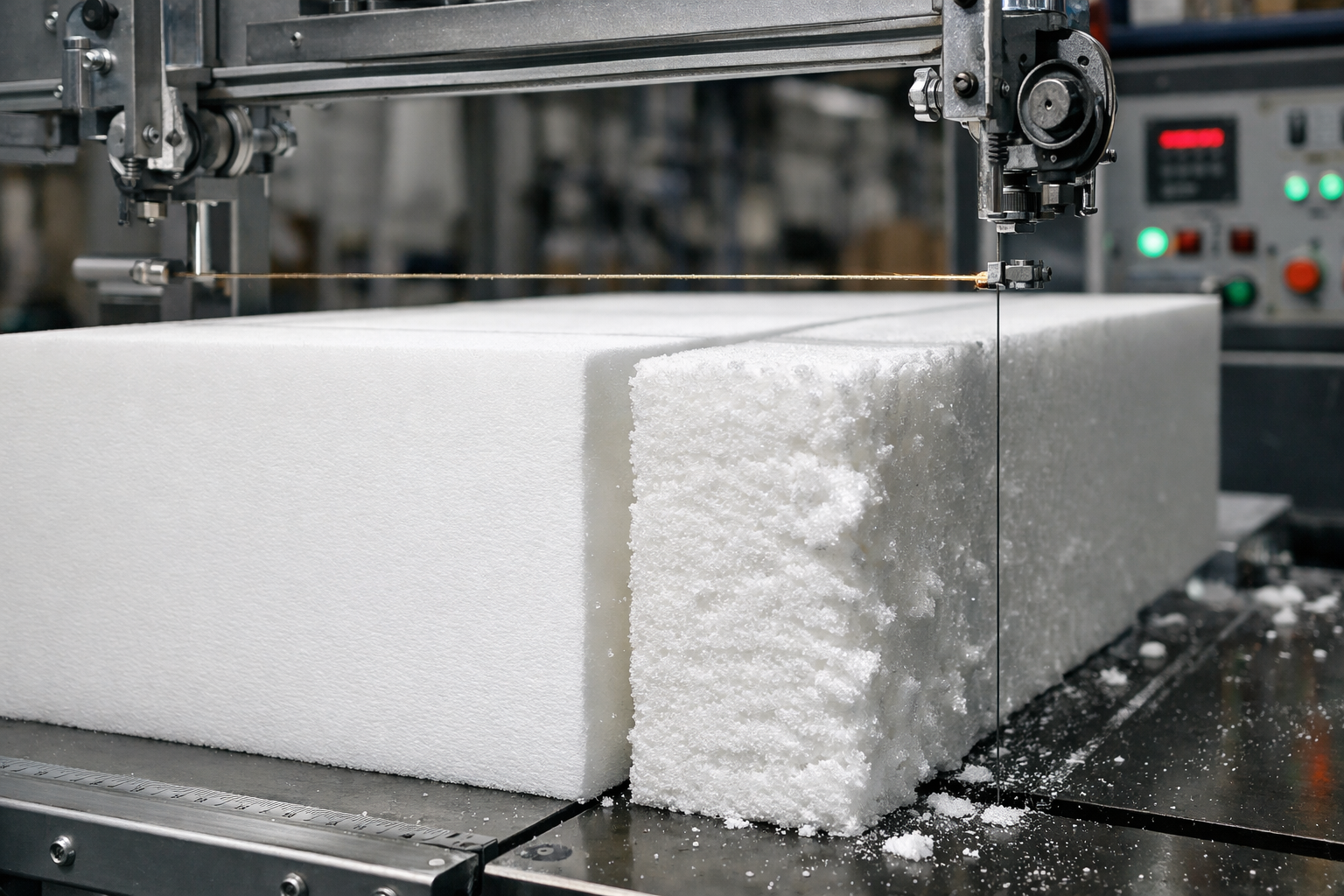
Once the polymer system is ready, several foaming methods regulate how much it foams or rises. Also, it can be molded, laminated, sprayed, or slapstick. Additionally, proprietary techniques are capable of more excellent rates of controlled foaming. After the foaming procedure, it goes through additional curing and cutting procedures.
What Machines Are Used For Foam Production?
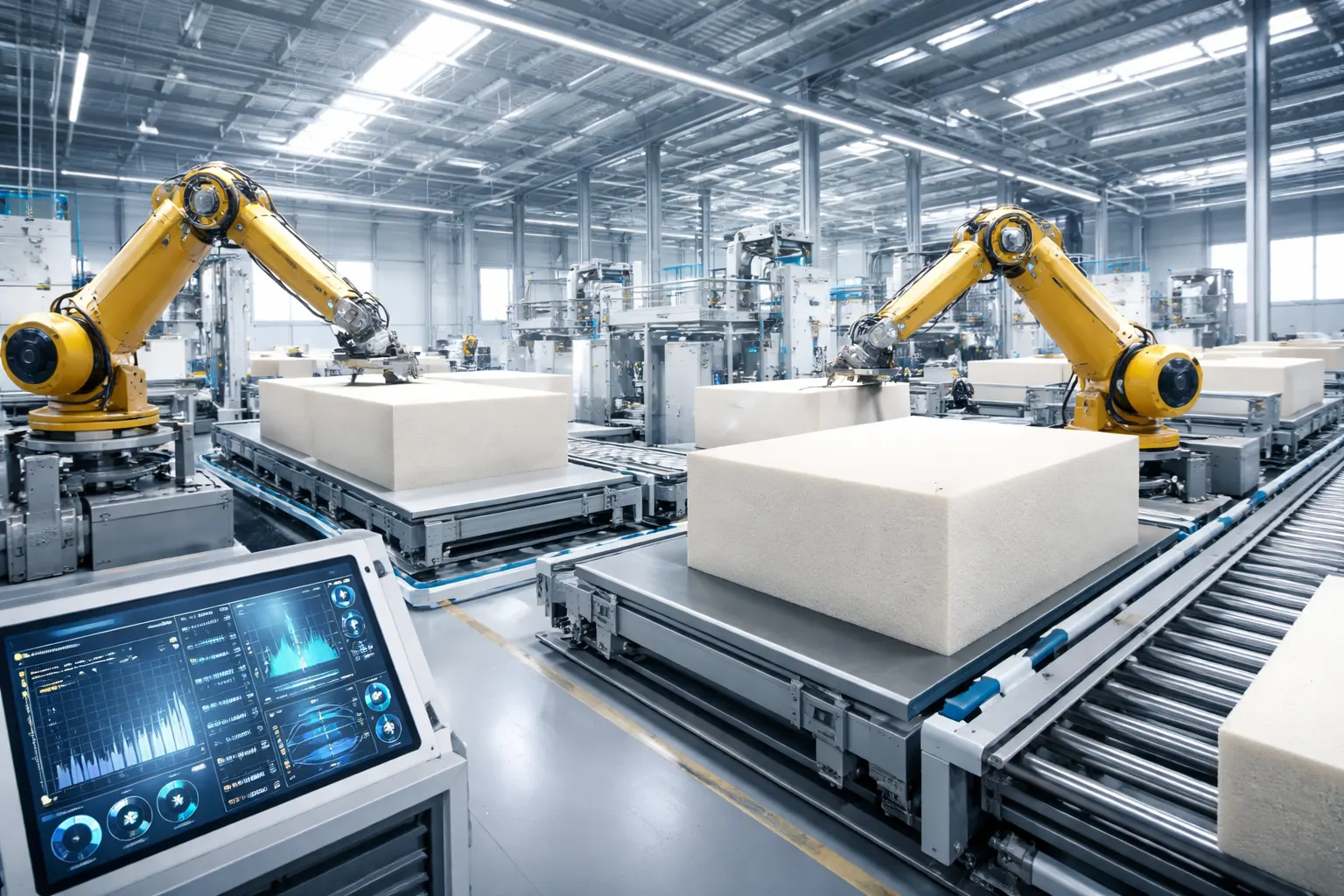
Foam blocks are made utilizing three well-known procedures, each requiring a full facility of the best industry foam machines. First, foam is produced using a foaming machine configuration that consists of a foam machine, a foam cutting machine, and an automated storage rack. The most recent industrial techniques include batch foaming, the continuous foam process, and recovered foam plants.
Where Does One Get These Types Of Machinery?
The varieties of industry foaming machines are continually expanding to accommodate the requirements of various situations. The foam machine manufacturers provide a wide range of machinery that is both secure and of high caliber. Foam equipment is catching merchants’ attention with its low-cost advantages as demand rises. Moreover, a foaming machine is available in several types and versions for different uses and different foam production.
Steps To Measure The Foam Density
Density is just the weight per unit volume. For foam, the unit of measurement is pounds per cubic foot (PCF). Alternatively, the weight of a single cubic foot of foam is used to calculate the density of the foam. The density significantly affects how the foam feels and functions. High-density foams typically feel firmer and are more pressure-resistant. On the other hand, low-density foams will feel softer but are not strong enough to support heavy loads.
Higher-density foams recover from pressure more slowly, especially when it comes to memory foam. Thus, this creates the character of memory foam, where a brief imprint of your body or an object is left in the foam.
How To Calculate Foam Density?
A piece of foam’s density is determined by dividing its weight by its volume (width, height, and length). Foam density in mattresses is defined as the weight per cubic foot when measuring in feet.
Volume= Width x Height x Length
Density = Weight ÷ Volume
For example, consider a 50 cubic foot layer of foam that weighs 200 pounds as an illustration. We may determine that this layer has a density of 4 pounds (4 PCF) per cubic foot by dividing the whole weight by the total of cubic feet (in this example, 200 divided by 50). Thus, this implies that a mattress extending a foot in every direction in a cube would weigh four pounds. However, a mattress’s flexibility and firmness aren’t just determined by density.
Foam Density Chart for PU Foam Mattresses
A foam density chart helps manufacturers and buyers quickly understand how different foam densities perform in real-world usage. The chart below outlines common PU foam density ranges and their typical applications in mattresses.
| Foam Density (kg/m³) | Foam Type | Mattress Usage |
|---|---|---|
| 18–22 | Low Density PU Foam | Temporary / guest mattresses |
| 23–28 | Medium Density PU Foam | Regular home mattresses |
| 30–35 | High Density PU Foam | Premium mattresses & support layers |
| 40+ | Industrial PU Foam | Heavy-duty & specialty applications |
Why Is Foam Density Important?
The foam density of a mattress is significant since density acts differently beneath different mattress layers. Additionally, a mattress’s density can affect its price, responsiveness, toughness, and ability to isolate motion. Denser foams won’t sag much with time and are often more long-lasting than low-density foams.
Regardless, density fluctuation might result in a different sleeping experience in various mattresses depending on the kind of foam we use in various layers. By softening the layer using greater density foam, the support layer may provide otherwise impossible contouring support. The same notion also holds for a dual-comfort mattress’s base, where ultra-high-density foam supports the top layers on either side.
Choosing The Right Density Mattress | Conclusion
Choosing the right and most appropriate foam density in mattresses might be difficult for most people to understand. But by concentrating on a few key principles, it is simple to understand. Moreover, the two most important considerations when picking a good mattress are your weight and your sleeping posture.
Low-density mattresses are ideal for light people as higher-density mattresses do not provide as much pressure relief. However, for heavier people resting on lower-density foams frequently results in excessive drooping and subpar support.
Sleeping posture is another key consideration. Side sleepers should go for softer, lower-density mattresses to support their shoulders and hips. Those who sleep on their backs or stomachs adopt postures that naturally align their spines. Still, overly soft mattresses may sink beneath the heavier parts of their bodies, making the sleep surface uneven and perhaps leading to different pressure spots.
Frequently Asked Questions
PU foam density refers to the weight of polyurethane foam per cubic meter (kg/m³). It is a key indicator of a mattress’s durability, support, and lifespan. Higher-density PU foam generally offers better structural stability and long-term comfort.
Not necessarily. Foam density and firmness are different properties. Density affects durability and support, while firmness depends on foam composition and compression resistance. A high-density foam can still feel soft if designed for comfort layers.
For regular home use, medium to high-density PU foam (around 23–35 kg/m³) is ideal. It provides a good balance of comfort, support, and durability without sagging prematurely.
Higher-density foams resist wear and deformation better over time. Mattresses made with low-density foam tend to lose shape and support faster, whereas high-density PU foam maintains performance and comfort for many years.