Foam manufacturing always keeps changing, but the pace feels different now. Plants are running higher volumes. Quality checks are tighter. If a line goes down or produces inconsistent foam, it shows up quickly in schedules and costs.
Processes that depended heavily on manual tuning and operator experience still work, but they struggle under pressure. Small density shifts, uneven blocks, or extra trimming don’t look serious on their own. Over a week or a month, they slow cutting, complicate planning, and eat into margins.
That pressure is pushing foam machine manufacturers to rethink how machines behave on the floor. The focus has moved toward better control, more automation, and systems that can hold consistency across long runs and multiple shifts.
How Foam Machine Manufacturers Are Driving Industry Innovation
A lot of people assume innovation in the foam industry is mainly about new chemicals. That’s only part of the story. The bigger shift, especially on the production side, is coming from machines doing more of the control work that used to depend on operators.
Foam machine manufacturers are being asked for more than a machine that runs. They’re being asked for stability and repeatability.
What it looks like in practice:
- Machines that reduce process variation instead of producing it
- Automation that keeps the line steady when conditions change
- Systems that scale without becoming a headache to manage
- Long-term technical support so plants don’t get stuck troubleshooting alone
Smarter Machine Design and Process Automation
Older foam setups had a certain rhythm. A good operator could feel when the line was drifting. They’d tweak, watch, tweak again. It worked, but it also meant the process depended on people noticing issues early.
Modern machine design tries to make the process less dependent on guesswork.
What’s changed:
- Sensors measure what matters continuously: flow, pressure, temperature
- PLC controls respond faster than a person can
- Recipes reduce the “let’s try this setting” approach
- Output stays consistent across shifts
Continuous Foaming Machines and the Move Toward Uninterrupted Production
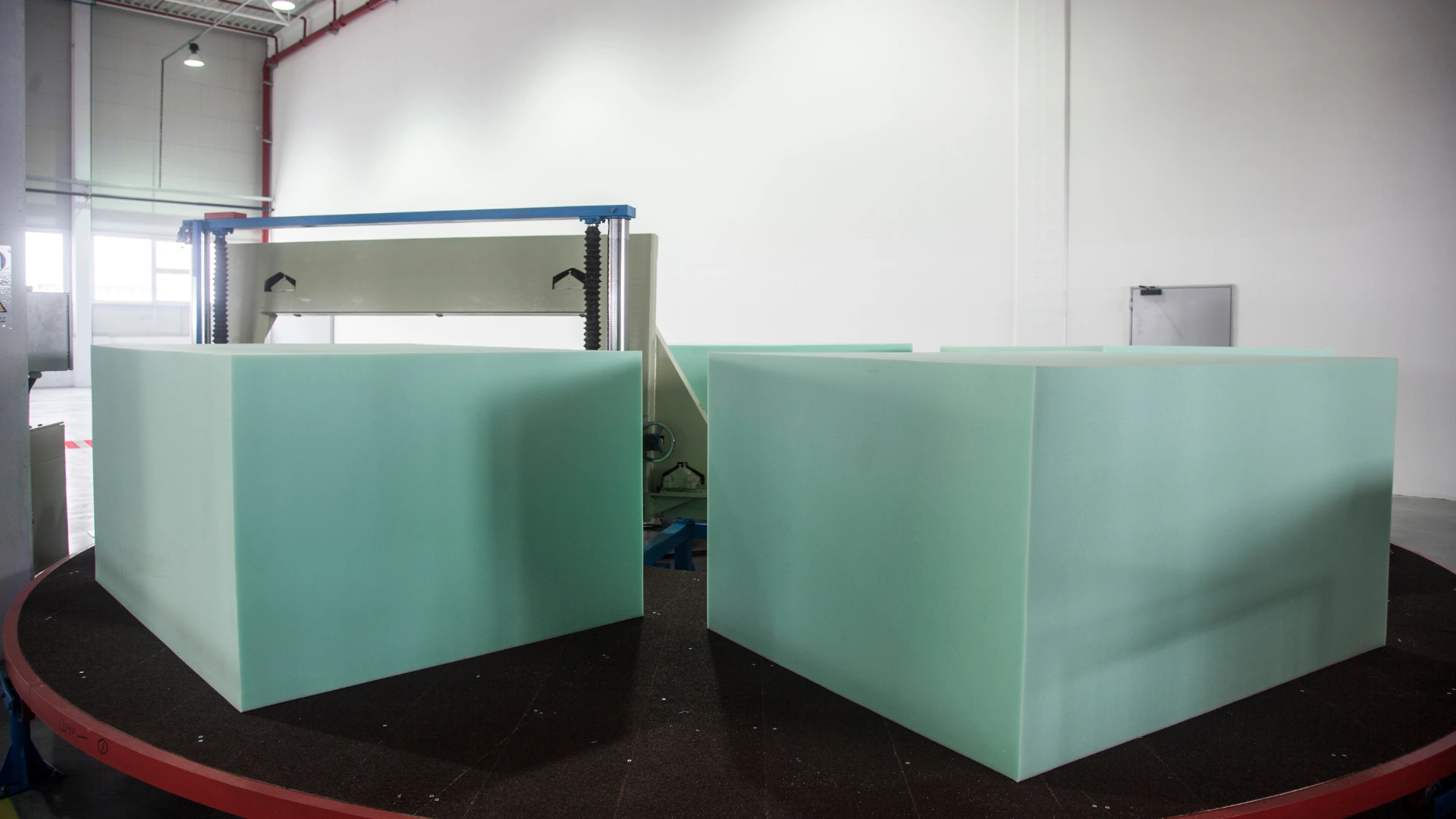
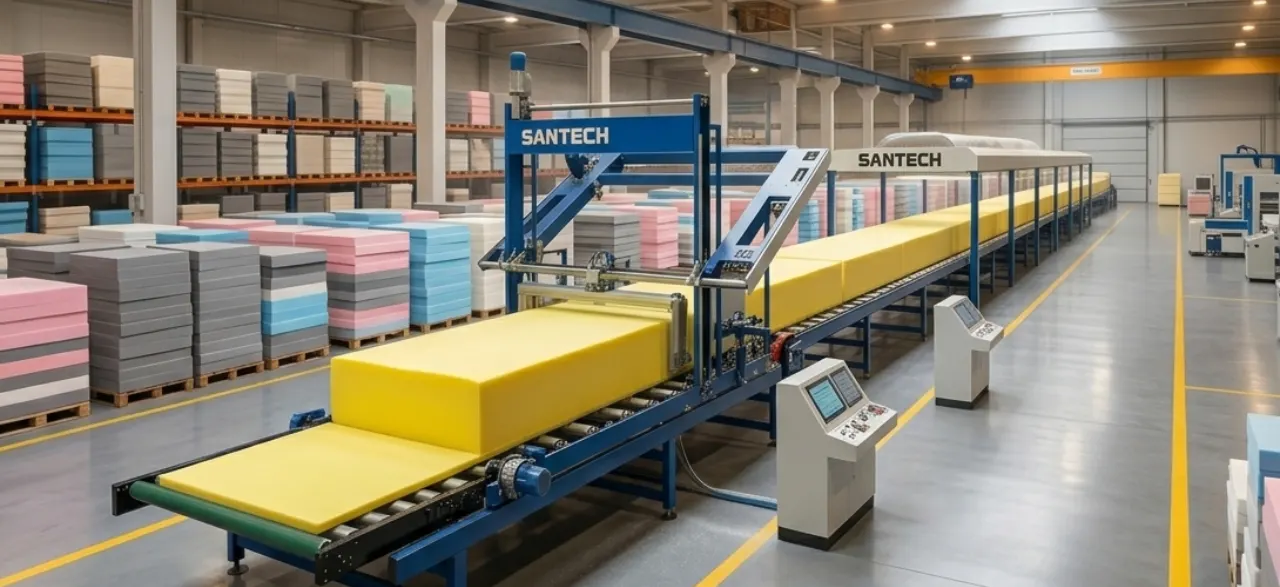
A continuous foaming machine solves a simple problem that batch lines face every day: stop-start production creates variation.
Every time a batch line stops, resets, and restarts, the process has to settle again. That settling time is where waste and inconsistency sneak in.
Continuous systems don’t remove all challenges, but they reduce the number of times the process has to find itself again. Once the line is stable, it stays stable longer.
Benefits that plants actually notice:
- Density stays more uniform over long slab runs
- Less start-up foam that needs to be discarded or trimmed
- Higher output without pushing labour harder
- Cutting schedules becomes easier to plan because the slab behaves predictably
For large-volume operations, continuous foaming machines are less about speed and more about control at scale.
Automatic Batch Foaming Machines: Innovation Without Losing Flexibility
Not every manufacturer needs a continuous line. Many plants run different foam grades, change specifications often, and produce smaller lots. Batch production still makes sense there.
That’s where the automatic batch foaming machine comes in. It keeps the flexibility of batch work but removes a lot of the variability that comes from manual handling.
What modern automated batch systems improve:
- Dosing and mixing cycles repeat accurately
- Timing is controlled digitally rather than by habit
- The process relies less on operator style
- Batch-to-batch consistency improves
They’re especially useful when:
- You produce multiple grades in the same week
- You handle customised requirements
- Your plant layout cannot support a continuous line
It’s a practical middle ground: better control without losing batch flexibility.
Digital Controls, Data, and Real-Time Process Monitoring
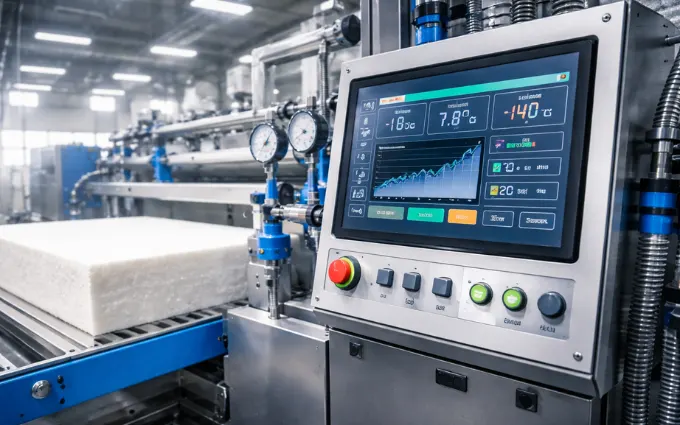
Most plants already track production data. The difference now is that data is being used while production is happening, not only after something goes wrong.
Real-time monitoring helps in simple ways:
- You see drift early instead of discovering it at cutting
- Troubleshooting becomes faster because the history is visible
- Changes can be documented instead of being “tribal knowledge”
- Repeat jobs become easier because settings and outcomes are recorded
Over time, this makes plants less dependent on one or two experienced people. It also makes scaling smoother because the process becomes more repeatable.
Innovation in Mixing, Metering, and Material Handling
Ask any experienced foam team where problems begin and they’ll often point to the start of the process. If metering slips or mixing isn’t stable, the rest of the line spends the day compensating.
Innovation here is about consistency under real conditions, not perfect lab conditions.
Modern systems focus on:
- Accurate metering even when flow rates change
- Stable mixing even when viscosity shifts
- Better handling of filled or modified formulations
- Cleaner transfer and lower exposure on the floor
This matters even more as plants test new additives and sustainability-driven formulations, where processing windows can be less forgiving.
Waste Reduction and Energy Efficiency Through Smarter Machines
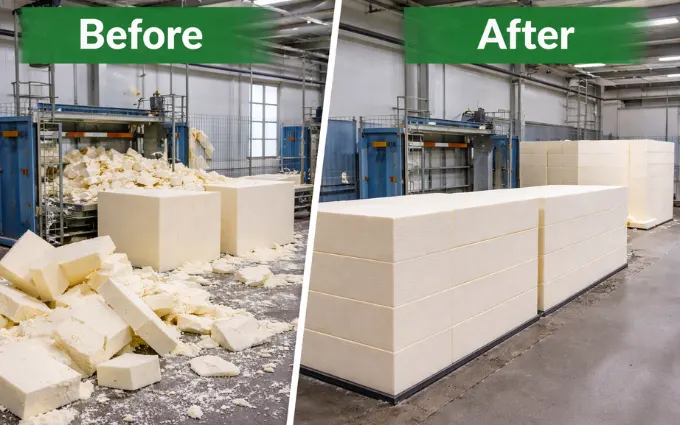
Waste in foam plants isn’t always obvious. It’s often hidden inside normal trimming, small off-spec batches, and repeated adjustments.
Smarter machines reduce waste because they keep the process closer to the target.
They help by:
- Reducing off-spec foam during start-up
- Improving block geometry so the yield improves
- Reducing rework and correction cycles
- Optimising energy use by keeping reactions controlled
For many plants, these improvements protect margins more than chasing higher speed ever will.
What the Future of Foam Manufacturing Looks Like
The future is moving toward more “self-managed” production lines. Not in the sense that people disappear, but in the sense that machines help prevent problems instead of waiting for people to react.
Trends that are already showing up:
- Predictive maintenance that reduces surprise breakdowns
- Smarter controls that support tighter process windows
- Systems designed for bio-based and low-emission materials
- Faster adaptation to new formulations without long trial periods
The gap between older equipment and modern systems is growing because the expectations are growing.
Choosing the Right Technology Partner in an Innovation-Driven Industry
A foam machine is not a one-time purchase. It’s a long relationship with the plant. That’s why the partner matters.
Reliable foam machine manufacturers provide:
- Engineering-led solutions, not generic machines
- Installation support and line tuning
- Operator training and reliable service
- Upgrade options as production needs change
Without this, even good equipment can become difficult to run. With it, plants improve steadily and keep improving for the long term.
Final Perspective: Innovation as the New Standard
Innovation in the foam industry is no longer a future topic. It’s already shaping daily production decisions.
Smarter design, automation, continuous systems, and digital controls are helping foam machine manufacturers deliver what plants need most: predictable output, consistent quality, and fewer surprises.
In the end, the goal isn’t fancy technology. The goal is a line that runs cleanly, holds its settings, and produces the same foam at the end of the week as it did at the start.