The foam manufacturing industry plays an important role in supplying materials for different sectors, including furniture, bedding, automotive, insulation, and packaging. As the expectations of a consumer continue to rise, manufacturers are under a lot of pressure to deliver exceptional-quality products with consistent performance and minimal delays. To achieve this, companies should be able to effortlessly manage everything, that is, from the initial design and material selection to final packaging and delivery.
The foam production industry has become highly dependent on modern machinery and processes. Various machines, such as the automatic batch foaming machine and the continuous foaming machine, have completely changed the way the industry used to produce foam.
This blog will explore how manufacturers can easily manage a modern foam production line, thereby ensuring smooth operations.
Understanding the Complete Foam Production Workflow

In order to successfully run a foam production process, it is important to have a clear understanding of the entire process. This is because each step of the process is interlinked, and any inefficiencies in one step can have a major impact on the entire process.
A typical production process includes:
- Product design and formulation
- Procurement of raw material
- Mixing and foaming
- Curing and cutting
- Quality inspection
- Packaging and dispatch
By effectively integrating all these steps, foam manufacturers can eliminate any bottlenecks in the process and ensure consistency in their products. Advanced planning software and automated machinery will further help in enhancing production accuracy and workflow transparency.
Role of Design and Material Selection
Product design serves as the foundation for any foam manufacturing process. Various factors, including density, firmness, resilience, and application requirements, should be defined clearly at this stage.
Important considerations include:
- Choosing suitable materials that are polyols, isocyanates, and additives
- Determining foam density and structure
- Desiging molds and cutting patterns
- Optimizing formultions for durability
Effective design planning will help ensure compatibility with both the automatic batch foaming machine and the continuous foaming machine.
Integrating Advanced Foaming Technologies
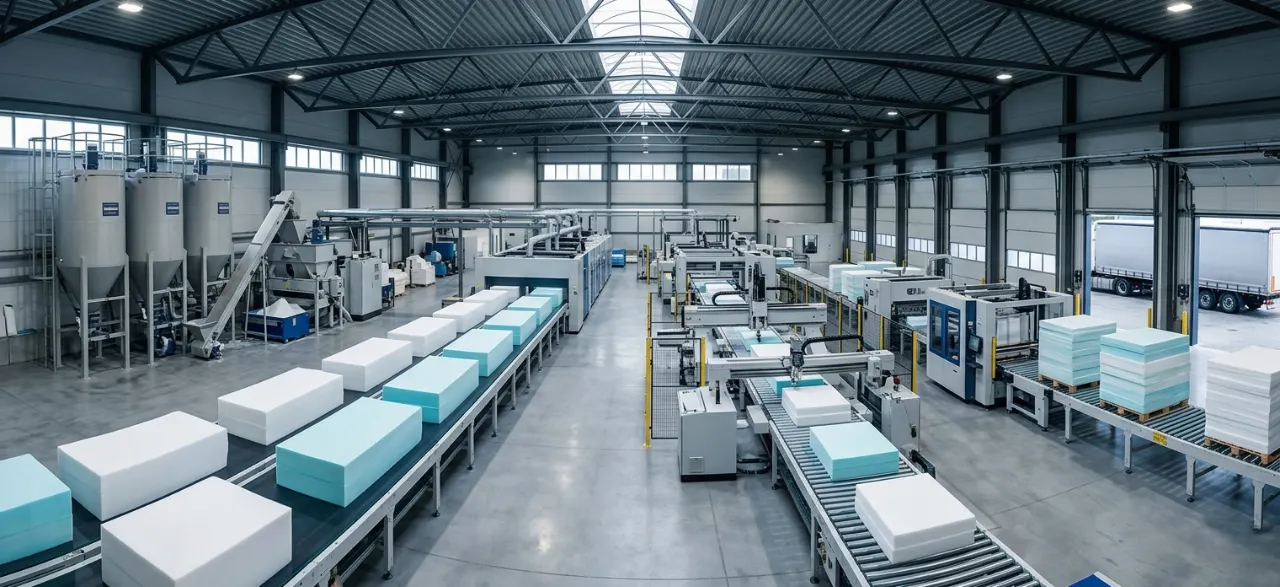
Modern foam production line depends on advanced machinery that can help in achieving precision and scalability. Two of the most important systems are the automatic batch foaming machine and the continuous foaming machine.
Automatic Batch Foaming Machine
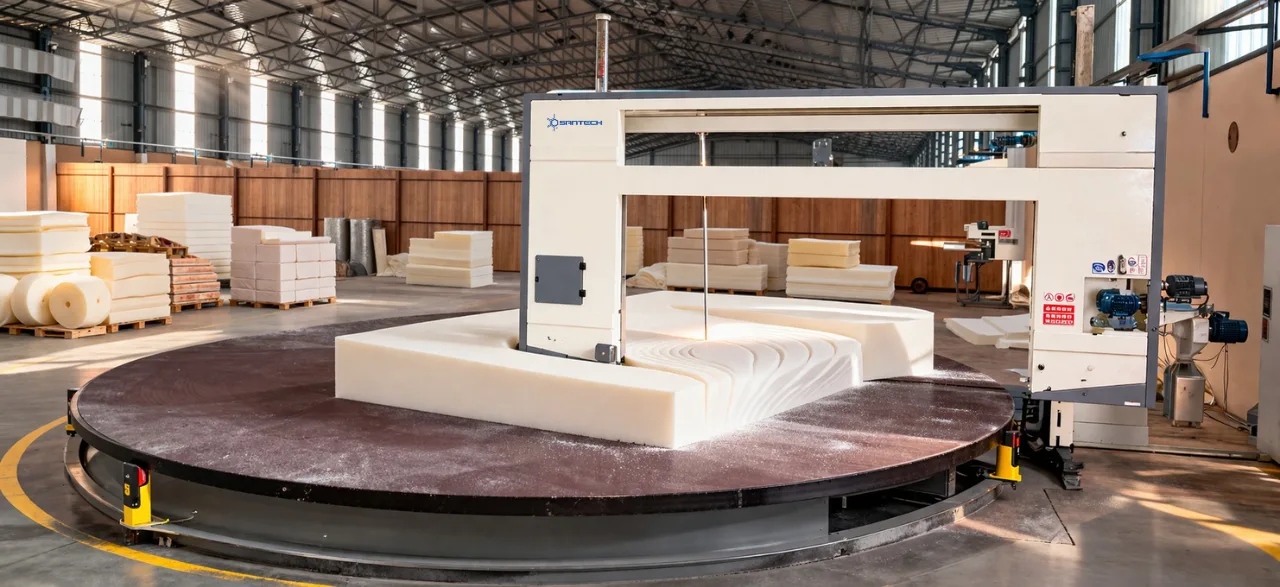
An automatic batch foaming machine is a perfect choice for producing customized foam products. It also enables accurate control over mixing ratios, temperature, and reaction time.
Primary benefits include:
- High formulation accuracy
- Uniform batch quality
- Suitable for small and medium production runs
- Reduced dependency on operators
This equipment is extremely useful for manufacturers providing a wide range of products or customized foam solutions.
Continuous Foaming Machine
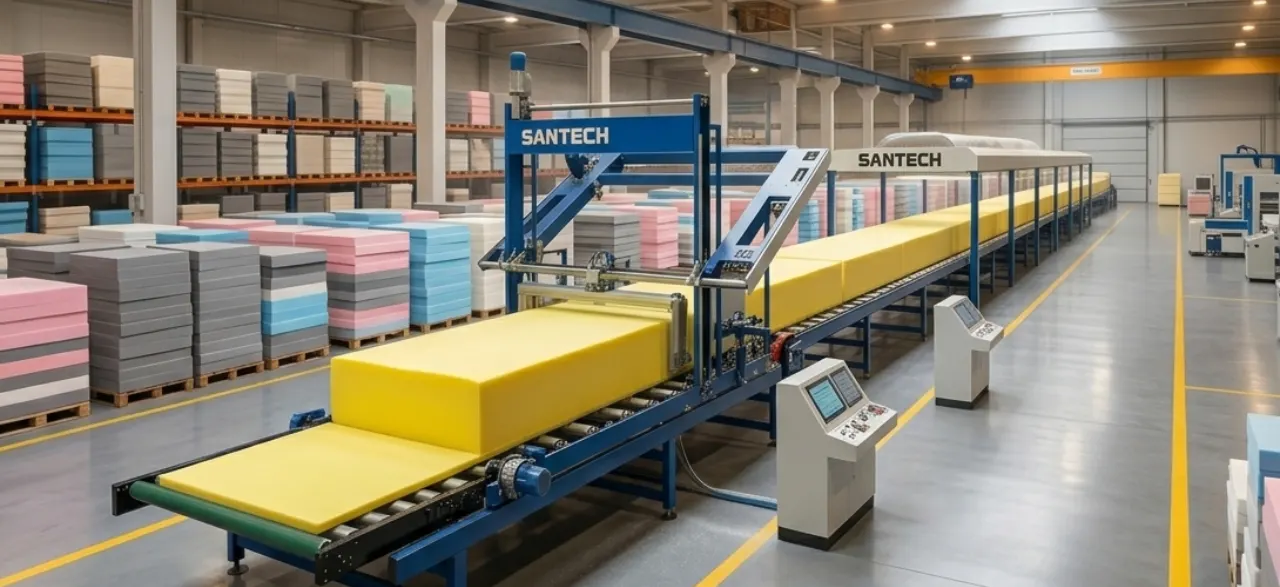
A continuous foaming machine is designed for handling high-volume production. It paves the way for uninterrupted foam generation, making it ideal for a large-scale manufacturing environment.
Primary benefits include:
- High production capacity
- Consistent foam structure
- Reduced processing time
- Better and improved cost efficiency
By strategically integrating both systems, manufacturers can easily balance flexibility and mass production needs.
Streamlining Production Planning and Scheduling
Effective production planning is critical to ensure that the delivery deadlines are met and the operational costs are under control. Modern foam manufacturers rely on data-driven scheduling systems to opimize machine usage and workforce allocation.
Effective planning includes:
- Predicting market demand
- Scheduling machine operations
- Managing inventory levels
- Allocating skilled operators
Synchronizing production schedules with the capabilities of an automatic batch foaming machine and a continuous foaming machine will help in preventing bottlenecks and ensure steady output.
Ensuring Quality Control at Every Stage
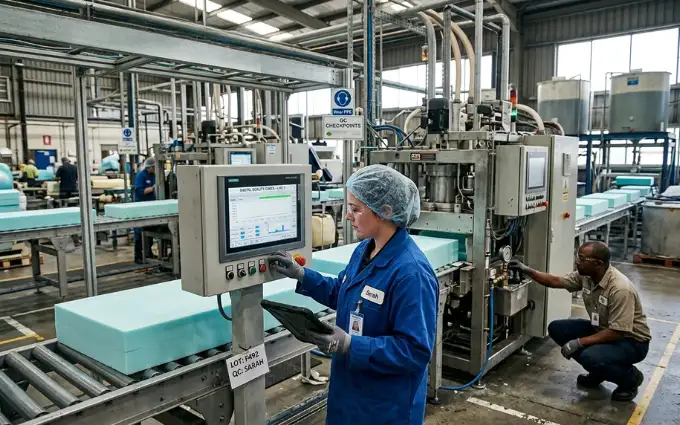
Quality assurance is necessary for the effective control of a modern foam manufacturing plant. This is because foam density, surface defects, and size variations can influence customer satisfaction.
Quality control measures consist of:
- Inspection of raw materials
- Density and firmness testing
- Analysis of visual defect
- In-process monitoring
- Final product certification
Automated sensors and digital monitoring systems will help in real-time tracking, allowing manufacturers to easily identify and correct process variations quickly.
Equipment Maintenance and Operational Reliability
Production efficiency relies heavily on the reliability of a machine. Any unplanned and sudden stoppage of the machine will not only affect the schedule but also increase the cost of operation.
Best maintenance patcices consists of:
- Preventive equipment maintenance programs
- Replacement of old and worn-out parts
- Equipment maintenance documentation
- Regular inspection of equipment
Proper maintenance of the automatic batch foaming machine and continuous foaming machine will ensure long-term reliability and quality of products.
Workforce Training and Process Standardisation
Even the most advanced equipment requires skilled operators. Employees who are well-trained will contribute to safe operations, higher productivity, and better quality outcomes.
Training programs should primarily focus on:
- Machine operation procedures
- Process control techniques
- Safety and compliance standards
- Quality inspection methods
- Emergency response protocols
Standardised operating procedures will further help in reducing errors and improving coordination across departments.
Packaging, Storage, and Logistics Management
After the foam products have been produced and inspected, packaging and logistics management will be critical in ensuring that the products are delivered on time.
Important practices comprise:
- Using protective packaging materials
- Clearly labelling the products
- Optimizing warehouse layout
- Implementing inventory tracking systems
- Coordinating transportation schedules
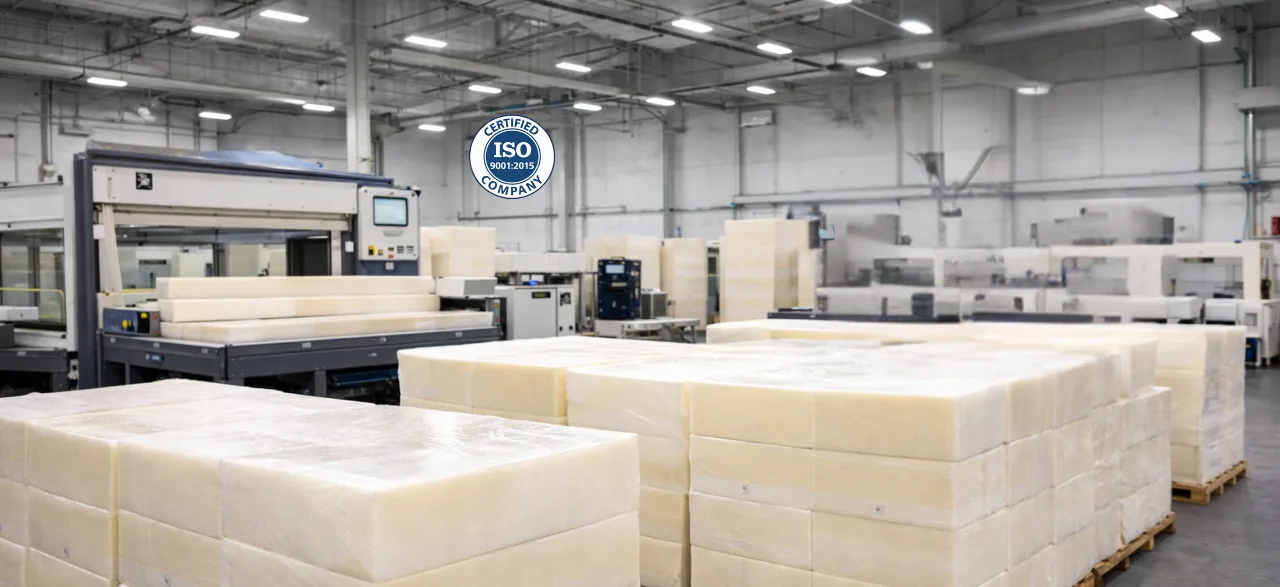
Proper handling during storage and transit will help in preserving the integrity of the product and enhancing customer satisfaction.
Integrating Digital Tools and Industry 4.0
Digital transformation is reshaping modern foam production. Industry 4.0 technologies will help in improving visibility and traceability and enhancing decision-making.
Advanced tools include:
- Production management software
- Cloud-based reporting dashboard
- IoT-enabled monitoring systems
- Predictive maintenance platforms
- Data analytics solutions
These are important technologies that will help the manufacturers integrate design, production, and delivery into a unified management system.
Advantages of Efficient Production Line Management
A foam production line that is well-managed will help in delivering the benefits apart from immediate output improvements. Strategic investments in technology and process optimization will help in creating sustainable growth opportunities.
Long-term benefits consist of:
- Enhanced and greater operational efficiency
- Lowered production costs
- Improved product consistency
- Stronger customer relationships
Companies that are able to easily manage both batch and continuous systems are better positioned to adapt to changing industry trends.
Wrapping Up
In a modern foam production line, everything has to run smoothly. Right from the procurement of raw materials to the distribution of the final products, every step should be executed seamlessly to achieve consistent quality and profit margins.
With the incorporation of modern machinery such as an automatic batch foaming machine and a continuous foaming machine, along with proper planning, quality control, and the use of digital technology, it becomes easy to optimize production while minimizing risks. This is a holistic strategy that will not only improve production efficiency but also help build brand credibility.