Foam production has been one of the evolving fields, but today the change is happening faster than ever. Modern plants are producing higher volumes, thereby following stricter quality protocols, and facing increased pressure to keep up with the consistent output. Any sort of changes, including small density shifts, uneven blocks, or increased trimming, will not only disturb schedules, but they will also increase waste and affect margins.
This, in turn, is driving innovation in foam manufacturing. Today, there is a heavy focus on machines and automation rather than operator experience or chemical formulations.
How Foam Machine Manufacturers are Shaping Modern Production?
Well, innovation in the foam industry is not just about new chemicals; while formulations are important, the most significant advances are happening on the production front, where foam-making machines and polyurethane foam-making machines are taking on more responsibilities which were earlier handled by skilled operators.
In addition, modern foam machine manufacturers are catering to plant needs by designing machines that will help in bringing stability, reliability, and growth. After all, the goal is not only about running a machine, but it is also about designing a system that will help in delivering consistent quality across shifts and long production runs.
Primary innovations include:
- Machines that reduce process variation
- Automation systems that can easily adjust to changing conditions
- Scalable systems that can maintain efficiency
- Technical support to prevent downtime
Smarter Machine Design and Automation
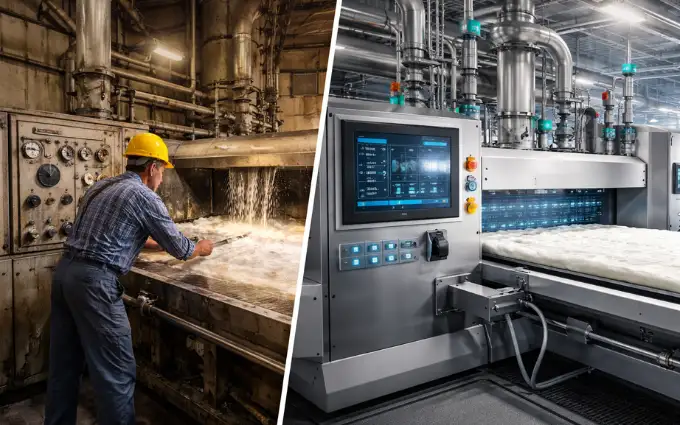
Old foam machines relied on the operator’s experience to spot and fix process drift. Operators adjusted temperatures, flow, and mixing rates by feel. This method worked, but there was heavy dependence on human observation.
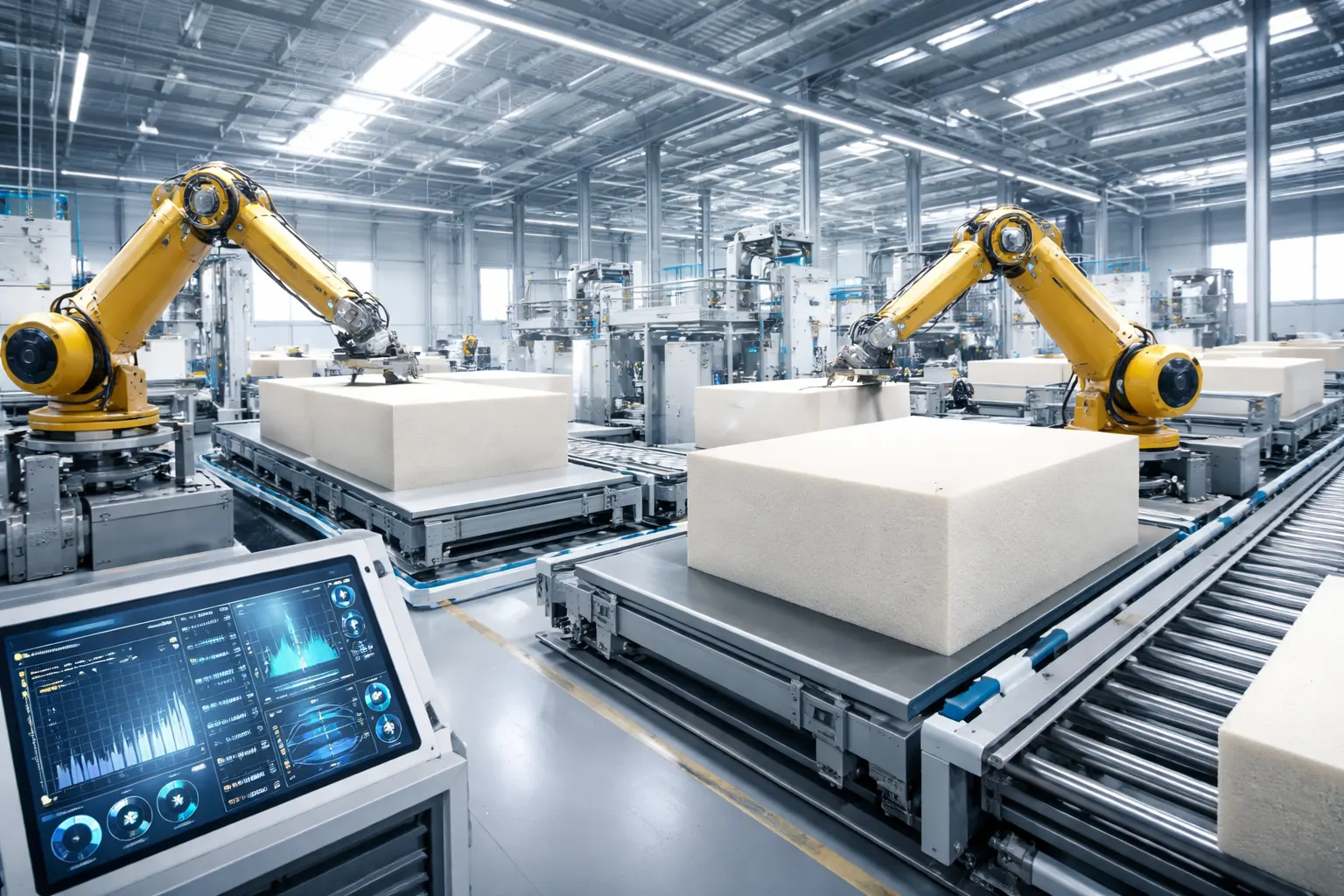
However, modern polyurethane foam-making machines plan to minimize this dependency by using sensors and automated controls that will help in the following ways:
- Provide continuous monitoring of temperature, pressure, and flow.
- Provide pre-programmed recipes that will help in replacing the trial-and-error adjustments.
- Achieve consistent output across different shifts.
These advancements will reduce errors, improve efficiency, and increase predictability.
Continuous Foaming Machines: Stable Production at Scale
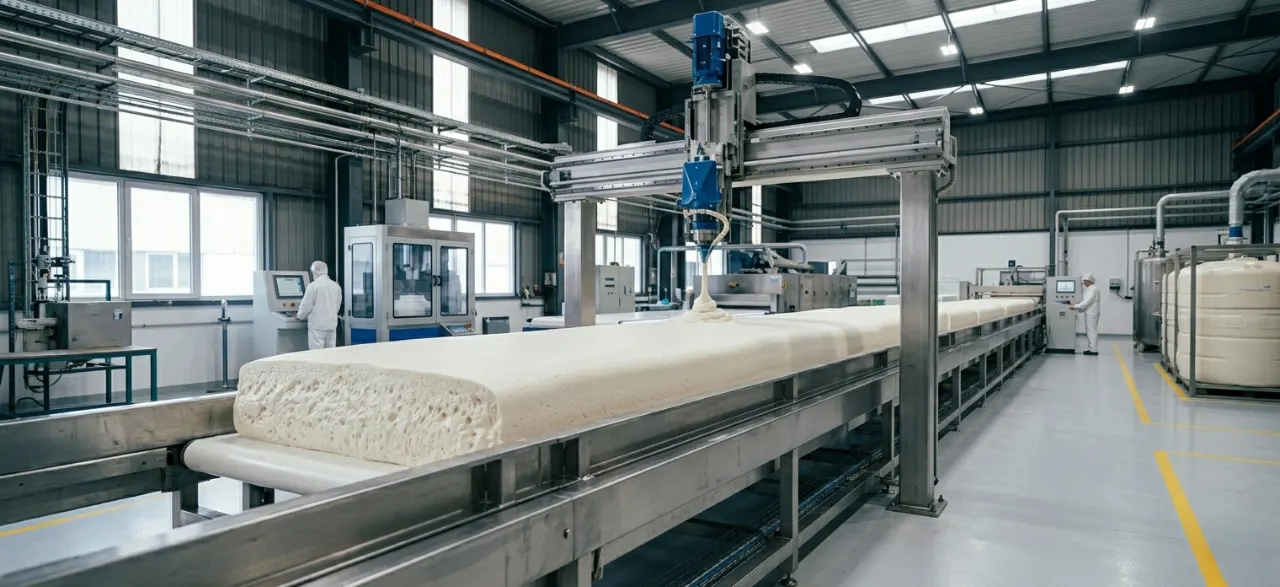
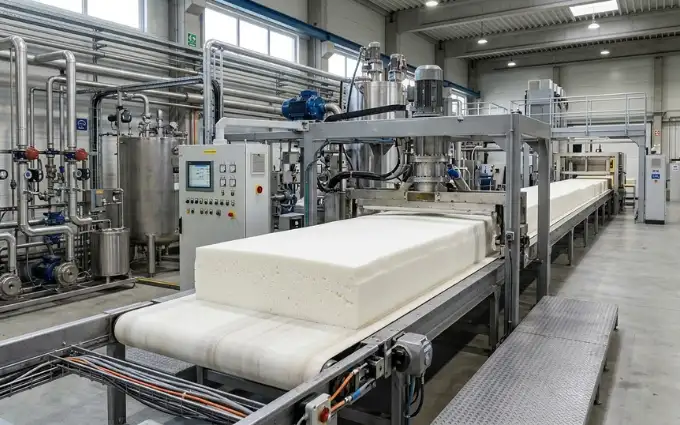
For the purpose of high-volume production, continuous foaming machines are changing how foam is made. Compared to batch processes, which require frequent stops and starts, continuous lines will help in achieving a stable process over long runs. Whenever a batch line stops, settling time introduces variation, waste, and inefficiency. However, continuous systems will not only reduce these problems, but also offer several benefits, including:
- Stable and uniform density across bigger slabs
- Reduction in foam wastage
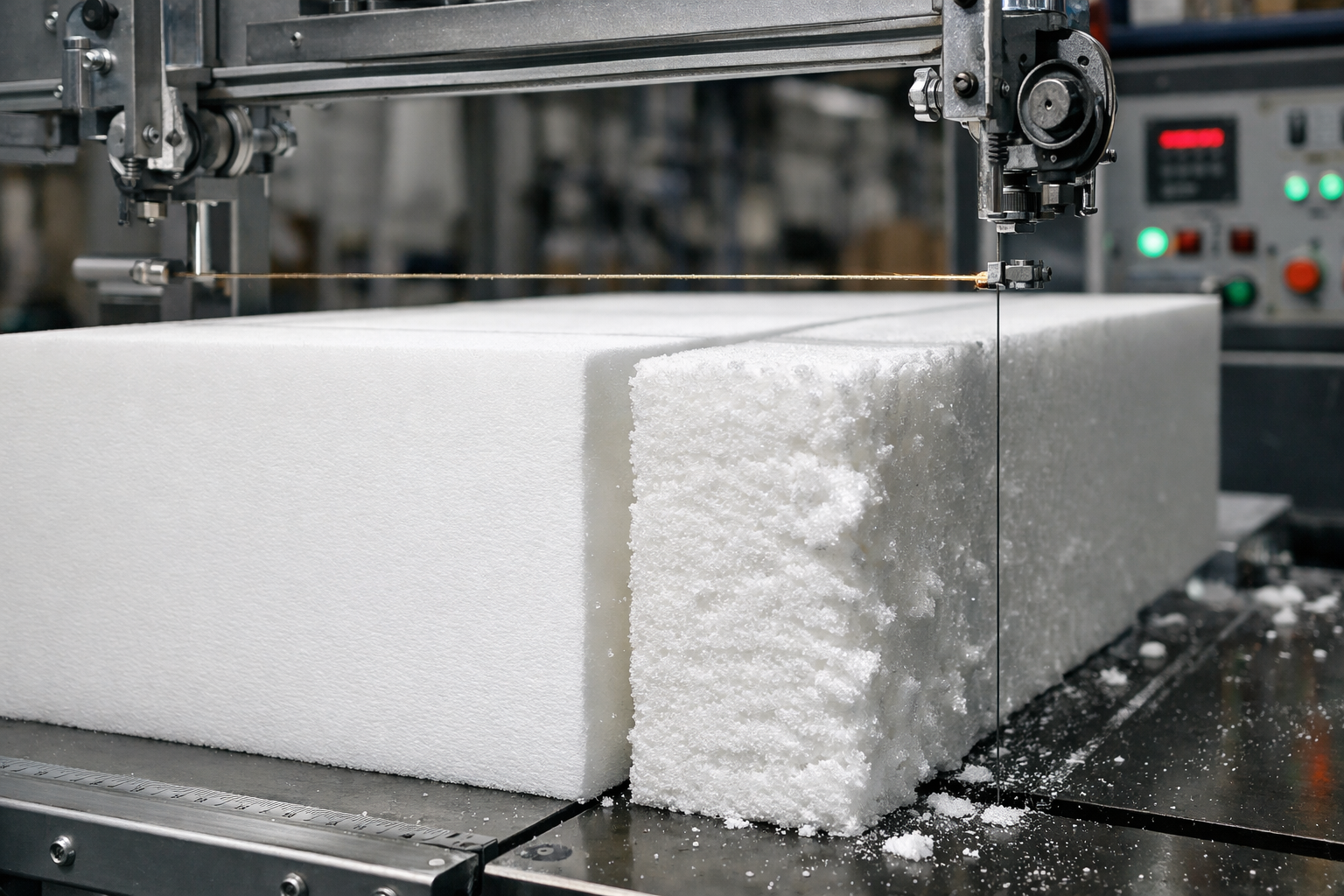
- Seamless planning for cutting and downstream processing
- Higher throughput without any extra labour strain
Well, a continuous foaming machine is not just about speed, but it is also about control, efficiency, and predictability at scale.
Automatic Batch Foaming Machines: Flexible and Reliable
Not every operation can be dependent upon a continuous line. Plants manufacturing multiple foam grades or customized products can still benefit from batch processing. The automatic batch foaming machine not only offers flexibility, but it also helps in reducing errors from manual handling.
Modern automated batch systems offer:
- Precise dosing and mixing cycles
- Timing that is digitally controlled
- Consistent batch-to-batch quality
- Hassle-free management of multiple foam grades
These machines are best suited for plants that can easily produce different foam grades within the same week or seamlessly handle special formulations that need frequent line changes.
Digital Controls and Real-Time Monitoring
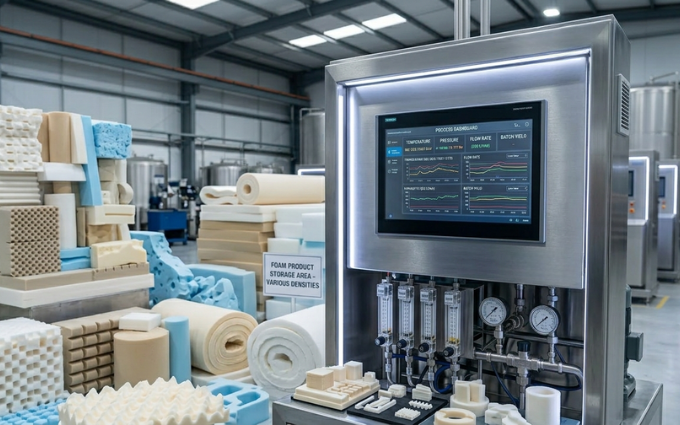
Modern foam production makes use of advanced machines and real-time data to identify problem areas before they affect quality. Key advantages include:
- Early identification of density drifts
- Documenting process changes for future references
- Faster troubleshooting using historical production data
This is an excellent approach to reduce dependency on experienced operators and ensure that the scaled production does not compromise quality.
Innovation in Mixing, Metering, and Material Handling
This is the foundation point of foam production that is the metering and mixing of raw materials. In fact, even small inconsistencies can affect block quality and increase wastage. However, modern polyurethane foam-making machines are able to tackle these challenges by:
- Ensuring consistent metering along with variable flow rates
- Maintaining consistent mixing even when viscosity changes
- Handling complex formulations easily
- Minimizing exposure and improving safety on the production front
These innovations will enable the plants to experiment with new sustainable materials without risking major process disruptions.
Minimizing Waste and Enhancing Energy Efficiency
Minimizing waste and enhancing energy efficiency have become important for competitive foam production. Smart machines are able to reduce waste by ensuring that they are able to keep the process closer to the target key specifications. Primary benefits include:
- Better bloc shape and higher yield
- Optimized energy consumption using controlled reactions
- Less rework and fewer corrections
- Less off-spec foam at startup
For most of the plants, these advancements contribute more towards profits than chasing higher line speed alone.
The Future of Foam Production
Talking about the future of foam manufacturing, it is moving forward in the direction of self-managed and intelligent production lines. These are intelligent machines that will play a key role in preventing the issues before they occur, thereby supporting tighter process windows and efficient adaptation to new formulations. Following trends will be worth-watching:
- Rapid and seamless adaptation to new chemical formulations
- Equipment that is designed for bio-based and low-emission raw materials
- Smarter controls that will pave the way for tighter process tolerance
- Predictive maintenance that will help in reducing unexpected downtime
Choosing the Right Partner
Opting for the ideal foam machine manufacturer is important. This is because a foam machine is a long-term investment, and the ideal partner will ensure that it continues to deliver excellent-quality output.
Reliable manufacturers should be able to offer:
- Custom-engineered solutions for plant needs
- Support during installation and line setup
- Training for operators
- Providing upgrade options as production needs keeps on changing
So, with the proper support, plants can improve their output at a steady scale, maintain uniform consistency, and adapt to industry changes effortlessly.
Wrapping Up
Developing an understanding about the entire production process easily highlights the role of invention in modern manufacturing. Right from foam making machines and polyurethane foam making machines to continuous and automatic batch systems, smarter design, and digital monitoring, technology is playing a key role in helping us achieve predictable output, consistent quality, and reduce waste.
Well, innovation is not just a buzzword! It’s a new standard. In today’s time, plants would like to make use of smarter machines, automation, and data-driven monitoring that will not only help in keeping pace but also set a benchmark for sustainable foam production.