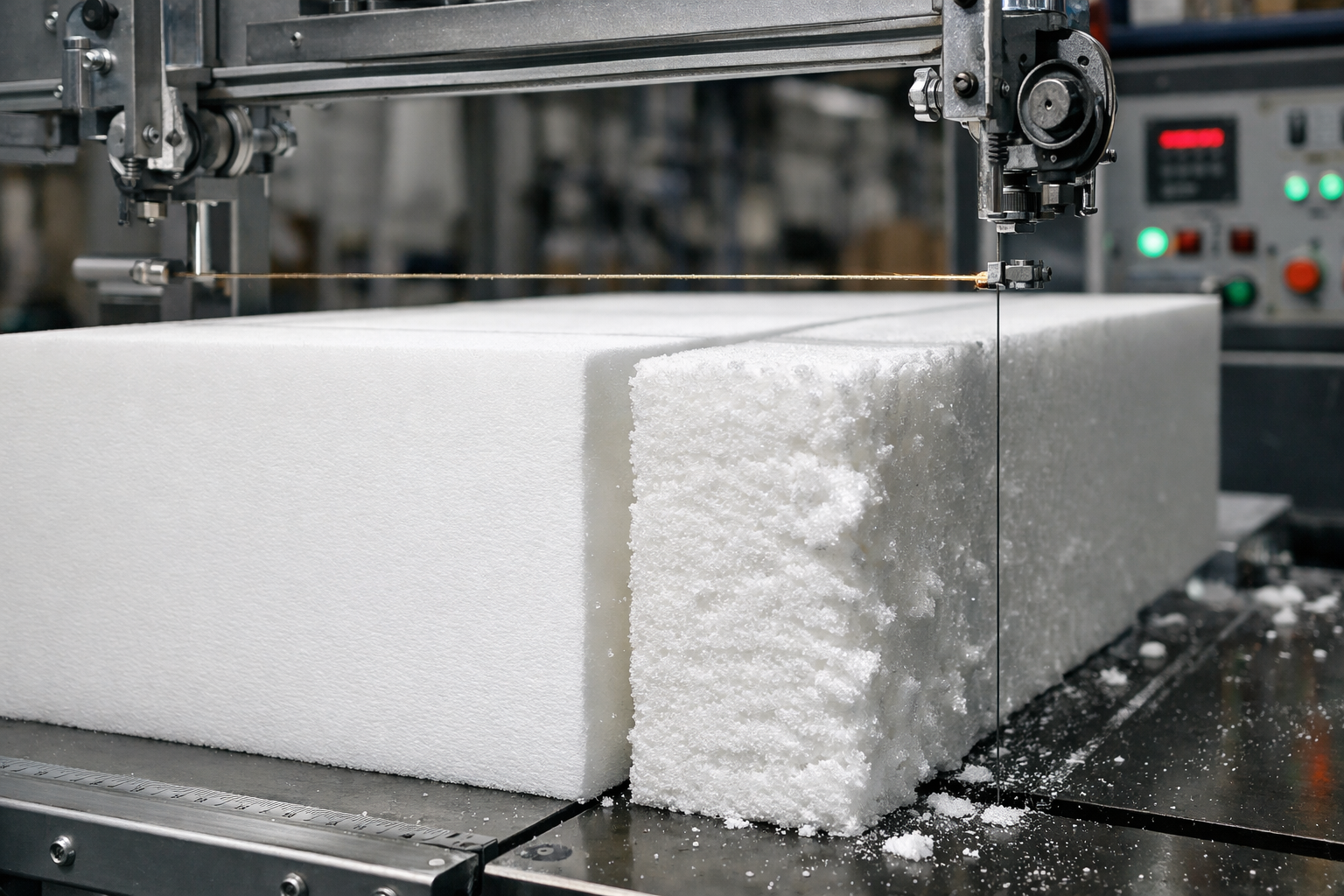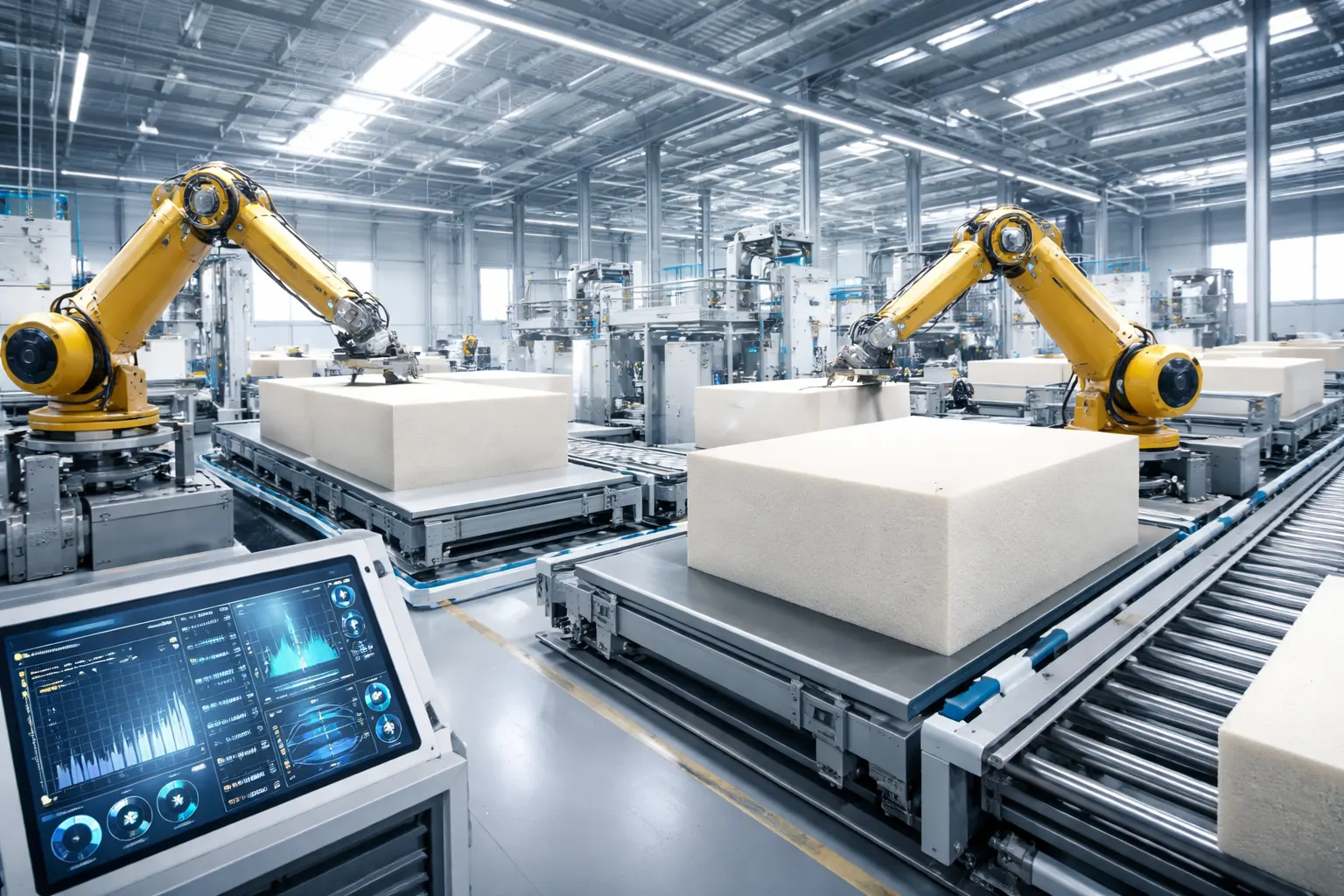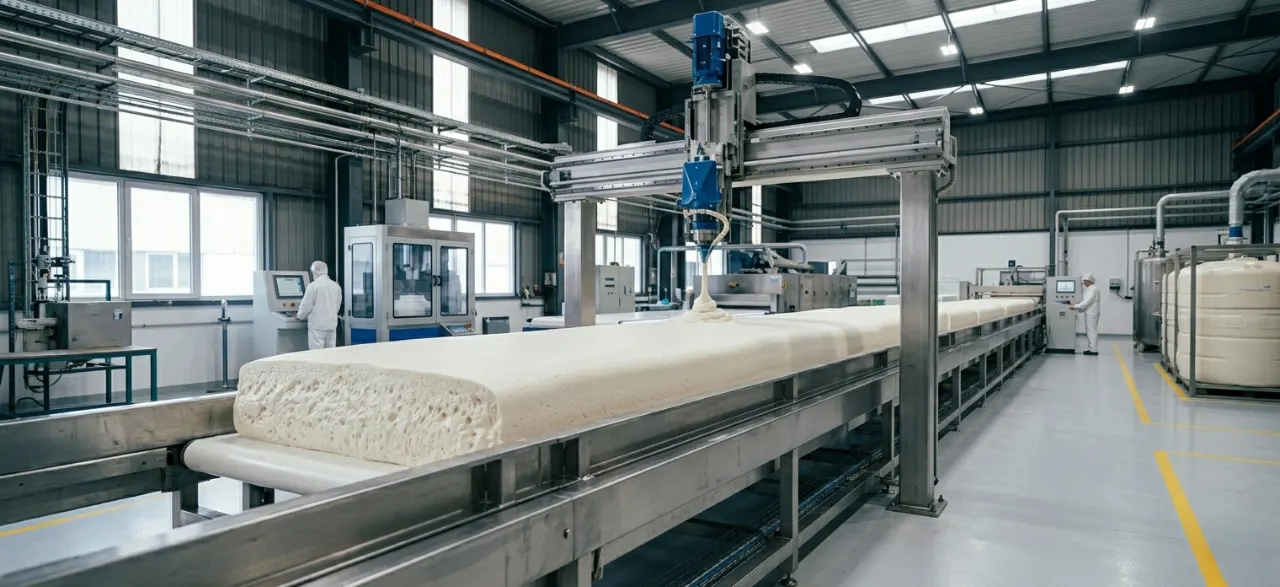
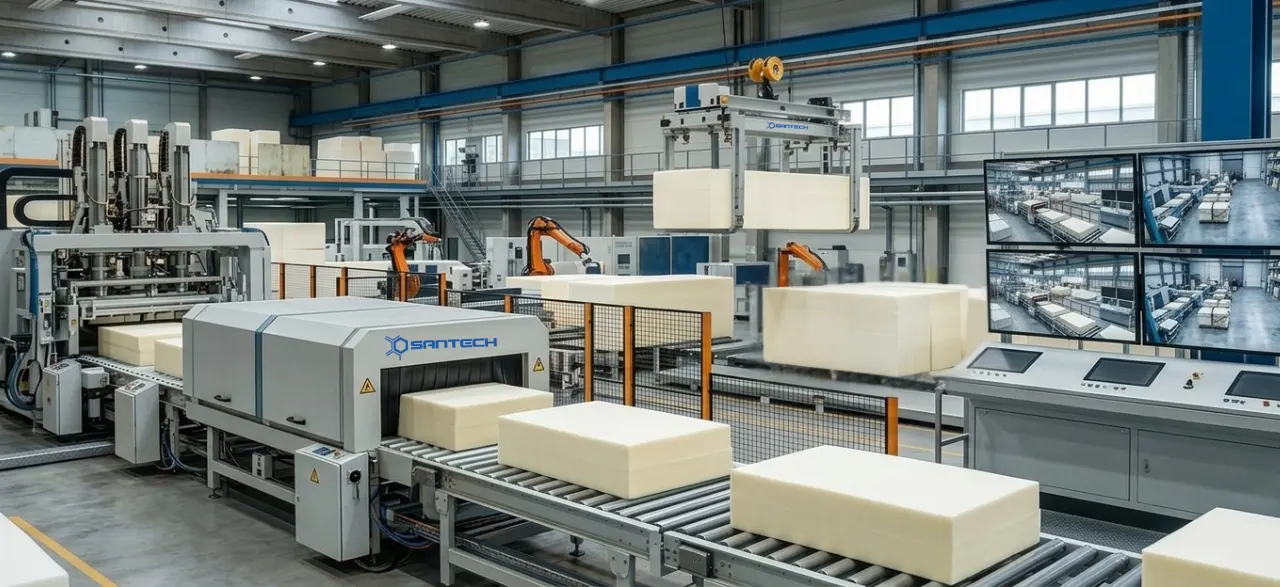
The foam manufacturing industry is entering an important era of transformation. Backed by increasing global demand and rapid technological innovation, the future of foam production is evolving beyond its use in conventional applications. So, in this blog, we’ll be exploring the key trends that are expected to shape the global foam manufacturing market, with a strong focus on how foam machine manufacturers and PU foam manufacturing machines are getting used to these changes.
Increasing Demand for High-Performance PU Foam Products
Polyurethane (PU) foam has served as a strong foundation material across sectors, including automotive, construction, bedding, and packaging. Over the next decade, demand for high-performance PU foam products is expected to grow rapidly. This is driven by:
- Automotive lightweighting initiatives are being adopted by manufacturers to make vehicles lighter in order to improve fuel efficiency.
- Advanced insulation needs in construction for better energy efficiency.
- Comfort-based customer goods, including mattresses and upholstered furniture.
As demand continues to increase, foam machine manufacturers are investing heavily in PU foam manufacturing machine innovations that will help in delivering precise controls, reduced waste, and better consistency.
Smart Manufacturing and Industry 4.0 Integration
The integration of smart technology is reshaping manufacturing across industries, and foam production is no exception. Various industry 4.0 technologies, including IoT connectivity, data analytics, and AI-driven process optimisation helps foam producers to:
- Carefully monitor machine performance in real-time.
- Predict maintenance needs to minimise downtime.
- Optimise material usage at lower costs.
Leading foam manufacturers are now also providing smart-enabled PU foam manufacturing machines that are capable of seamlessly connecting to a centralised analytics platform. These machines also offer insights into production quality and efficiency, thereby transforming traditional foam plants into intelligent and data-driven operations.
Sustainable and Green Production Practices
Sustainability is not merely a buzzword, but a business priority! The foam industry is undergoing tremendous pressure to reduce its environmental footprint. Primary sustainability trends consist of:
- Bio-based raw materials are replacing traditional petrochemicals.
- Energy-efficient production processes
- Closed-loop recycling systems for foam waste.
As environmental regulations continue to tighten, foam machine manufacturers are redesigning equipment that will offer support for cleaner operations. Modern PU foam manufacturing machines are designed to use less energy, reduce emissions, and include recyclable components.
Customisation and Niche Market Growth
Today, a customer wants the products to be tailored to their needs. This sudden shift towards cystomisation is also influencing foam production. Various industrial sectors, including speciality packaging, medical supplies, and advanced cushioning materials, require highly specific foam configurations.
Therefore, to address this, top foam machine manufacturers are providing modular PU foam manufacturing machines that will make way for quick changeovers and flexible production runs. These machines allow the manufacturers to easily switch between formulations and densities without any costly delays.
Global Supply Chain Resilience and Localisation
Recent global disruptions have also highlighted the importance of resilient supply chains. The foam manufacturing industry is adapting by:
- Establishing regional production facilities closer to the demand centres.
- Strengthening partnerships with OEMs and local producers
- Diversifying sourcing options for raw materials.
Well, for foam machine manufacturers, this trend means expanding production networks and providing localised support services. In addition, reliable after-sales service is becoming important for complex equipment like a PU foam manufacturing machine, where uptime is vital for productivity.
Automation and Workforce Evolution
Automation is all set to play an important role in future foam manufacturing, not only for process optimisation but also for workforce efficiency. Automated systems can help with:
- It can easily handle repetitive tasks with high accuracy.
- Help reduce manual labour dependency.
- Improve workplace safety.
As machines will become more autonomous, the workforce will also evolve. Operators will be required to develop digital skills that will help them manage and maintain complex PU foam manufacturing machines.
Adoption of Advanced Materials and Hybrid Foams
Different types of innovations in raw materials are paving the way for new foam applications. Researchers have started developing hybrid foams that will combine PU with other polymers to enhance performance traits, including thermal resistance, durability, and recycling.
This increase in material innovation will require production equipment that is capable of handling complex formulations. Forward-thinking foam machine manufacturers are upgrading PU foam manufacturing machines that will support multi-component feeds, precision dosing systems, and temperature-controlled processing.
Digital Marketplaces and E-Commerce Expansion
The digital economy is consistently reshaping how foam products are marketed and sold. B2B buyers are now making use of online platforms to compare products, request quotes, and evaluate suppliers. As a result:
- Manufacturers are investing in digital catalogues.
- Virtual demonstrations and support are becoming common.
For foam machine manufacturers, establishing a strong digital presence is very important for reaching out to global audiences and facilitating seamless procurement of PU foam manufacturing machines and other related equipment.
Wrapping Up
The future of the global foam manufacturing market is well-defined by innovation, sustainability, and adaptability. From smart production systems to greener machines, the industry is embracing a change at every level.
Key Takeaways include:
- Increasing demand for high-performance PU foam across different industries.
- Increased use of smart and connected manufacturing machines.
- Rising importance of customisation and automation for a competitive edge.
- Ongoing improvement in supply chains and workforce skills.
- A strong focus on sustainable and eco-friendly production.
For companies that are aiming to stay ahead, partnering with trusted foam manufacturers and investing in advanced technology is important. This approach will help the businesses meet changing market demands and create a more efficient, sustainable, and profitable future.