


Polyurethane foam is one of the most widely used materials in industries such as mattresses, furniture, automotive, packaging, and insulation. Its comfort, durability, and versatility make it an essential material for countless everyday products. But producing high-quality foam requires much more than simply mixing chemicals. The process involves carefully selected raw materials, precise formulations, and advanced PU foam machines that ensure consistent foam density, structure, and performance.
Understanding how polyurethane foam is made helps manufacturers improve product quality, reduce material waste, and optimise production efficiency. In this guide, we’ll explain the complete foam manufacturing process, the essential raw materials used, the role of PU foam machines and foam cutting machines, and the key factors that influence the quality of the finished foam.
What Is A Foam Plant?
The foaming plant is the manufacturing unit that produces the foam that we see around us. It has the capability of producing many types of foams, such as
- Polyurethane
- Closed cell
- Memory
- Latex
Foam can be found everywhere, from vehicle seats to household appliances as insulators. It is formed by creating gas bubbles in plastic using a blowing agent. While manufacturing laminate foam is a continuous process, giving it various sizes and shapes, it is produced in batches with the help of different cutting machines.
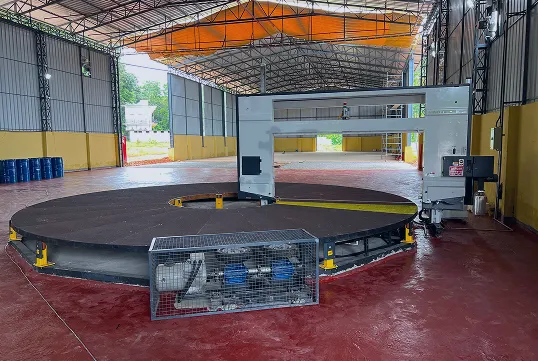
Now foam cutting machines use a variety of materials like cutters or blades. Moreover, the hot wire is the most commonly used in these machines. These plants uses many machines for diverse shapes and sizes meant for different uses.
Flexible foam has an open structure and is made in two densities, high and low. Although, in contrast, the low-density is ideal for cushioning purposes, high-density rigid are highly cross-linked and prevent gas movement. Therefore they are used as an insulator in buildings and freezers.
Raw Materials Required For Creating Foam
Generally, foam consists of the following chemicals: 40% polyisocyanates, 10% water, and 50% of polyol. Polyisocyanates and polyols are liquid polymers that produce an exothermic (heat generating) reaction producing polyurethane. The two polyisocyanates are diphenylmethane diisocyanate (MDI) and toluene diisocyanate(TDI). While MDI is used in rigid foams, TDI is used in more flexible foam.
A wide range of additives is used in this process. Catalysts such as tin and amines fasten the reaction, allowing the production of large quantities.
How Is Foam Made? (Step-by-Step Process)
| Step | Foam Manufacturing Process |
|---|---|
| Step 1: Raw Material Preparation | Polyol, isocyanate (TDI or MDI), water, catalysts, silicone surfactants, and other additives are carefully measured according to the required foam formulation. |
| Step 2: Mixing the Chemicals | The raw materials are mixed thoroughly using a batch or continuous foaming machine to ensure a consistent blend before the chemical reaction begins. |
| Step 3: Chemical Reaction | When polyol reacts with isocyanate, an exothermic reaction takes place. Water generates carbon dioxide gas, creating millions of tiny air cells that allow the foam to expand. |
| Step 4: Foam Expansion | The expanding foam rises rapidly as gas bubbles form inside the mixture, creating the desired cellular structure and density. |
| Step 5: Curing | The foam is left to cure, allowing the chemical reaction to complete and the material to achieve its final strength, stability, and shape. |
| Step 6: Foam Cutting | Large foam blocks are cut into sheets or customized dimensions using contour, vertical, or horizontal foam cutting machines based on application requirements. |
| Step 7: Quality Inspection | The finished foam is inspected for density, firmness, dimensions, and overall quality before being supplied for use in mattresses, furniture, automotive components, insulation, packaging, and other industries. |
Foaming Machines Used in Foam Manufacturing
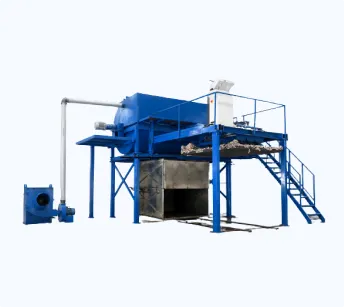
Foaming machines are the backbone of the polyurethane foam manufacturing process. They accurately mix raw materials such as polyol, isocyanate, water, catalysts, and additives to produce high-quality foam with the desired density, flexibility, and durability. Depending on production capacity and manufacturing requirements, foam manufacturers generally choose between batch foaming machines and continuous foaming machines.
1. Batch Foaming Machines
Batch foaming machines are designed for small to medium-scale foam production. They produce polyurethane foam in individual batches, making them ideal for manufacturers who require flexibility in production or frequently change foam formulations. These machines provide excellent control over the mixing process, ensuring consistent foam quality and density in every batch.
Key Features:
- Produces polyurethane foam in controlled batches.
- Ideal for small and medium-scale production facilities.
- Suitable for manufacturing both low-density and high-density foam.
- Delivers consistent mixing for uniform foam quality.
- Lower initial investment compared to continuous production systems.
- Perfect for customised foam production and specialty applications.
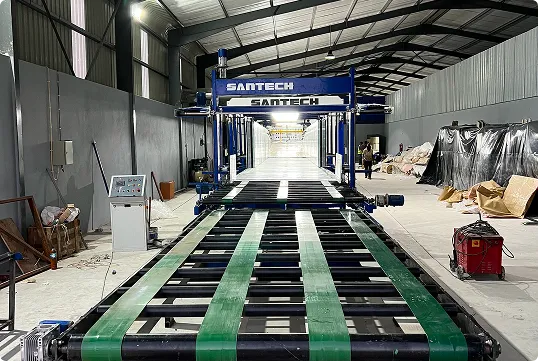
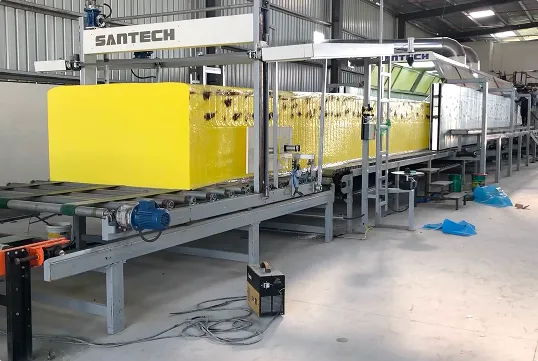
2. Continuous Foaming Machines
Continuous foaming machines are built for high-volume foam production. Instead of producing foam in separate batches, these machines continuously mix and dispense raw materials, allowing manufacturers to produce large foam blocks with consistent quality and minimal downtime. They are widely used in industries that require large-scale production of mattresses, furniture, automotive seating, and industrial foam products.
Key Features:
- Provides uninterrupted polyurethane foam production.
- Suitable for large-scale manufacturing operations.
- Produces foam with consistent density and uniform cell structure.
- Improves production efficiency while reducing operating costs.
- Supports automated manufacturing with minimal manual intervention.
- Ideal for high-volume mattress and furniture manufacturers.
Choosing the right foaming machine depends on several factors, including production capacity, factory size, product requirements, and investment budget. Both batch and continuous foaming machines play a crucial role in producing high-quality polyurethane foam efficiently.
Foam Cutting Process
As foam is a very adaptive material that can take up any shape, size, or density, it is used in numerous industries. Therefore, different products need specific forms of foam, which various types of foam cutting can achieve. Therefore, let us see multiple types of foam cutting machines in brief.
1. Contour Cutting Machines
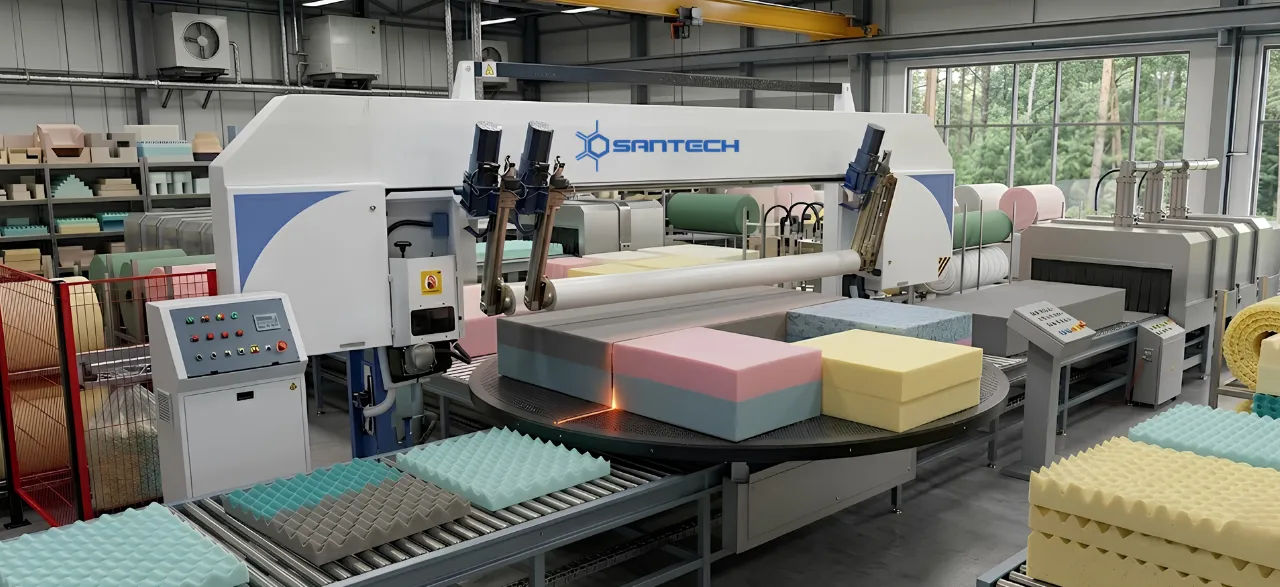
- Contour cutting machines are famous for their expertise and high speed.
- They make cuts of any geometrical shape using different materials as cutting tools such as band knives or wires.
- There are vertical and horizontal contour cutting machines. According to the machine type, an oscillating knife or smooth rotating knife is found.
- This machine can also cut PU foam with a very high density.
- The machine is easy-to-operate and, therefore, user-friendly.
- The machine has a dual operating system, i.e. besides automatic operation, it can also be manually operated without extensive training.
2. Vertical Cutting Machine:
- These machines are one of the most basic equipment in the foam processing industry.
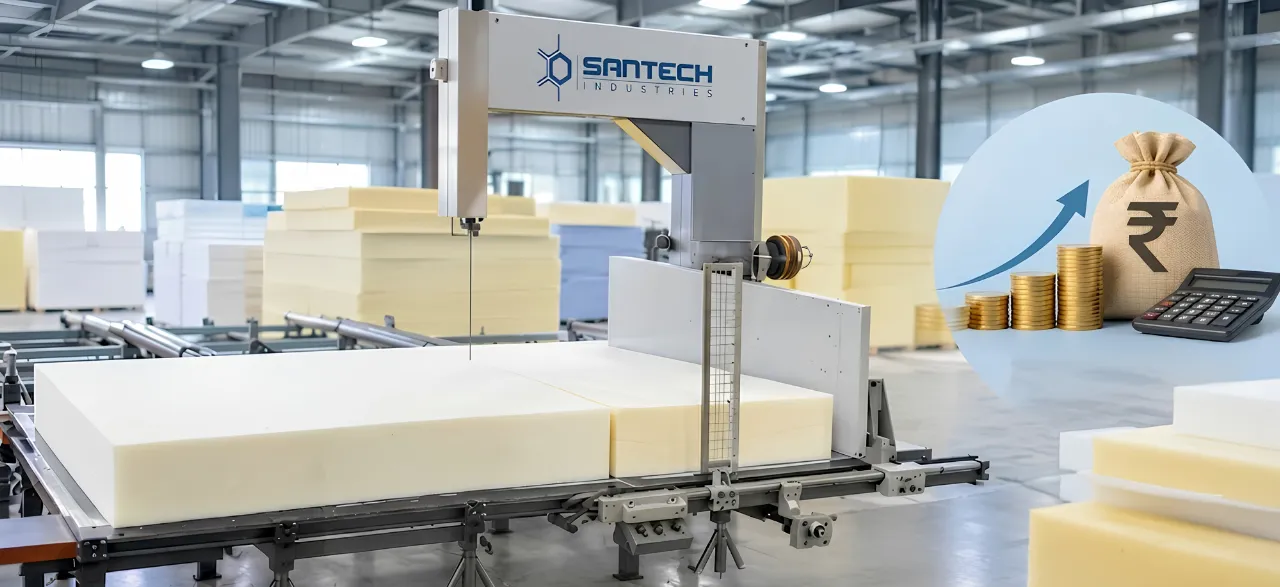
- A smooth or toothed band knife or bandsaw runs vertically in this machine.
- This machine is especially needed for edging PU blocks or creating rectangular plates.
3. Horizontal Cutting Machine:
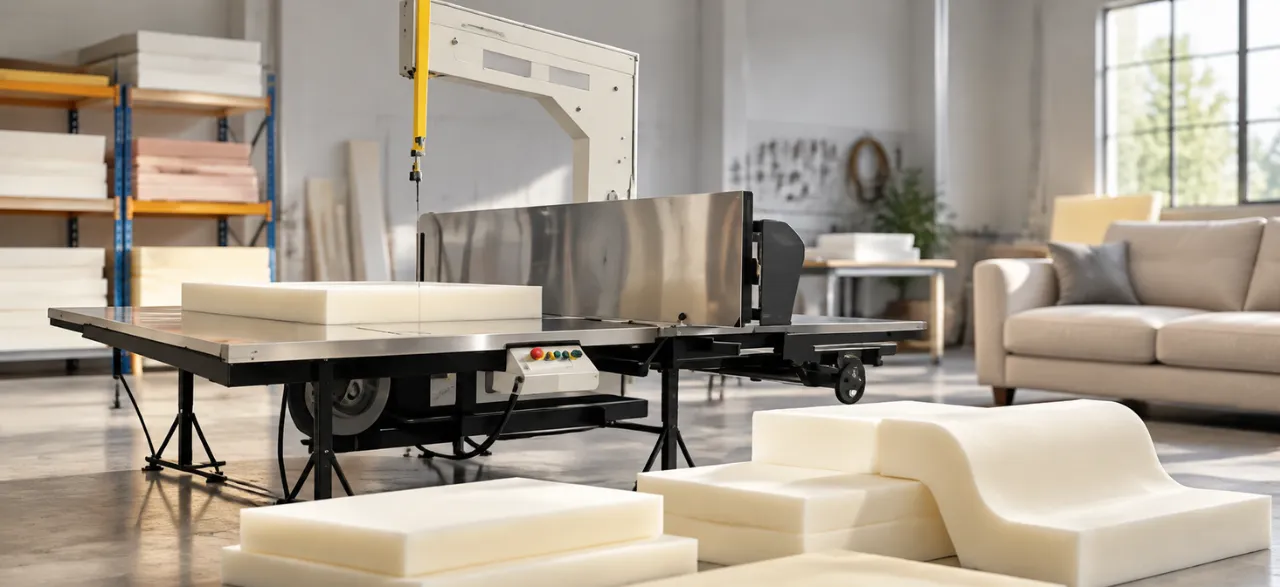
- Horizontal cutting machines can slice the PU foam into thin or thick plates without affecting the quality.
- Comparatively, these machines have more solid construction.
- In most machines, the split plates have to be taken out manually.
- They are considered ideal for mattresses.
Why Choose Santech Foam Machines?
Santech Foam Machines is a leading foam machine manufacturer, offering advanced foaming and foam cutting solutions for the mattress, furniture, automotive, and insulation industries. Our machines are engineered to deliver consistent foam quality, improve production efficiency, and minimise material waste. From batch and continuous foaming machines to precision foam cutting machines, we provide customised solutions backed by expert technical support, helping manufacturers build efficient, reliable, and high-performing foam production lines.
Conclusion
Choosing the right foam manufacturing process depends on your production needs, budget, and desired foam quality. Whether you opt for batch or continuous production, investing in reliable foam machines ensures consistent performance, reduced waste, and long-term efficiency. With advanced technology and expert support, Santech Foam Machines helps manufacturers achieve high-quality foam production with confidence.