Polyurethane Foam production usually does not fail all at once. It drifts. A setting changes slightly. A condition behaves differently than it did last week. At first, nothing looks wrong. Then foam starts reacting in ways that feel familiar but harder to control.
Germany became a benchmark in PU foam production by focusing on exactly this problem. Instead of treating foam making as a series of isolated steps, German engineering approached it as a connected system. Equipment, chemistry, and control logic were developed to support one another, so the process stayed steady even when production pressure increased.
That is why German technology keeps showing up in serious foam plants around the world. It is not about appearance or branding. It is about machines that behave the same way on a difficult day as they do on an easy one.
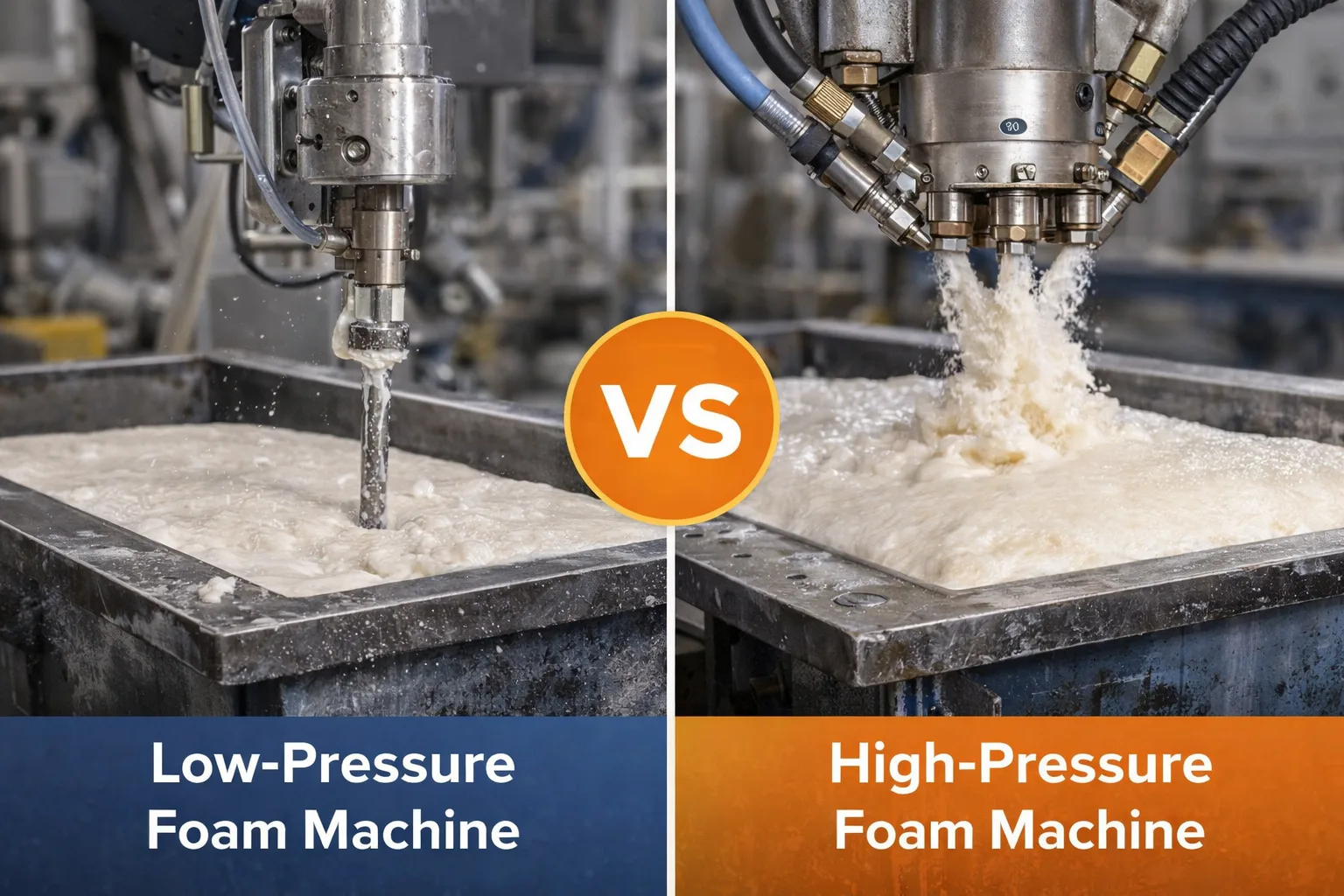
The Shift from Low-Pressure to High-Pressure Foam Making Machines
Low-pressure polyurethane foam machines were the starting point for many plants. They rely on mechanical stirring and gravity-fed mixing, and for basic applications, they can get the job done.
Problems start when production speeds increase or formulations change. Mixing becomes less consistent. Cleaning takes more time. Waste becomes part of the routine.
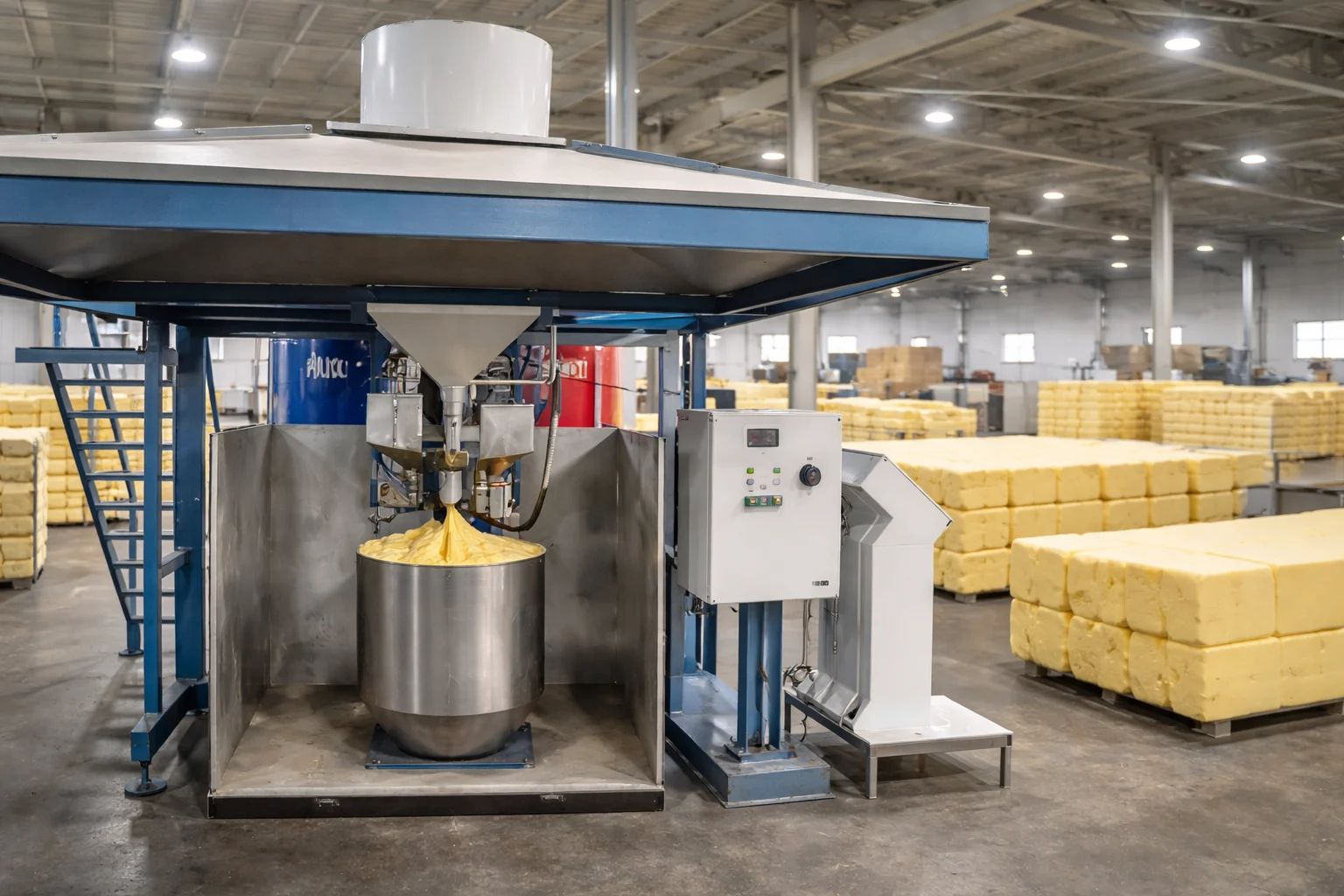
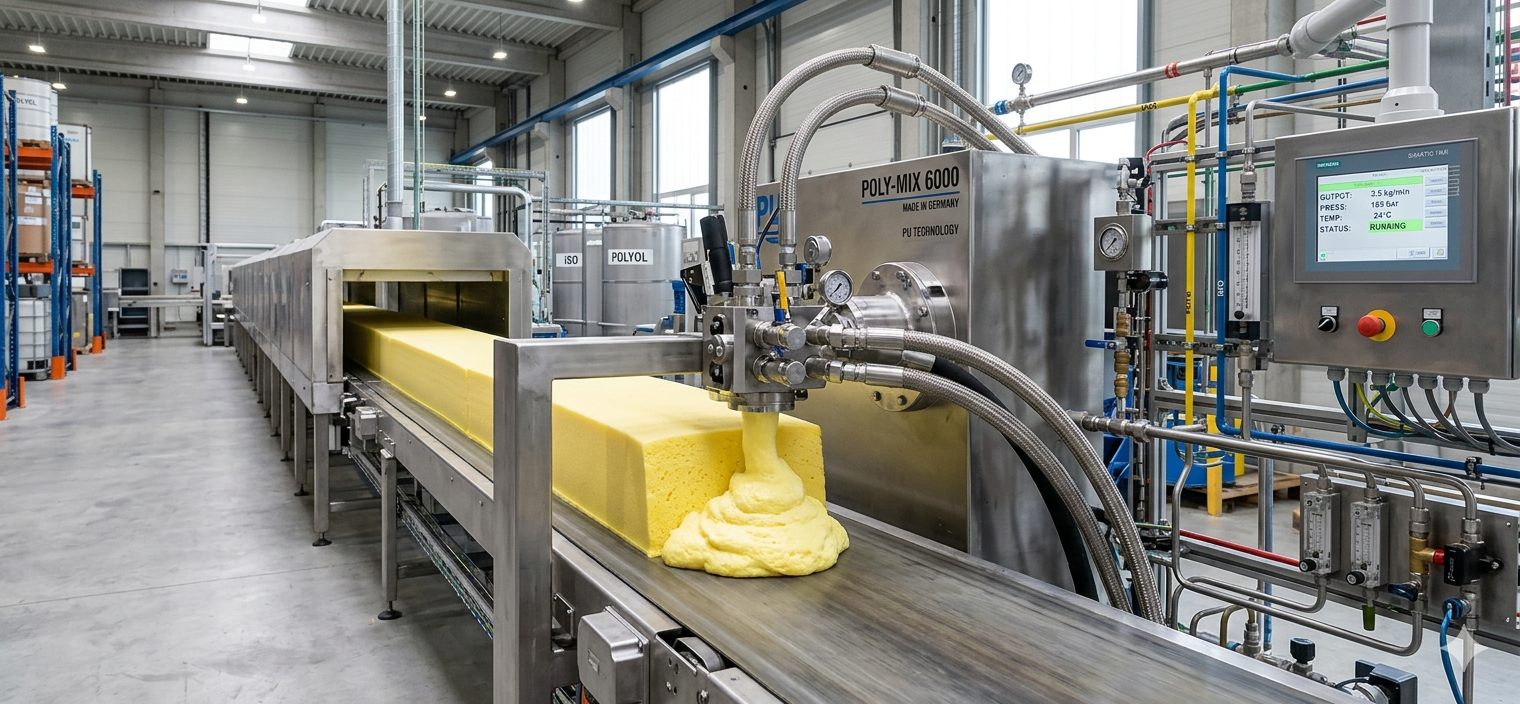
High-pressure foam making machines changed that balance. By injecting polyol and isocyanate at high pressure into a controlled mixing chamber, the reaction becomes more predictable. Mixing happens through impact rather than agitation.
In day-to-day production, this leads to:
- More stable mixing even at higher output
- Less dependence on constant operator adjustment
- Better control when formulations change
For many manufacturers, upgrading the PU machine is the point where production stops feeling fragile.
How High-Pressure PU Machines Reduce Raw Material Loss
Material loss in foam making machine production rarely looks dramatic. It is usually spread across cleaning cycles, advance shots, and small amounts of waste that feel unavoidable.
Low-pressure systems often rely on solvent flushing to keep the mixing chamber clean. That means raw material is sacrificed just to maintain the process.
High-pressure polyurethane foam machines reduce this loss by design. Because mixing is cleaner and more controlled, solvent flushing can often be removed from the process. Mechanical or air-based cleaning becomes sufficient.
Over time, this leads to:
- Lower raw material consumption
- Less chemical waste to manage
- More predictable operating costs
For many plants, this is where the real economic benefit becomes visible.
Advanced Mixing Head Design and Its Impact on Foam Quality
The mixing head is where good foam becomes possible or impossible. Even with correct ratios, poor mixing shows up quickly as defects.
German mixing head designs focus on balance. The aim is to keep the mixing energy centred and controlled, instead of letting turbulence spread through the chamber. When this balance is right, foam structure improves naturally.
Plants running these systems often see:
- More even density through the block
- Fewer surface issues
- Less variation between runs
Modern designs also allow adjustments without hardware changes. This matters for manufacturers producing different grades of foam on the same foam machine.
Precision Metering and Ratio Control in Modern PU Machines
Foam chemistry does not allow much flexibility. Small ratio errors can change curing behaviour and long-term performance.
German Polyurethane Foam machines treat metering as a core function, not a supporting one. Systems are built to stay accurate across different flow rates and material viscosities. This matters because production conditions rarely stay fixed.
Digital controls help reduce variability. Recipes can be programmed and repeated without relying on memory or manual fine-tuning. Across shifts, this consistency makes a noticeable difference.
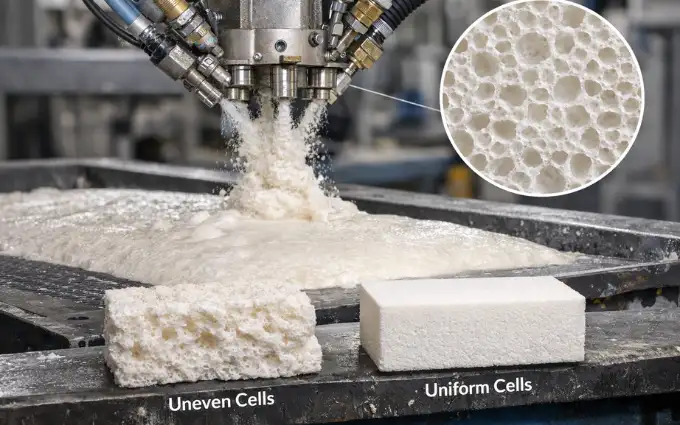
Improving Cell Structure with German Silicone and Air Mixing Technology
The internal structure of Polyurethane Foam affects how it feels and how long it lasts. That structure depends on how bubbles form and stabilise during the reaction.
German developments in silicone surfactants and air mixing focus on controlling this early stage. By introducing air more evenly before full mixing, foam rises with more uniform cells.
In practice, this results in:
- Cleaner surface finish
- More consistent foam feel
- Fewer internal weak spots
These changes may not be obvious at first glance, but they matter in finished products.
Waste Reduction and Yield Improvement in Foam Manufacturing
Waste from foam making machine is not always chemical. Often, it is physical.
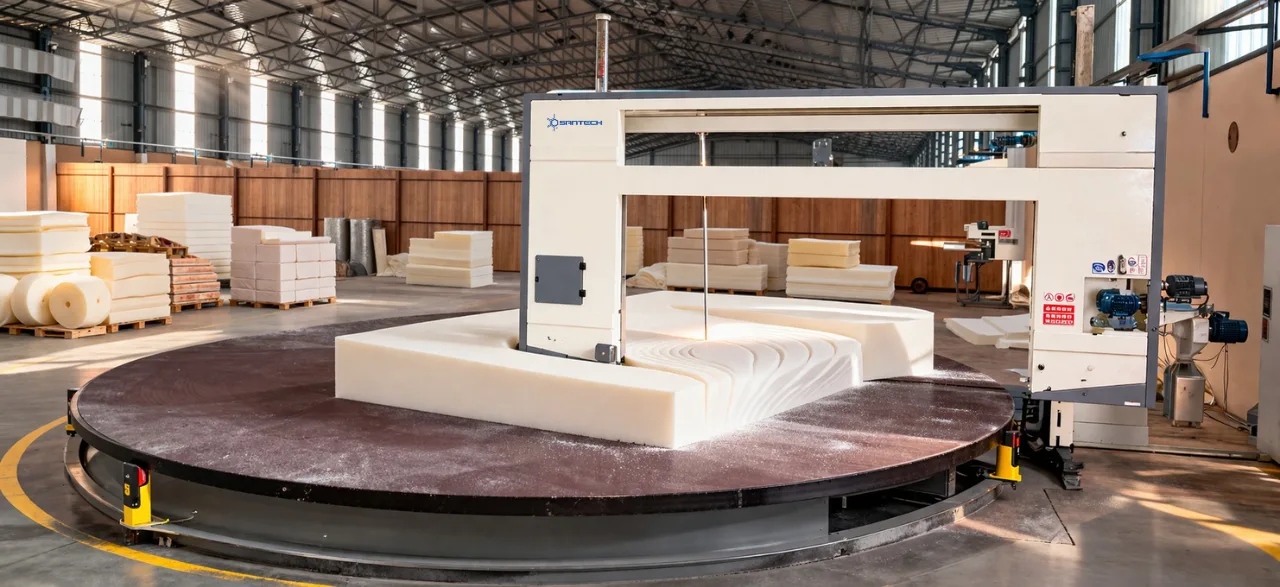
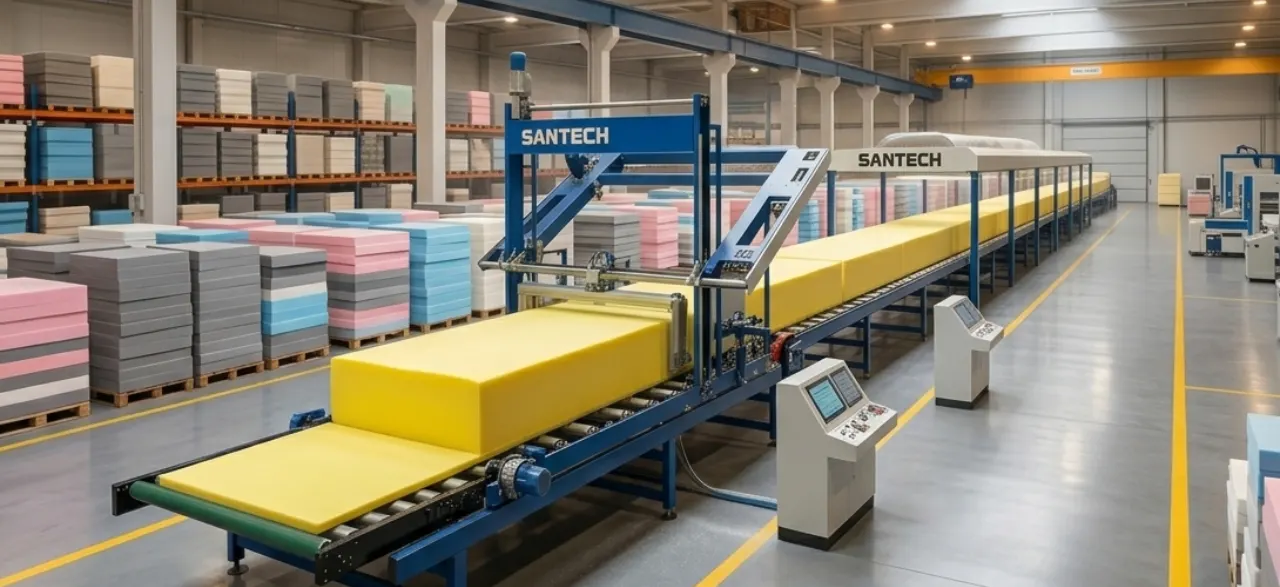
If slabstock blocks lose shape during rise or early cure, trimming becomes unavoidable. That trimming turns into waste, regardless of foam quality.
German-engineered systems help control block geometry during these early stages. When shape stays consistent:
- Trimming is reduced
- Yield improves
- Handling effort drops
In high-volume production, even small gains here add up quickly.
Environmental Compliance Through German Chemical Innovation
Environmental requirements for Polyurethane Foam have become stricter across markets. Emissions, odour, and fogging are now part of quality discussions.
German chemical innovation has focused on reducing emissions at the source. Reactive catalysts are designed to become part of the polymer network instead of migrating out over time. This reduces residual odour and helps meet indoor air quality standards.
For manufacturers supplying furniture, bedding, or automotive sectors, this makes compliance easier without changing core product performance.
CO₂ Blowing Agent Technology and Sustainable Foam Production
Sustainability in foam production increasingly involves changing how foam expands.
German technology has helped bring liquid CO₂ into practical use as a blowing agent. Injected under controlled conditions, CO₂ allows tight control over foam density while avoiding many environmental drawbacks of traditional blowing agents.
This approach offers:
- Lower environmental impact
- Better control over low-density foams
- More consistent cell structure
Supporting Bio-Based and Recycled Materials in PU Foam Production
Bio-based and recycled materials behave differently from traditional raw materials. They introduce variation in viscosity and reaction speed that can destabilise production.
German technology addresses this by treating sustainability as a system-level issue. Metering, mixing, and control systems are designed to handle wider variation without constant adjustment.
This reduces trial and error and shortens the path from formulation testing to stable production.
Why German Technology Delivers Long-Term Competitive Advantage
The advantage of German technology is not a single feature. It is how improvements reinforce each other over time.
Better metering supports consistency. Better mixing supports quality. Better control reduces waste. Better chemistry supports compliance.
Together, these elements create production systems that are reliable and difficult to replace.
Closing Perspective: What This Means for Foam Manufacturers Today
For Polyurethane Foam manufacturers, the value of German technology is practical. It shows up in fewer production surprises, steadier costs, and foam quality that customers can rely on.
As expectations around efficiency, sustainability, and consistency continue to rise, the technologies that keep the process stable become the ones that matter most. In PU foam production, stability is often the difference between managing problems and staying ahead of them.