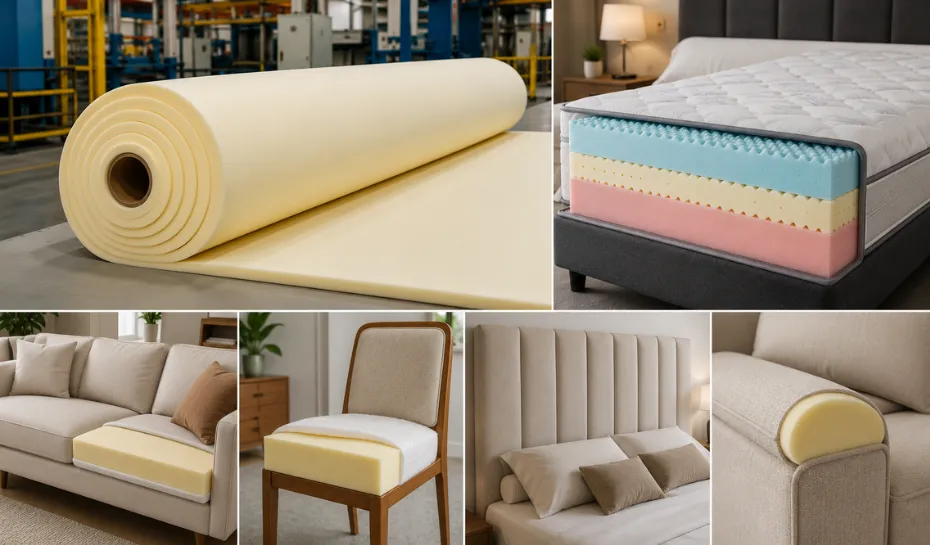
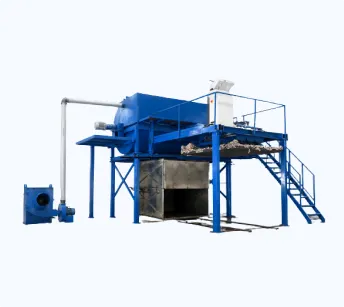
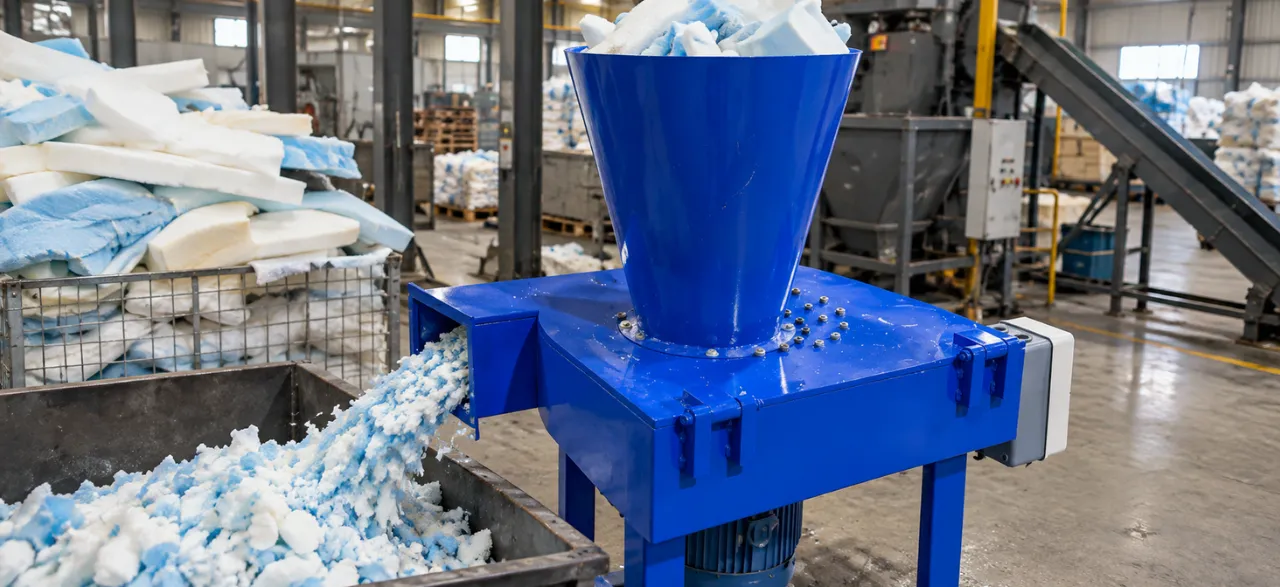
The best foam machine for mattress manufacturing depends on your required foam type, production volume, density range, block size, automation level, and future production needs. For manufacturers producing flexible polyurethane (PU) foam at industrial scale, the right foaming machine should provide consistent material mixing, controlled foam formation, reliable output, and compatibility with downstream cutting and processing equipment.
A foam production line typically involves several stages, including raw material preparation, controlled mixing, foaming, curing, block handling, and precision cutting. Choosing machinery that matches your production requirements can help manufacturers maintain consistent foam quality while improving production efficiency. For a broader overview of the process, explore this complete guide to foam production, including the role of foaming machines, production processes, and common manufacturing challenges.
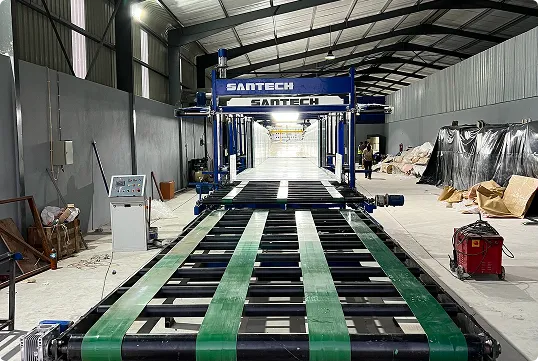
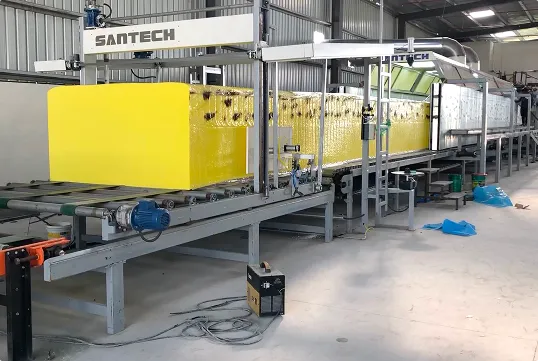
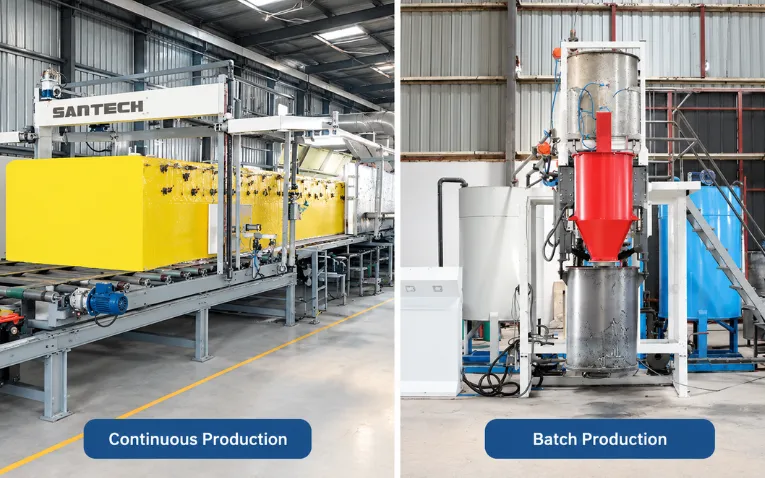
For large-scale operations, continuous foaming machines can be suitable where high and consistent production output is required. Batch foaming machines can be considered when manufacturers need greater flexibility for different production requirements.
What Is a Foam Machine Used for Mattress Manufacturing?
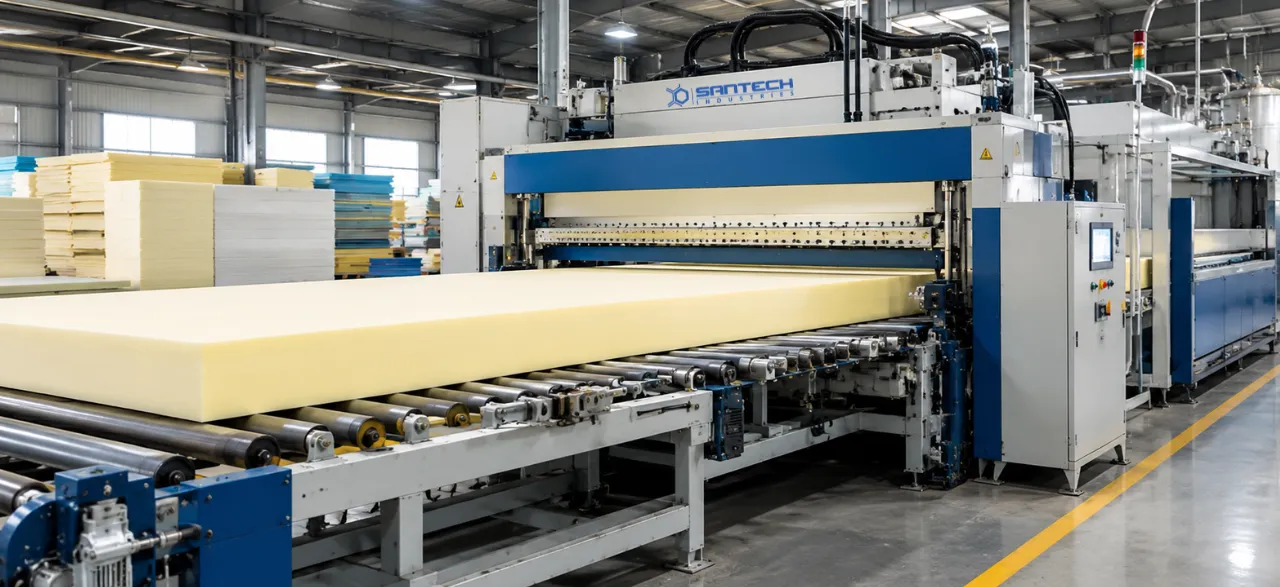
A foam machine for mattress manufacturing is industrial equipment used to produce foam from chemical raw materials under controlled processing conditions. In PU foam manufacturing, the machine combines and processes the required components to create foam with specified characteristics such as density, firmness, cell structure, and resilience.
The type of machine required depends on the manufacturer’s production model.
For example, a manufacturer producing large quantities of flexible PU foam blocks may require a continuous foaming machine, while a smaller operation or manufacturer producing different formulations in separate runs may consider a batch foaming system.
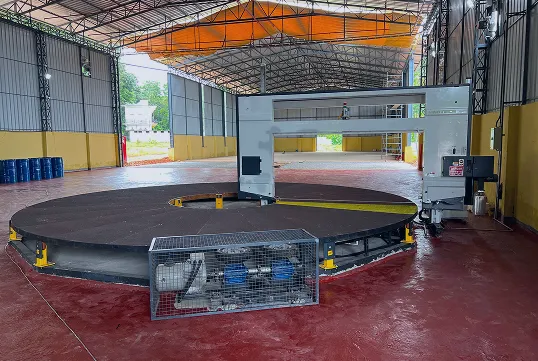
The foam produced by the machine can subsequently be processed using equipment such as foam cutting machines, horizontal cutters, vertical cutters, circular cutters, and other specialized machinery depending on the final mattress design.
Why Does the Foam Machine Matter in Mattress Production?
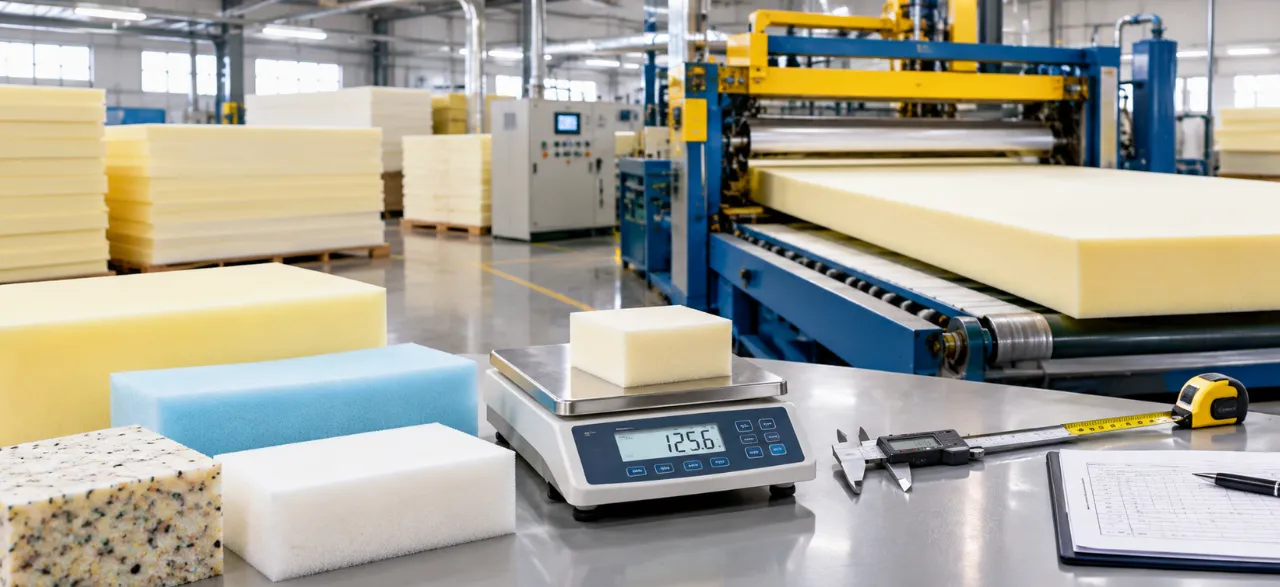
Foam is one of the most important components of many mattresses, so consistency during foam production is essential.
The foaming machine can influence important production parameters by providing controlled processing of the raw materials. Variations in processing conditions can affect characteristics such as foam density, structure, firmness, and overall consistency.
For mattress manufacturers, a suitable machine can support:
- Consistent foam production
- Repeatable production conditions
- Efficient material processing
- Higher production capacity
- Better integration with foam cutting equipment
- Reduced production interruptions
- More predictable manufacturing results
However, the machine alone does not determine final foam quality. Raw material formulation, material ratios, processing conditions, environmental conditions, curing, and quality-control procedures also have an important role.
This is why manufacturers should evaluate the complete production process rather than choosing a machine based only on advertised output.
How to Choose the Best Foam Machine for Mattress Manufacturing
There is no single foam machine that is best for every mattress manufacturer. The right choice depends on your production requirements and operating conditions. If you are planning a new foam manufacturing facility, it is also important to consider equipment investment, factory requirements, utilities, installation, and operating costs. See our guide on how much a foam manufacturing plant costs for a broader look at the factors involved in setting up a foam production facility.
1. Determine Your Required Production Capacity
Start by calculating how much foam you need to produce.
Consider:
- Daily production requirements
- Monthly production targets
- Number of production shifts
- Required block dimensions
- Expected future demand
A manufacturer with high-volume requirements may need a continuous production system, while a smaller or more flexible operation may find a batch system more appropriate.
2. Consider the Foam Type and Formulation
Before selecting a foam manufacturing machine, identify the type of foam you intend to produce.
Flexible PU foam used in mattresses can be manufactured with different formulations and target properties. Foam density is an important specification to consider because it helps manufacturers evaluate and control foam characteristics. Learn more about foam density before selecting your production equipment.
Your machine should be appropriate for the formulation and processing requirements specified for your production.
Discuss the intended formulation, density range, production method, and required output with the machinery manufacturer before finalizing equipment.
3. Evaluate Production Consistency
Consistency is particularly important in mattress foam production.
The machine should provide controlled processing conditions so manufacturers can work toward repeatable foam characteristics across production runs.
Important considerations include material metering, mixing, process control, monitoring, and the ability to maintain stable operating conditions.
4. Compare Continuous and Batch Production
The production method is one of the most important decisions when selecting a foam making machine for mattresses.
A continuous foaming machine is designed for ongoing foam production and can be suitable for manufacturers with higher-volume requirements.
A batch foaming machine produces foam in individual production cycles. This approach can provide greater flexibility when manufacturers need to manage different production requirements between batches.
Your decision should be based on production volume, formulation requirements, available space, workforce, investment capacity, and planned expansion.
5. Check Automation and Process Control
Automation can help manufacturers monitor and manage important production parameters.
When evaluating a machine, consider the available control system, monitoring functions, material metering, operating interface, and process adjustments.
The appropriate level of automation depends on your production requirements and the level of process control needed by your manufacturing operation.
6. Consider Energy Consumption
Energy consumption contributes to the operating cost of a foam manufacturing plant.
Instead of looking only at the purchase price, evaluate the machine’s overall operating requirements. Ask the manufacturer about power consumption, operating conditions, maintenance requirements, and expected production capacity.
This provides a more realistic understanding of the machine’s long-term operating cost.
7. Evaluate Maintenance and Service Support
Maintenance is an important part of keeping foam production equipment operational.
Before purchasing, ask about:
- Preventive maintenance requirements
- Spare parts availability
- Technical support
- Service response
- Operator training
- Recommended maintenance intervals
Accessible technical support can be particularly important when a foam machine is integrated into a larger manufacturing line.
8. Check Compatibility With Foam Cutting Equipment
Foam manufacturing does not end when the foam block is produced.
Mattress manufacturers may subsequently use foam cutting machines to convert large foam blocks into required dimensions and shapes.
Therefore, consider how the foaming system will fit into your complete production workflow, including block handling, curing, storage, horizontal cutting, vertical cutting, and other downstream processes.
Explore foam cutting machines to understand how foam-processing equipment can fit into the overall manufacturing process.
9. Consider Factory Space and Installation Requirements
The available factory area can influence your machinery selection.
Consider the machine’s footprint, material storage requirements, block-handling area, curing space, electrical requirements, ventilation, operator access, and space required for maintenance.
A production system should be planned around the complete workflow rather than the machine footprint alone.
10. Calculate Total Cost of Ownership
The purchase price is only one part of the investment.
Your total cost of ownership may include:
- Machine purchase cost
- Installation
- Energy consumption
- Maintenance
- Spare parts
- Labour
- Production downtime
- Training
- Supporting equipment
Comparing these factors can provide a clearer picture of the long-term investment.
Continuous vs Batch Foam Machines
| Factor |
Continuous Foaming Machine |
Batch Foaming Machine |
| Production method |
Continuous |
Individual batches |
| Suitable for |
Higher-volume production |
Flexible production requirements |
| Production flexibility |
Generally lower between continuous runs |
Generally higher between batches |
| Output planning |
Designed for ongoing production |
Planned by batch |
| Automation |
Can support highly controlled production |
Available at different automation levels |
| Best suited to |
Large-scale manufacturing |
Smaller or flexible operations |
The appropriate choice depends on your production model rather than simply choosing the machine with the highest stated capacity.