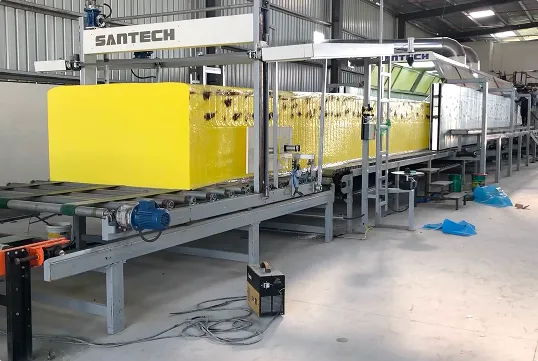


Indian foam factories will find that production setbacks do not always begin at the initial stages. The actual delay occurs when it is difficult to cut them at the same pace.
Cutting speed is important because it determines how many processed parts are moved to the next production stage per unit of time. Delayed cutting rates mean a buildup of foam on the floor, increased handling, and a compromised delivery schedule. In such cases, a common solution to meet growing demands is to add more labour or work extra hours.
As the demand is growing for furniture, mattresses, packaging, and insulation industries, companies are now starting to see that faster production is not only about producing more foam. It depends heavily on how efficiently that foam is cut, sized, and prepared for what comes next.
The Role of Foam Cutting in the Production Line
Foam cutting is often treated as a supporting activity. In reality, it controls the flow of the entire line.
A foam cutting machine affects:
- Dimensional accuracy of parts
- Ease of assembly or further processing
- How much usable material comes from each block
When cutting accuracy is poor, the impact shows up later. Parts do not fit properly. Trimming increases. Rejection becomes common. These problems are time-consuming to fix.
When cutting stays consistent, the rest of the process becomes easier. Conversion teams work faster. Rework reduces. Finished goods move instead of waiting on the floor.
What Makes a Foam Cutting Machine Advanced
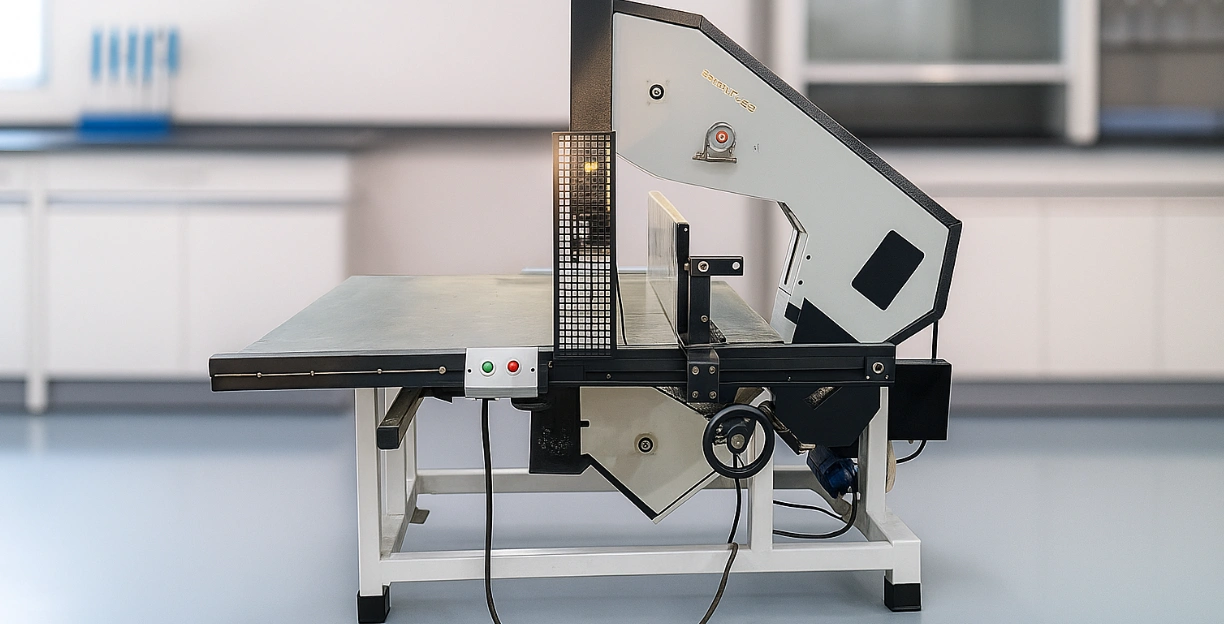
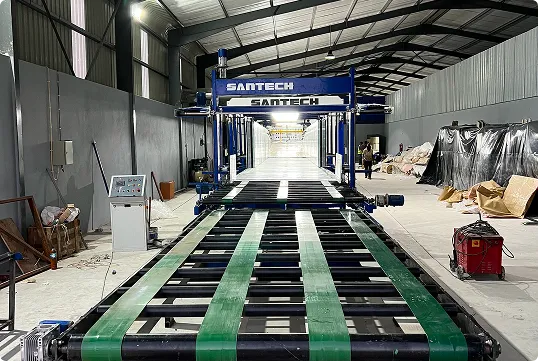
An advanced foam cutting machine is not just a faster machine. Many older machines can be run faster, but accuracy drops quickly when that happens.
Modern cutting systems are built to stay stable while running at higher speeds. They control several things together:
- Blade movement and tension
- Feed rate
- Machine rigidity and vibration
What makes these machines advanced is not complexity. It is repeatability. They cut the same shape again and again without gradual variation. This allows manufacturers to increase output without adding more inspection or correction work.
Circular Foam Cutting Machines and Their Industrial Applications
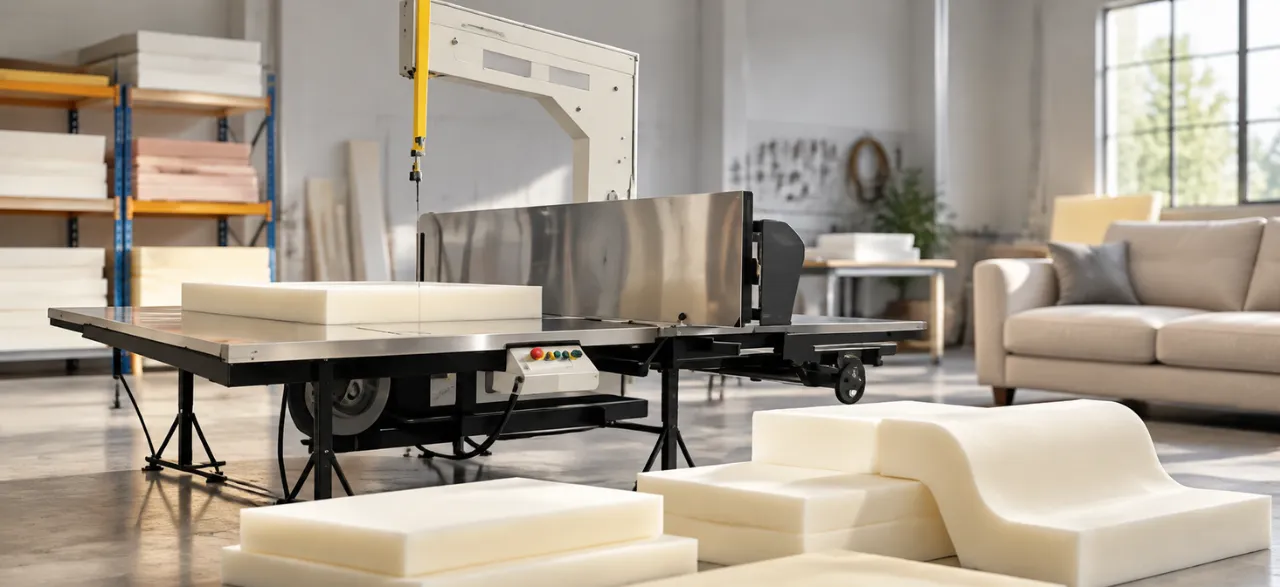
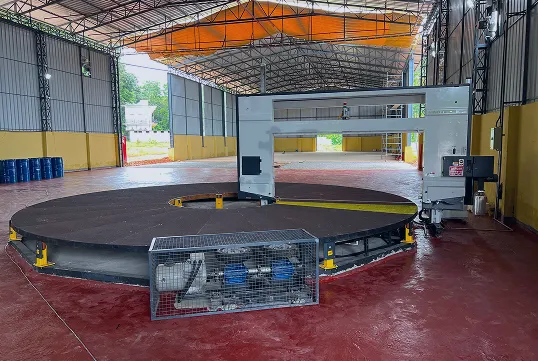
Circular foam cutting machines are commonly used in Indian plants where the same shapes are produced in large numbers.
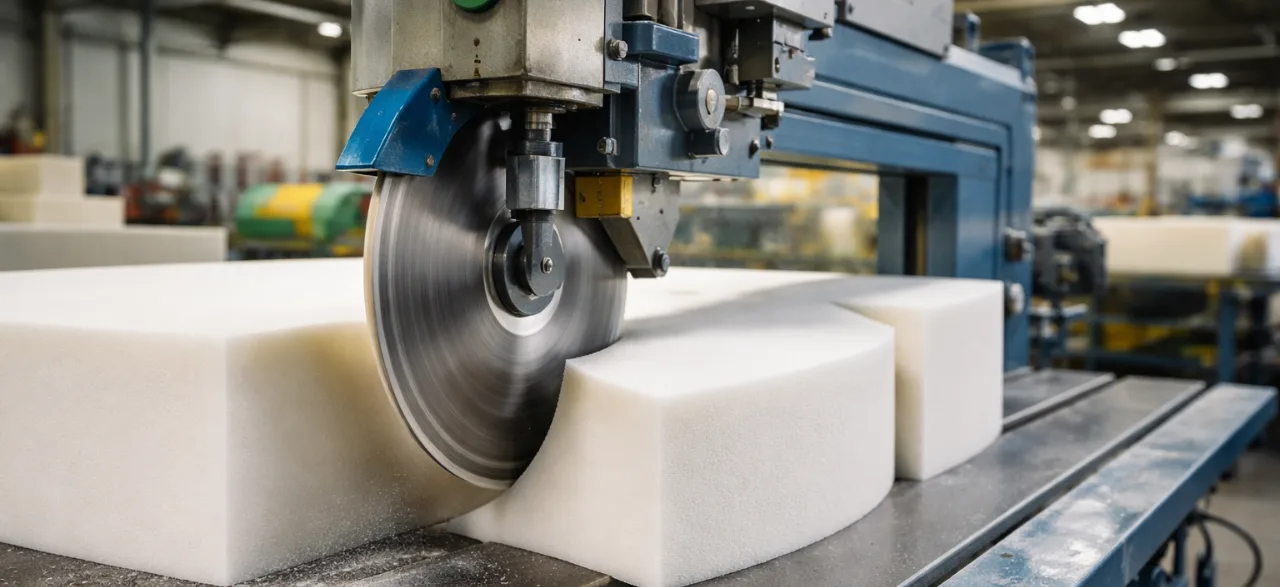
These machines use a rotating blade to cut foam blocks into uniform profiles. They are widely used for:
- Mattress production
- Cushion and seating parts
- Packaging and protective foam
A circular foam cutting machine works well when smooth curves or continuous cuts are needed. Compared to straight cutting machines, it offers better control in these cases and keeps variation low even at higher output levels.
Improving Production Speed Without Sacrificing Accuracy
A common mistake in foam plants is increasing cutting speed without changing the cutting system. Output increases for a short time. Then quality issues appear.
Advanced cutting machines are designed to run faster without losing control. Blade stability, feed movement, and machine structure are designed to work together.
When this balance is maintained:
- Cutting cycles reduce
- Edges stay clean
- Rework does not increase
Speed becomes manageable instead of stressful for the production team.
Waste Reduction Through Precision Foam Cutting
A large part of foam waste is created during cutting. Inaccurate cuts lead to trimming, rework, and rejected pieces.
Precision cutting helps reduce this by keeping each cut where it is supposed to be. Over time, this improves how much usable foam comes from each block.
The impact is straightforward:
- Less trimming
- Less scrap
- Lower handling and disposal effort
With raw material costs changing frequently, reducing waste becomes an important part of cost control.
Automation and Operator Efficiency in Foam Cutting
Labour availability and skill consistency are ongoing issues in Indian factories. Advanced foam cutting machines help reduce dependence on constant manual adjustment.
Automation supports production by:
- Reducing setup time
- Making changeovers faster
- Keeping output consistent across shifts
Operators rely less on personal judgement and more on programmed settings. This reduces errors and makes it easier to scale production.
Choosing the Right Foam Cutting Machine for Indian Conditions
Production conditions in India are not the same everywhere. Some plants have limited space. Others process different foam types on the same line. Power supply and layout also matter.
When choosing a foam cutting machine, manufacturers need to look at:
- Actual production volumes
- Foam thickness and density range
- Available space and workflow
A machine that fits the plant’s conditions will perform better than one chosen only based on specifications.
Why Indian Manufacturers Are Upgrading Cutting Systems
Many Indian manufacturers are upgrading cutting systems even though older machines still run.
The reason is simple. Expectations have changed.
- There are shorter delivery schedules.
- Customers anticipate greater consistency.
- The expense of labour and operations is increasing.
Modern cutting systems help meet these demands without increasing complexity. Faster output with stable quality makes upgrades a practical decision.
The Role of Foam Machine Manufacturers in Production Success
The machine is not the only factor that affects cutting performance. Support is crucial.
Reliable suppliers of foam machines provide:
- Support throughout the setup procedure
- Service with available spares
- Assistance with future updates
As equipment is being operated on a daily basis, timely support and clear instructions become crucial for avoiding interruptions.
Key Questions to Ask Before Investing in a Foam Cutting Solution
Before investing in a new cutting system, manufacturers should focus on practical questions rather than specifications alone.
Important questions include:
- Will this machine support future growth
- How easy is maintenance and spare access
- Can it handle different foam types
Clear answers help avoid equipment that looks good but does not perform well long term.
Final Perspective: Faster Production Starts with Better Cutting
In foam manufacturing, cutting is not just a finishing step. It controls how smoothly the entire operation runs.
Advanced foam cutting solutions allow manufacturers to increase speed without increasing waste or pressure on workers. They improve yield, keep quality stable, and help meet growing demand.
In the long term, faster production does not come from pushing machines harder. It comes from cutting systems that work consistently, every day.