

How to cut foam accurately depends on the foam type, required thickness, cutting shape, and production requirements. From manual cutting tools to industrial foam cutting machines, choosing the right method is essential for achieving clean edges, uniform dimensions, and minimal material wastage. For manufacturers processing polyurethane (PU) foam, the appropriate cutting equipment also helps maintain consistent quality and improve production efficiency.
Foam cutting plays an important role in mattress manufacturing, sofa production, furniture, automotive interiors, and packaging. Different applications require different cutting techniques, including horizontal, vertical, circular, and contour cutting.
So, what is the best way to cut foam, and which foam cutting machine should you choose? This guide explores seven types of foam cutting machines, their uses, and key selection factors to help manufacturers find the right PU foam cutting solution.
How Can You Cut Foam Using Different Cutting Methods?
Foam can be cut manually or through specialised industrial machinery. The appropriate method depends on the foam material, block dimensions, required shape, and cutting accuracy.
The most common foam cutting methods include:
- Manual cutting: Uses sharp knives or handheld cutting tools for small foam pieces and simple shapes.
- Horizontal cutting: Divides large foam blocks into sheets of consistent thickness.
- Vertical cutting: Cuts foam slabs into specific lengths, widths, and dimensions.
- Circular cutting: Processes foam blocks into uniform sheets using a rotating cutting arrangement.
- Contour cutting: Produces customised shapes, curves, and specialised profiles.
- Peeling: Converts large foam blocks into continuous thin sheets.
- Angle cutting: Creates foam components with adjustable angular profiles.
For small DIY applications, manual cutting may be sufficient. However, commercial foam manufacturing requires specialised machinery to achieve repeatable results and improve production efficiency.
Explore the different industrial foam cutting machines used for processing PU foam blocks, sheets, and customised components.
Which 5 Foam Cutting Machines Are Used in Industrial Manufacturing?
Different foam cutting machines are designed for specific manufacturing operations. Understanding their functions helps manufacturers select suitable equipment for mattress, furniture, upholstery, and other foam-processing applications.
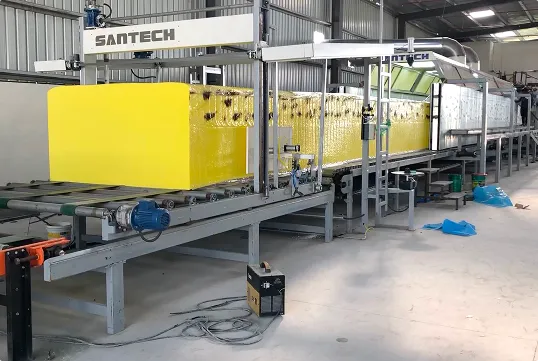
1. Horizontal Foam Cutting Machine for Uniform Foam Sheets
A horizontal foam cutting machine is used to slice large PU foam blocks into thin sheets of the required thickness. The machine uses a horizontal cutting arrangement to produce uniform foam layers.
Main applications:
- Cutting foam sheets for mattresses.
- Producing layers for sofas and cushions.
- Preparing foam for lamination and further processing.
- Manufacturing uniform foam slabs.
Why is it useful?
It helps manufacturers maintain consistent sheet thickness and improve productivity when processing large foam blocks.
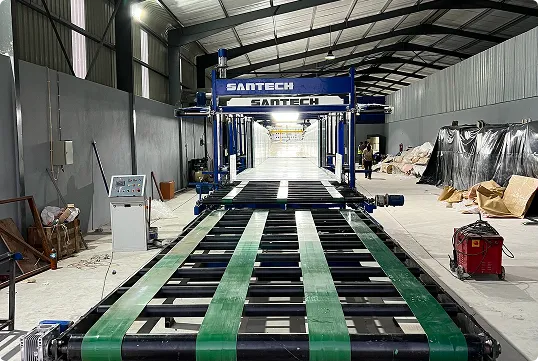
2. Vertical Foam Cutting Machine for Foam Block Sizing
A vertical foam cutting machine cuts foam blocks and slabs in a vertical direction. It is commonly used for trimming block edges, dividing foam into smaller sections, and producing components with specific dimensions.
Main applications:
- Cutting foam slabs into required sizes.
- Trimming irregular foam block edges.
- Producing mattress and furniture components.
- Processing flexible PU foam and bonded foam.
Manual vertical machines are suitable for controlled cutting operations, while automatic versions can improve repeatability and reduce manual handling.
For manufacturers handling regular production requirements, an automatic vertical foam cutting machine can help streamline foam sizing and trimming operations.
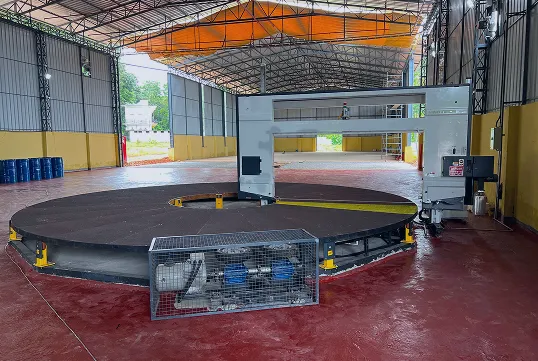
3. Circular Foam Cutting Machine for Industrial Sheet Production
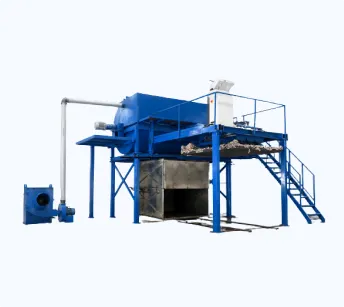
A circular foam cutting machine converts large PU foam blocks into uniformly sized sheets. It uses a rotating table and a fixed cutting arrangement to support consistent sheet processing.
Main applications:
- Producing uniform foam sheets.
- Processing large PU foam blocks.
- Manufacturing mattress components.
- Supporting repetitive industrial cutting operations.
When should you choose it?
It is suitable for manufacturers requiring repetitive sheet production and controlled cutting thickness across multiple production cycles.
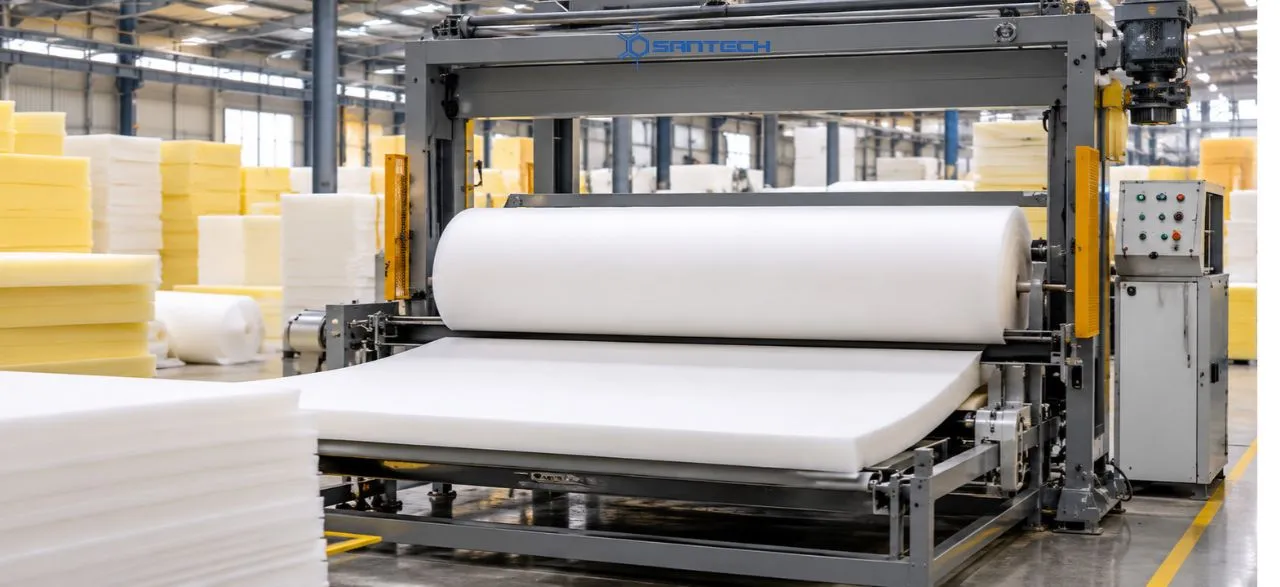
4. Foam Peeling Machine for Continuous Thin Sheets
A foam peeling machine converts large foam blocks into continuous thin sheets by removing layers from the block surface.
This process allows manufacturers to produce foam material in different thicknesses for further conversion.
Main applications:
- Manufacturing thin foam sheets.
- Producing upholstery foam layers.
- Processing foam for mattress applications.
- Preparing foam for lamination.
Peeling machines are useful for manufacturing facilities that require continuous foam sheet production.
5. Pillow Edge Foam Cutting Machine for Cushion Shaping
A pillow edge foam cutting machine shapes foam cushion edges to create rounded or pillow-style profiles. It helps manufacturers achieve consistent finishing across multiple cushion components.
Main applications:
- Sofa cushion manufacturing.
- Pillow-shaped foam products.
- Upholstery applications.
- Uniform cushion edge finishing.
This machine is particularly useful for furniture manufacturers producing cushions with standardised shapes.
Which Foam Cutting Machine Is Best for Different Applications?
Each foam cutting machine performs a different operation. Comparing their functions makes it easier to identify the appropriate equipment.
| Machine Type | Primary Function | Suitable Application |
|---|---|---|
| Horizontal | Cutting uniform foam sheets | Mattress and upholstery foam |
| Vertical | Trimming and block sizing | Foam slabs and furniture |
| Circular | Repetitive sheet cutting | Industrial foam processing |
| Contour | Creating customised shapes | Automotive and specialised components |
| Peeling | Producing continuous thin sheets | Upholstery and lamination |
| Pillow Edge | Shaping cushion edges | Sofa and cushion manufacturing |
| Variable Angle | Cutting adjustable angular profiles | Custom foam components |
The right choice depends on the required cutting operation, foam block dimensions, production capacity, and finished product specifications.
How Should You Choose the Right Foam Cutting Machine?
Selecting suitable equipment requires more than comparing machine prices. Manufacturers should evaluate their current production requirements and future processing needs.
Consider these six factors before purchasing:
1. What Type of Foam Will You Process?
Identify whether you will cut flexible PU foam, bonded foam, or other foam materials. Different materials and densities may require different blade configurations and cutting settings.
2. What Cutting Dimensions Do You Require?
Consider the maximum foam block size, required sheet thickness, cutting length, and final product dimensions.
3. How Much Production Capacity Do You Need?
Small processing units may benefit from manual machinery, whereas high-volume manufacturing facilities may require automated cutting equipment.
4. How Important Is Cutting Accuracy?
Choose machinery that can maintain consistent dimensions and minimise uneven edges and unnecessary material wastage.
5. What Are the Maintenance Requirements?
Evaluate blade replacement, servicing, energy consumption, spare parts, and operator training.
6. Can the Machine Support Future Production Requirements?
Consider whether the equipment can accommodate changes in production volume, foam dimensions, and cutting applications.
How Can You Improve Foam Cutting Accuracy and Reduce Material Waste?
Selecting the right machine is only one part of achieving consistent foam cutting quality. Proper operation, maintenance, and material handling also influence the finished product.
Follow these practices:
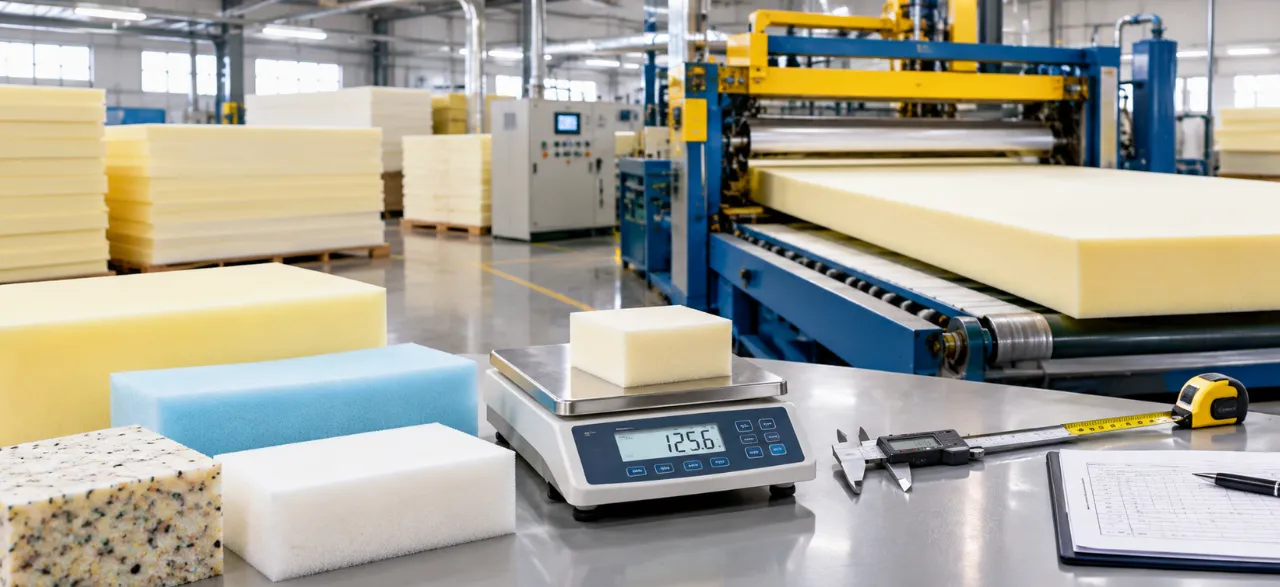
- Measure foam blocks accurately: Check dimensions before starting the cutting operation.
- Maintain sharp cutting blades: Inspect blades regularly and replace them when necessary.
- Use suitable cutting settings: Adjust machine speed according to material characteristics and equipment specifications.
- Keep foam blocks stable: Ensure the material remains properly positioned during cutting.
- Inspect finished dimensions: Check thickness, length, and edge quality.
- Maintain machinery regularly: Follow preventive maintenance schedules.
- Follow operating instructions: Use equipment according to the manufacturer’s safety guidelines.
These practices help manufacturers reduce avoidable cutting errors, improve material utilisation, and maintain consistent foam dimensions.
For more guidance, read our article on improving foam cutting accuracy.
How Can You Select the Best Way to Cut Foam for Your Business?
Understanding how to cut foam starts with identifying the material, required dimensions, shape, and production volume.
Manual tools may be suitable for small projects, while industrial foam cutting machines provide specialised solutions for large-scale manufacturing.
Horizontal, vertical, circular, contour, peeling, pillow edge, and variable angle machines each perform different cutting operations. Selecting the appropriate equipment helps manufacturers achieve consistent dimensions, minimise material wastage, and improve production efficiency.
With over 28 years of industry experience, Santech Foam Machines provides industrial foam processing and cutting solutions for different manufacturing requirements.
Looking for suitable foam cutting machines for your manufacturing unit? Contact Santech Foam Machines to discuss your production requirements and explore the right equipment for your application.