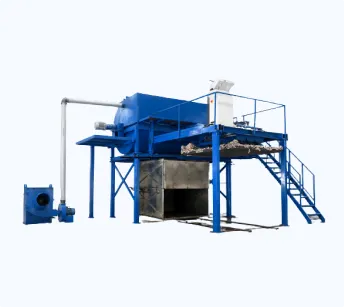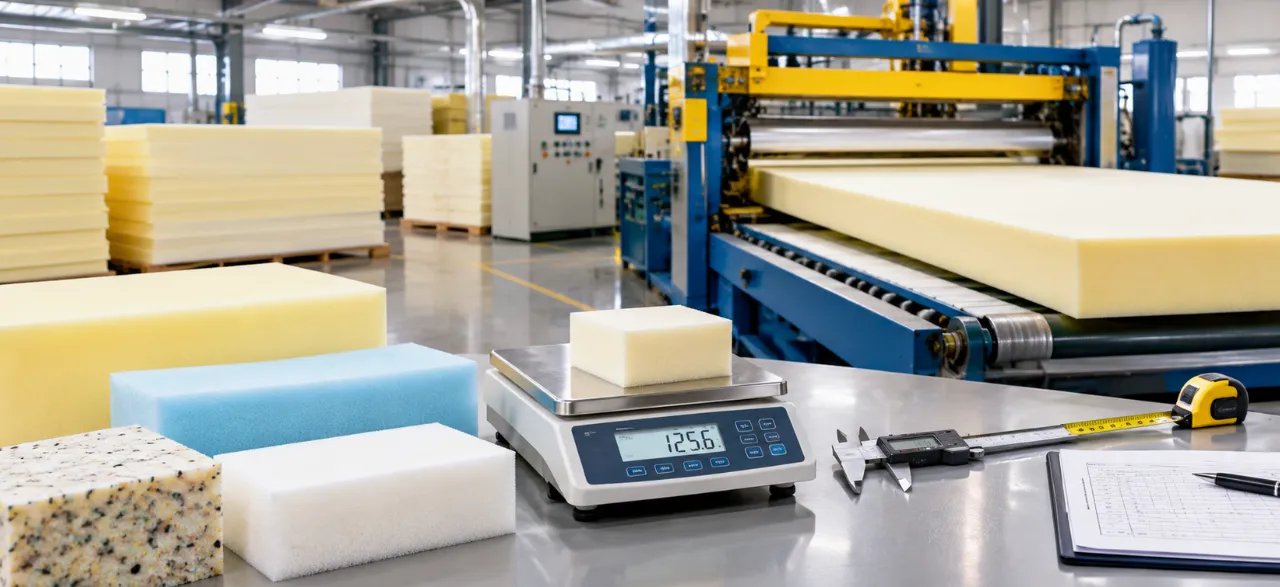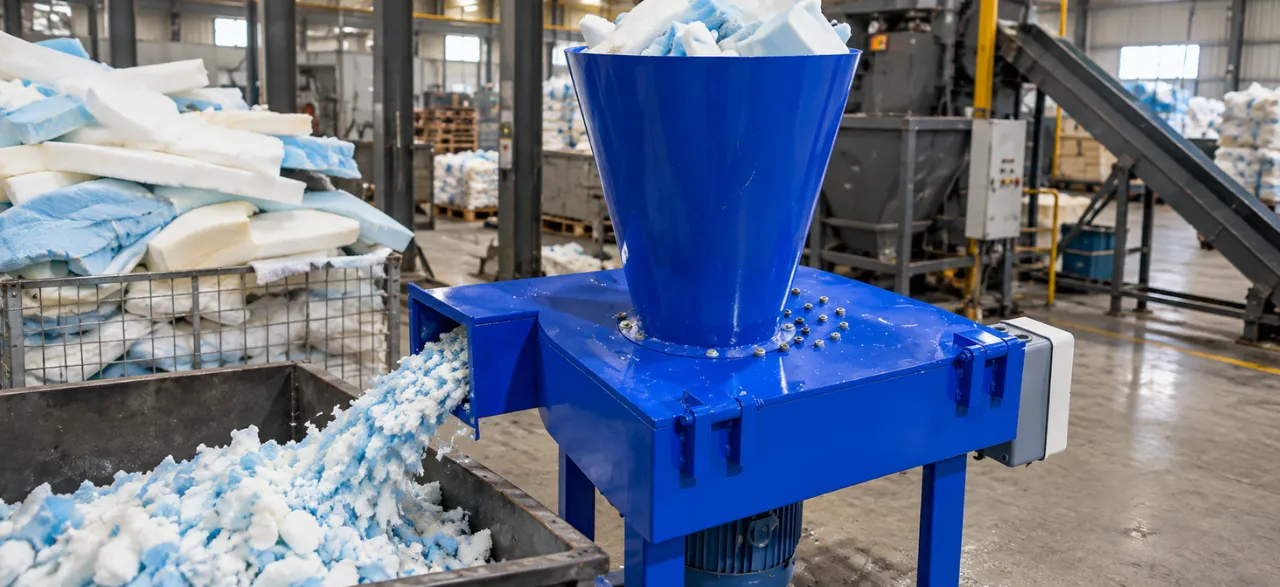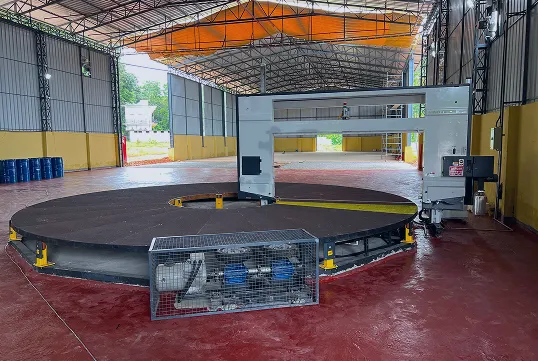
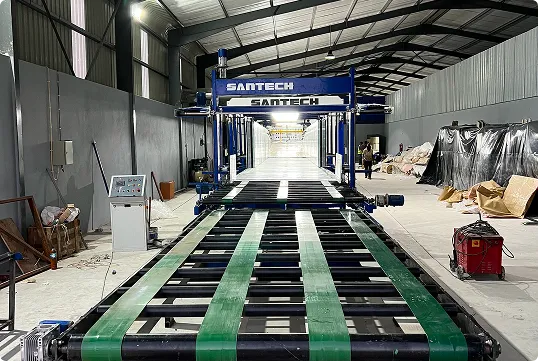
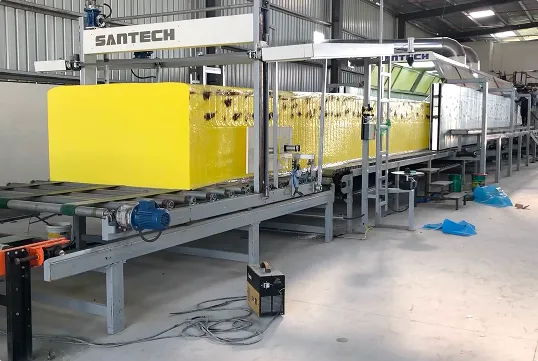
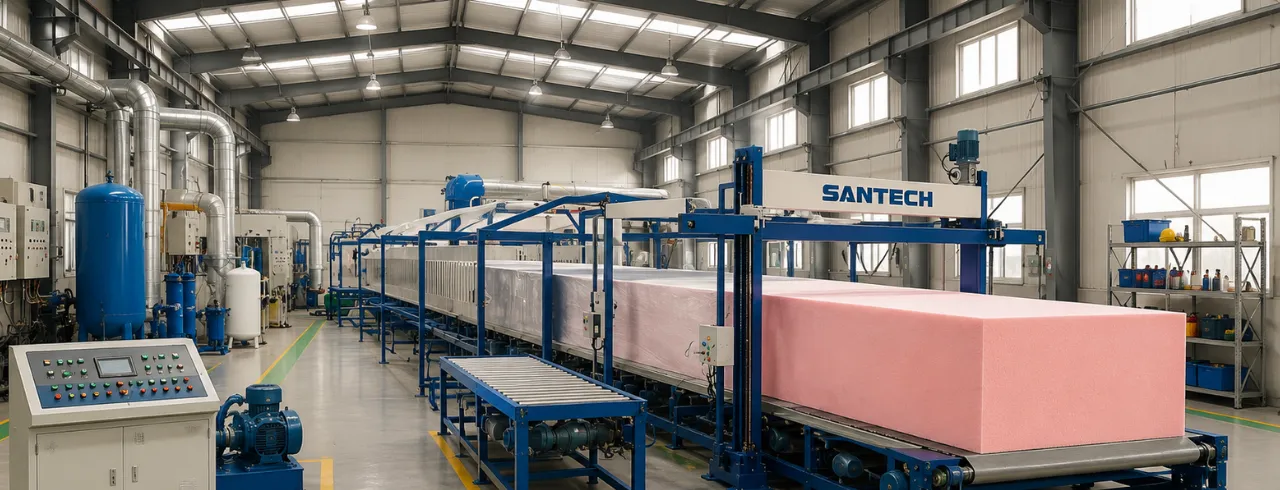


The space required to set up a foam manufacturing plant depends on production capacity, foam type, machinery selection, and facility layout. A small foam unit may require limited space for batch production, while large-scale facilities using continuous foaming machines need dedicated areas for raw material storage, foaming, curing, cutting, and finished product handling.
Choosing the right layout and machinery from experienced foam machine manufacturers in India helps manufacturers optimize workflow, improve safety, and maintain consistent foam production. A well-planned foam plant includes proper space allocation for equipment installation, chemical storage, ventilation, quality control, and future expansion.
This guide explains the ideal space requirements for a foam manufacturing plant, key layout considerations, and how efficient planning improves production performance.
Begin With Your Production Type
The type of PU foam machine you choose also influences the overall plant size. Batch machines are suitable for smaller facilities, while continuous PU foam machines require additional space for conveyors, curing, and material handling.
| Foam Production Type | Approximate Space Required | Key Space Requirements |
|---|---|---|
| Small Foam Plant | 3,000–5,000 sq. ft. | Suitable for compact setups with basic machinery, raw material storage, curing area, and limited production capacity. |
| Medium-Scale Foam Plant | 6,000–12,000 sq. ft. | Provides space for curing, foam cutting, finished goods storage, material handling, and improved production workflow. |
| Large Continuous Foam Production Plant | 15,000+ sq. ft. | Requires space for continuous foaming lines, conveyors, large foam blocks, storage areas, and high-volume manufacturing operations. |
The exact foam manufacturing plant area depends on machinery footprint, production capacity, foam type, storage requirements, safety standards, and future expansion plans.
Primary Areas In a Foam Plant
Well, a good foam plant should not feel cluttered or crowded. Every section should be able to offer support for smooth production, easy supervision, and safer movement.
Storage of Raw Materials
This area in particular should be able to store various chemicals like polyols, isocyanates, catalysts, and other additives that are used in foam production. Make sure that it is separate from the main working zone and planned with sufficient ventilation, spill control, and access restrictions.
Additionally, you should keep ample space for drums, tanks, pumps, and the safe movement of workers. Chemical space should never be moved into a corner to save space.
Foaming Area
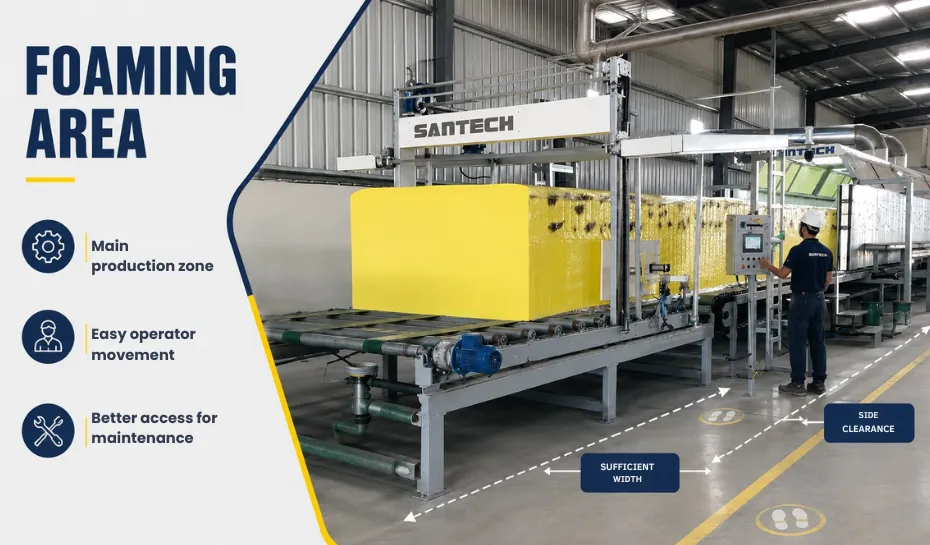
This is the main production zone where the foam making machine is installed. Whether you are using a batch foaming machine or a continuous foaming machine, this area requires sufficient width, height, and side clearance for efficient production.
Curing Space
Foam blocks require time and space after production. This is one such area that many new plant owners take for granted.
You cannot always send fresh foam blocks directly for cutting and packaging. They need to rest, stabilise, and cool properly. If a curing area is too small, the production flow will gradually slow down.
Cutting Section
Once curing is completed, foam blocks are moved for cutting, trimming, and shaping. This can include horizontal cutting machines, vertical cutting machines, peeling machines, and other foam cutting equipment.
Make sure that you plan sufficient room space for each machine for loading and unloading blocks. Since foam blocks can be heavy, tight spaces can turn into daily stress.
Finished Goods Storage
Finished foam sheets, blocks, rolls, or cushions should be organized properly in storage. This section should be close to the dispatch area but also away from raw chemical storage.
In case your business handles different densities, sizes, and customer orders, storage planning becomes even more important.
Utility and Maintenance Area
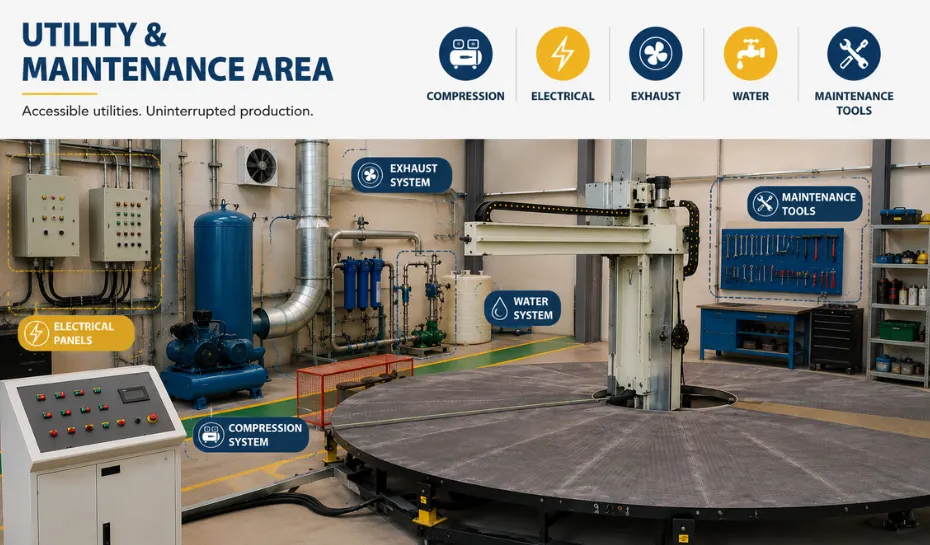
A foam plant may require compression systems, electrical panels, exhaust systems, water systems, maintenance tools, and other supporting utilities. These should be placed in accessible locations without affecting production movement or workflow. Proper space planning is also important for installing and maintaining foam cutting equipment, as adequate service clearance helps ensure safe operation, easy maintenance, and efficient performance.
Importance of the Layout Flow
Space alone does not make a plant sufficient. The overall flow of the movement is also important. Well, your layout should adhere to the given sequence:
- Raw material receiving
- Storage of materials
- Foaming area
- Curing space
- Cutting and shaping
- Quality check
- Storage of finished goods
- Packing and dispatch
This flow will help in reducing unwanted movement by also offering support to the workers so that they understand the process clearly.
A poorly designed layout might force workers to move foam blocks across the same path over and over again. That will waste time, increase handling efforts, and create safety risks.
Consider the Height
There are plenty of factory owners who only focus on square feet. But height is equally important in foam production.
Foam blocks can be large. As a result, some machines may also require overhead clearance for tanks, ducts, exhaust lines, conveyors, and lifting arrangements. In case the ceiling is very low, installation and daily operations can become a task.
So, before choosing the site, check for the machine height, tank height, ventilation needs, and movement clearance.
Don’t Count the Safety Zone As Extra Space
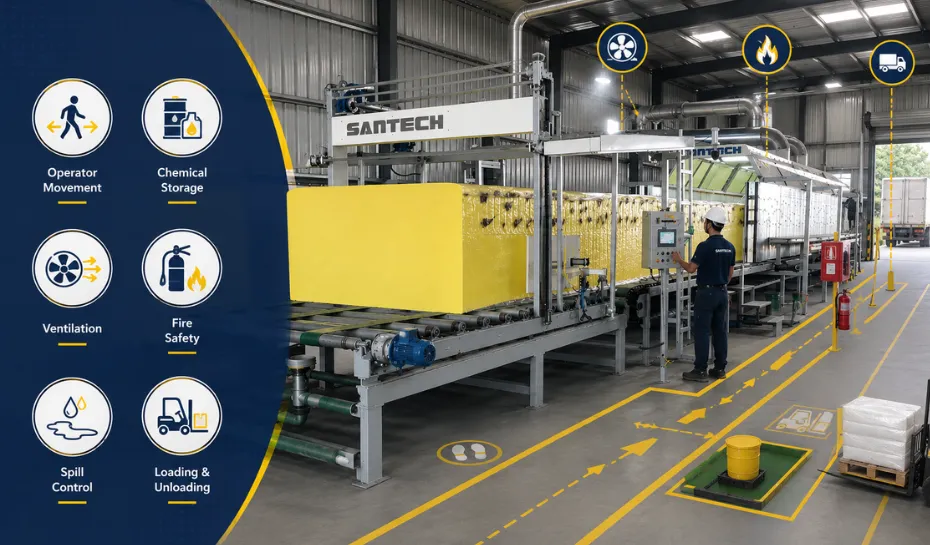
Safety spaces are not optional. A foam manufacturing plant should always have clear pathways, emergency exits, ventilation, fire safety equipment, and chemical handling zones.
The layout should also include the following:
- Space for clear operator movement
- Separate chemical storage
- Proper exhaust and ventilation points
- Fire safety access
- Arrangements for spill control
- Areas for safe loading and unloading
Plan for Expansion
Even if you are starting small, it is always a good idea to leave room for growth. You can later add more cutting machines, storage racks, conveyors, and a large foaming line.
A plant that is planned for only today can become rigid within a few years. However, a flexible layout will help you to scale without shifting the complete setup.
Whenever you plan to seek help from the foam machine manufacturers of India, you should also discuss your present production goals and your plans. After all, a good manufacturer will be able to suggest a layout that supports both.
Wrapping Up
The space required for a foam manufacturing plant depends on your production type, machinery selection, output capacity, and layout requirements. A small batch foam setup may operate in a compact industrial space, while a continuous foam production line requires a larger facility with dedicated areas for foaming, curing, cutting, storage, and utilities.
Proper space planning not only improves workflow and safety but also affects the overall foam manufacturing plant cost by influencing machinery installation, infrastructure, and operational requirements. Selecting the right foam machine based on your production goals is essential, as every machine has different space, power, and clearance requirements.
Before setting up your plant, consult experienced foam machine manufacturers in India for accurate guidance on machinery selection, layout planning, and factory requirements. A well-designed foam plant helps manufacturers achieve efficient production, consistent quality, and long-term business growth.