ISO vs Non-ISO Foam Manufacturers | Key Differences
Product Categories
Foam Machine Accessories

Foam machine accessories by Santech Foam Machines support foam production systems for smooth and efficient machine operation.

Foam Machine Accessories
Foaming Machines

Explore foaming machines engineered for dependable operation and foam consistency.

Foaming Machines

ISO vs Non-ISO Foam Manufacturers: What’s the Real Difference?

Whether you are purchasing foam products or planning to set up a production line, the majority of buyers compare the prices first. However, one of the most vital differences that cannot be ignored is certification and quality systems. The debate revolving around the ISO vs. non-ISO foam manufacturers is not limited to paperwork. But it is also about uniformity, safety, efficiency, and long-term value. 

Whether you’re sourcing foam sheets, mattresses, insulation boards, or industrial cushioning, understanding these basic differences will enable you to make informed decisions. Always remember that for any PU foam manufacturer, quality control is the backbone of reliable and stable production. 

ISO vs Non-ISO Foam Manufacturers

What Does ISO Mean in Foam Manufacturing?

ISO is mainly used to define standards that have been set up by the International Organisation for Standardisation. In fact, in manufacturing, the most common certification is ISO 9001, which primarily focuses on quality management systems. 

Well, for a foam manufacturer, this means having a well-structured system in place for 

  • Batch uniformity 
  • Raw material checks 
  • Production monitoring 
  • Staff training 
  • Documentation 
  • Corrective actions 
  • Customer satisfaction 

In simple terms, an ISO-certified manufacturer works with a well-defined roadmap and not guesswork. 

For modern PU foam producers, ISO systems help in maintaining density, firmness, resilience, and overall product performance across repeated production runs. 

What Is a Non-ISO Foam Manufacturer?

A non-ISO manufacturer may still produce acceptable foam products, but they do not always operate under a certified management system. Some may have internal standards, while others depend on experience alone. 

This does not mean poor quality. But, it can mean: 

  • Processes that are less documented
  • A greater degree of variation between batches 
  • Limited traceability 
  • Slower issue resolution 
  • Inconsistent testing methods 

So, in situations like these, a comparison of ISO vs. non-ISO foam manufacturers becomes important.

Quality Consistency: The Real Difference

the Real Difference ISO vs Non-ISO Foam Manufacturers


Just imagine every month you are ordering the same foam grade, but each time the delivery feels different. While one batch is softer, the other one is heavier, and another is less durable. This, in turn, can create problems for mattress brands, furniture makers, and insulation suppliers. 

ISO-certified manufacturers aim to reduce these variations through controlled systems and routine checks. 

For instance, foam products largely require more reliable thermal and structural performance, especially in insulation applications where the material stability matters a lot. Industry sources often note that rigid foam materials that are rigid are valued for better moisture resistance, durability, and uniform performance when they are properly manufactured. 

This is where ISO-certification takes the lead. 

Cost vs. Value

Some buyers opt for non-ISO suppliers, as their initial price is much lower. On paper, it may look like a deal. But in reality, hidden costs can appear later, leading to 

  • Rejected batches 
  • Frequent complaints by the customer
  • Product returns 
  • Wasted cutting material 
  • Supply gets delayed 

On the other hand, an ISO-certified supplier may charge more, but in the end, it saves money through well-defined quality.

Safety and Compliance

Foam is used extensively in products that provide comfort, protection, and help in building performance. Depending on the sector, buyers may need compliance with fire standards, density tolerances, and environmental requirements. 

ISO systems enable the manufacturers to maintain records, audits, and process discipline. This is mainly important for exporters and brands that are catering to regulated markets. 

How Can the Right Machinery Make a Difference?

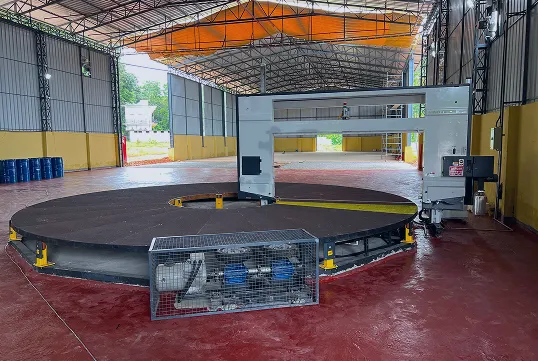
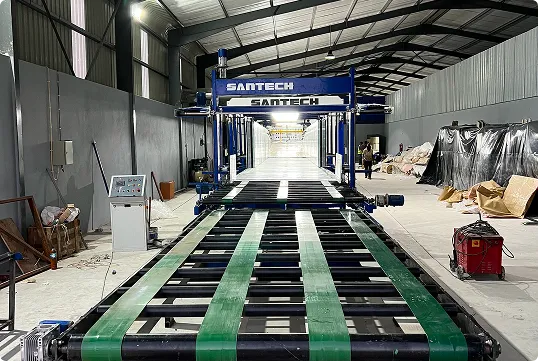
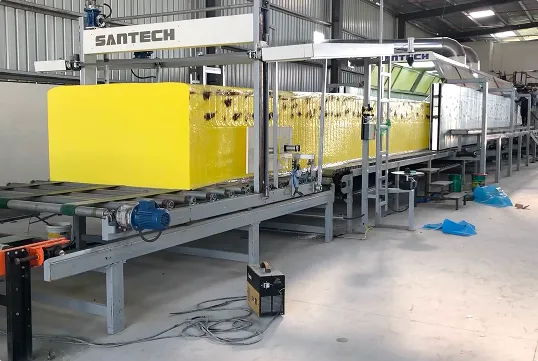
Even the best quality systems need the support of strong machinery. Precision mixing, controlled pouring, uniform cutting, and efficient curing all influence the final foam result. 

That is why it is important to invest in advanced production lines from trusted machinery suppliers like Santech Foam Machines. 

High-performance equipment will help the foam manufacturers to achieve the following: 

  • Better density control 
  • Reduced waste 
  • Faster output 
  • Cleaner finishing 
  • Repeatable product quality

Which Manufacturer Should You Choose?

Which Manufacturer Should You Choose 


The answer depends on your business goals. 

Choose an ISO Manufacturer If You Require

  • Reliable repeat orders
  • Strong documentation 
  • Export-ready standards 
  • Uniform product grades
  • Scalable long-term supply

Choose a Non-ISO Manufacturer If You Require

  • Small local orders
  • Low initial pricing
  • Flexible short-term sourcing

Essential Questions to Ask Before Buying Foam

Before you end up choosing a support, ask these questions: 

  • Do you test every batch? 

Regular testing will help you in improving consistency. 

  • Can you provide quality records? 

This will showcase whether the manufacturer is adhering to the proper quality control processes or not. 

  • What kind of machinery do you use?

Modern machinery often plays an important role in improving accuracy, output, and overall product quality. 

  • Can you maintain the same quality for repeat orders? 

This is important for the businesses that require reliable foam quality over time. 

Wrapping Up

The truth behind ISO vs. non-ISO foam manufacturers is quite simple. ISO certification helps in reflecting stronger systems, enhanced uniformity, and higher accountability. 

On the other hand, non-ISO suppliers may suit low-risk projects, but brands that strongly focus on repeat quality and growth need certified manufacturers. 

So, for every PU foam manufacturer, combining skilled teams, reliable standards, and advanced machinery from Santech Foam Machines builds a stronger foundation for success. 

Download Our Brochure

Get the complete Santech Foam Machines range with specifications, configurations, and key details in one place.

Personalised Foam Solutions for Every Project

At Santech Foam Machines, we customise foaming and cutting machines around your production requirements.

Manufacturer

We are the trusted foam machine manufacturers in India, building foaming and cutting equipment tailored to real production needs.

Solution

We supply PU foam and polyurethane foam machines configured to match your process, output expectations, and quality requirements.

Industry Insights

Stay updated with expert insights and industry trends shaping the future of foam manufacturing.

ISO vs Non-ISO Foam Manufacturers: What’s the Real Difference?

ISO vs Non-ISO Foam Manufacturers: What’s the Real Difference?

Whether you are purchasing foam products or planning to set up a production line, the…

15 May 2026

Horizontal vs Vertical Foam Cutting Machines: Applications, Uses, and Industrial Benefits

Horizontal vs Vertical Foam Cutting Machines: Applications, Uses, and Industrial Benefits

Selecting the right machinery for foam cutting is important for achieving a high level of…

08 May 2026

Foam Shredding Machine: How It Improves Foam Recycling and Waste Management Efficiency

Foam Shredding Machine: How It Improves Foam Recycling and Waste Management Efficiency

Waste management and recycling are the primary components of the global sustainability efforts, especially when…

01 May 2026