
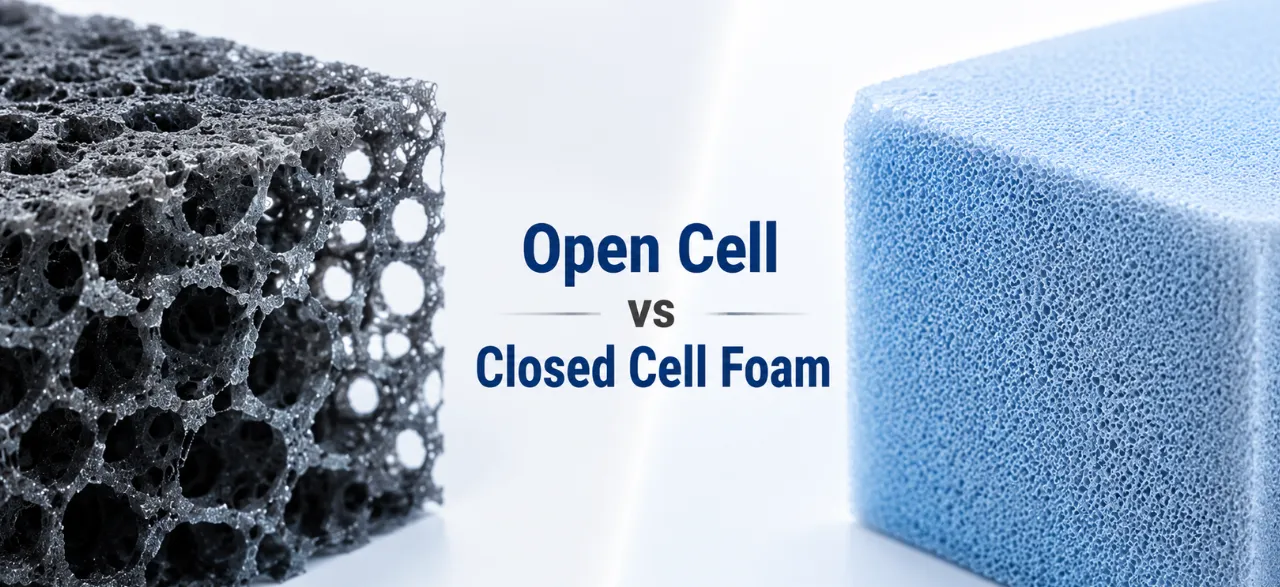


Foam may look like a simple material, but it is often overlooked in everyday life, despite the fact that it plays an important role across industries. From cushioning in furniture to insulation in construction, foam affects comfort, energy efficiency, and overall durability. However, choosing the right one requires you to know the basic differences between open-cell vs. closed-cell foam.
While open-cell foam is soft, breathable, and flexible, which makes it a perfect choice for comfort and sound absorption. Closed-cell foam, on the other hand, is dense, rigid, and moisture-resistant, making it an excellent choice for insulation and structural applications.
Understanding these differences, along with the types of foam materials, will help you save costs, improve performance, and ensure that your projects meet their intended goals.
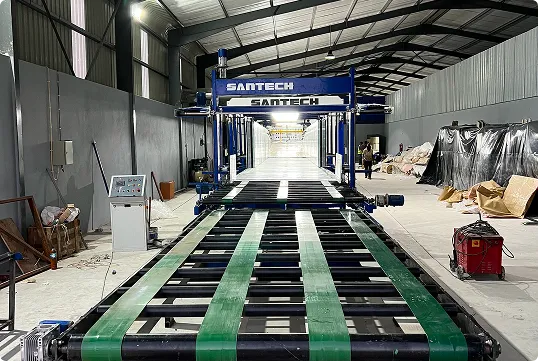
Whether you are a designer, engineer, or consumer, this blog will help you explore the technical yet practical world of foam and also offer helpful insights into the foam machine manufacturers in India who produce these materials at an industrial level.
What is Foam and Why is it Important?
Foam is a cellular material that consists of tiny bubbles that get trapped in a solid polymer matrix. These bubbles or cells can either remain interconnected or closed off. Moreover, this structure further helps in defining the foam type and its impact properties like flexibility, density, insulation, and water resistance.
Common types of foam materials consist of polyurethane, polyethylene, neoprene, and PVC. PU foams are extremely versatile due to their seamless adaptability, with properties getting modified during the process of PU foam manufacturing, either to create an open or a closed cell structure. However, before understanding the differences between open-cell and closed-cell foam, it is important to understand how foam is made. Foam is produced through a chemical reaction that creates a cellular structure, and adjustments during the manufacturing process determine its density, flexibility, insulation properties, and overall performance.
What is an Open-Cell Foam?
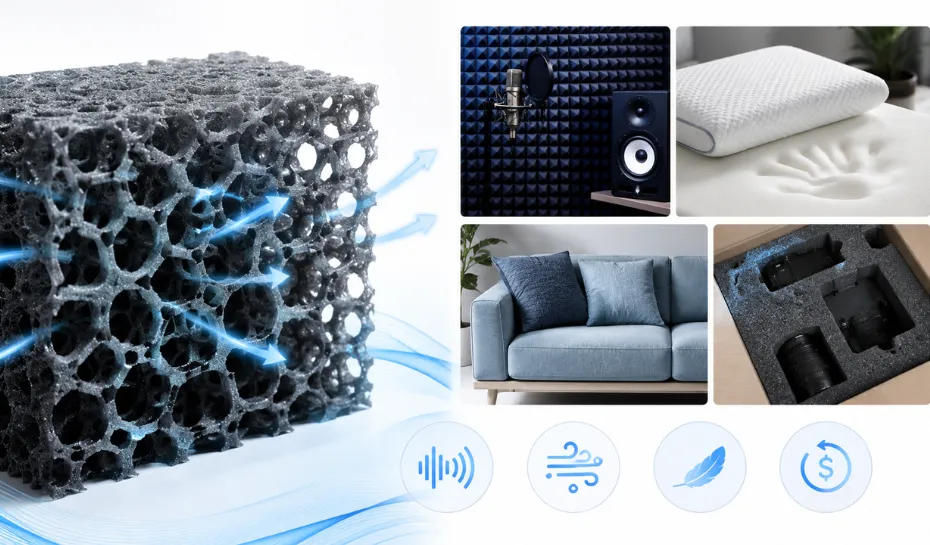
An open-cell foam is characterised by interconnected cells that form a sponge-like network, which further enables the air and moisture to move freely. It is this structure that helps in giving the foam its soft, flexible, and breathable nature.
Key Characteristics of an Open-Cell Foam
- They are breathable and flexible due to interconnected pores.
- Open-cell foam has low density and is lightweight compared to closed-cell foam.
- They are an excellent choice when it comes to sound absorption and acoustic insulation.
- It is a cost-effective solution since it uses less material and expands during the course of production.
Uses of an Ideal Open-Cell Foam
- Cushions and upholstery in furniture.
- Memory foam mattresses and pillows.
- Acoustic panels for soundproofing studios and offices.
- Protective packaging for sensitive items.
What is a Closed-Cell Foam?
A closed-cell foam consists of featured cells that are fully enclosed, with gas trapped inside each bubble. This further helps in creating a dense, rigid, and water-resistant material that will be perfect for structural and insulation purposes.
Key Characteristics of a Closed-Cell Foam
- They offer superior thermal insulation.
- A closed-cell foam is highly resistant to water and moisture penetration.
- It offers stronger structural support.
- Compared to open-cell foam, they provide a higher degree of density and durability.
Uses of an Ideal Closed-Cell Foam
- It assists with building insulation, roofing, and wall panels.
- Closed-cell foam is extensively used in marine applications and automotive components.
- They are also used in packaging for heavy and sensitive equipment.
Open Cell vs. Closed Cell Foam: A Practical Comparison
| Feature | Open-Cell Foam | Closed-Cell Foam |
|---|---|---|
| Structure | Interconnected and Breathable | Sealed and Rigid |
| Density | Low | High |
| Water Resistance | Absorbent | Water-Repellent |
| Thermal Insulation | Moderate | High |
| Best For | Sound Absorption and Comfort | Moisture Control and Insulation |
| Cost | Lower | Higher |
The ultimate choice between the 2 types of foam will depend on application needs. While an open-cell foam is used for comfort, sound absorption, and light cushioning. Closed-cell foam, on the other hand, is chosen for insulation, structural support, and moisture control.
Foam Process and Material Types
Developing an understanding of the type of foam materials is important. Polyurethane is a common base that is flexible enough for both open and closed-cell foams. In PU foam manufacturing, polyol is thoroughly mixed with isocyanates and additives to control expansion and density. In fact, adjustments during the production process enable the foam to achieve particular properties like softness, rigidity, and water resistance. To understand how foam density affects performance, you can check our detailed guide on measuring foam density in mattresses.
Wrapping Up
Choosing the right foam is all about understanding the structure, material properties, and intended use. Open-cell foam excels in comfort, airflow, and sound absorption. Closed-cell foam, on the other hand, provides moisture resistance, durability, and thermal insulation for industrial and structural uses.
By carefully evaluating these differences, exploring the various types of foam materials, and understanding the process of PU foam manufacturing, you can make informed decisions that improve performance, durability, and efficiency in any project. Working with experienced foam machine manufacturers India can further help ensure consistent foam quality, optimized production processes, and reliable manufacturing support for long-term business success.