

Starting a PU foam manufacturing business in India requires careful planning, the right machinery, reliable raw materials, adequate factory space, and compliance with applicable safety and regulatory requirements. Polyurethane (PU) foam is widely used in mattresses, furniture, automotive seating, packaging, footwear, and insulation, creating opportunities for manufacturers serving different industries.
A successful PU foam manufacturing business depends on choosing the right production system, such as batch or continuous foaming, based on your required capacity and product specifications. You also need suitable foam cutting equipment, chemical storage and handling systems, trained operators, quality-control procedures, and sufficient working capital.
In this guide, we explain how to start a PU foam manufacturing business in India, covering the machines required, raw materials, manufacturing process, plant space, licenses, infrastructure, costs, and key steps involved in setting up a foam production plant.
What is PU Foam and Why is it in Demand?
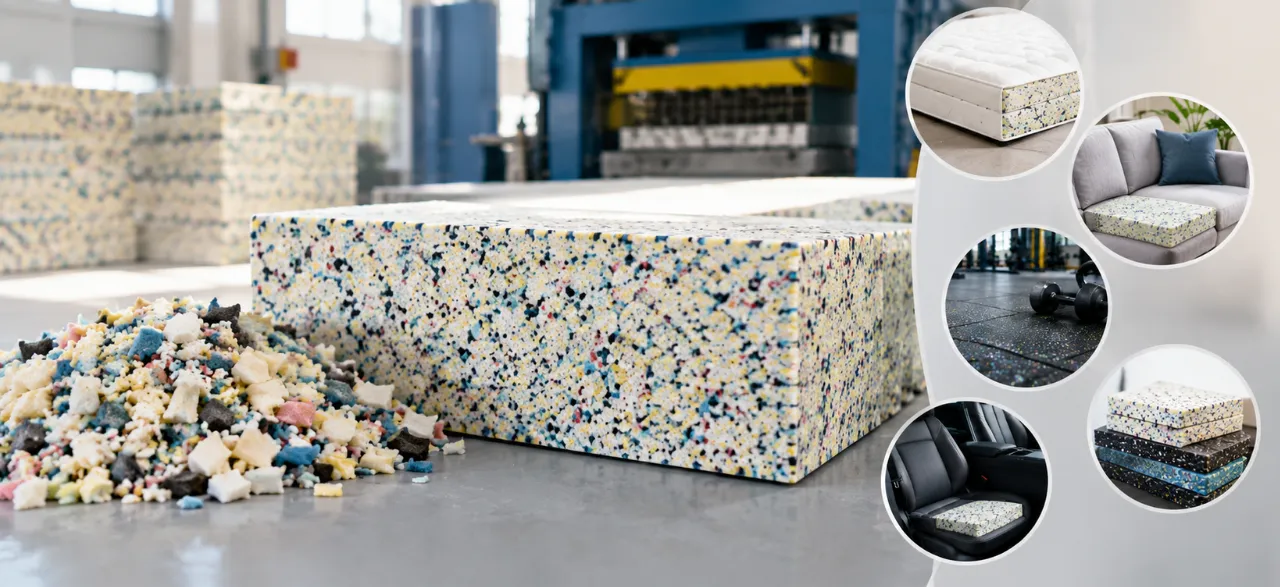
Polyurethane (PU) foam is a lightweight and versatile material known for its cushioning, flexibility, durability, and insulation properties. It is widely used to manufacture mattresses, sofas, cushions, automotive seats, packaging products, footwear, and insulation materials.
PU foam is available in different densities, hardness levels, and formulations, allowing manufacturers to produce foam for specific applications. This versatility makes it an important material across the furniture, bedding, automotive, packaging, and other industries.
The diverse applications of PU foam create opportunities for manufacturers looking to start a PU foam manufacturing business. However, business success depends on factors such as product demand, production capacity, raw-material costs, machinery efficiency, foam quality, and operating expenses.
For new manufacturers, understanding the target market and selecting the appropriate PU foam manufacturing machine are important first steps when planning a foam production business.
What Machines Are Needed to Manufacture PU Foam?
Choosing the right machinery is one of the most important steps when setting up a PU foam manufacturing business. The required equipment depends on your production capacity, foam specifications, level of automation, available factory space, and target applications.
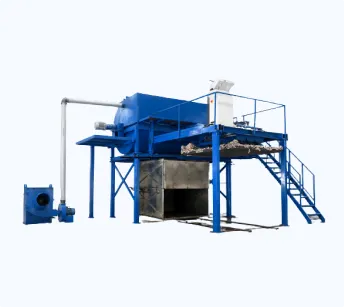
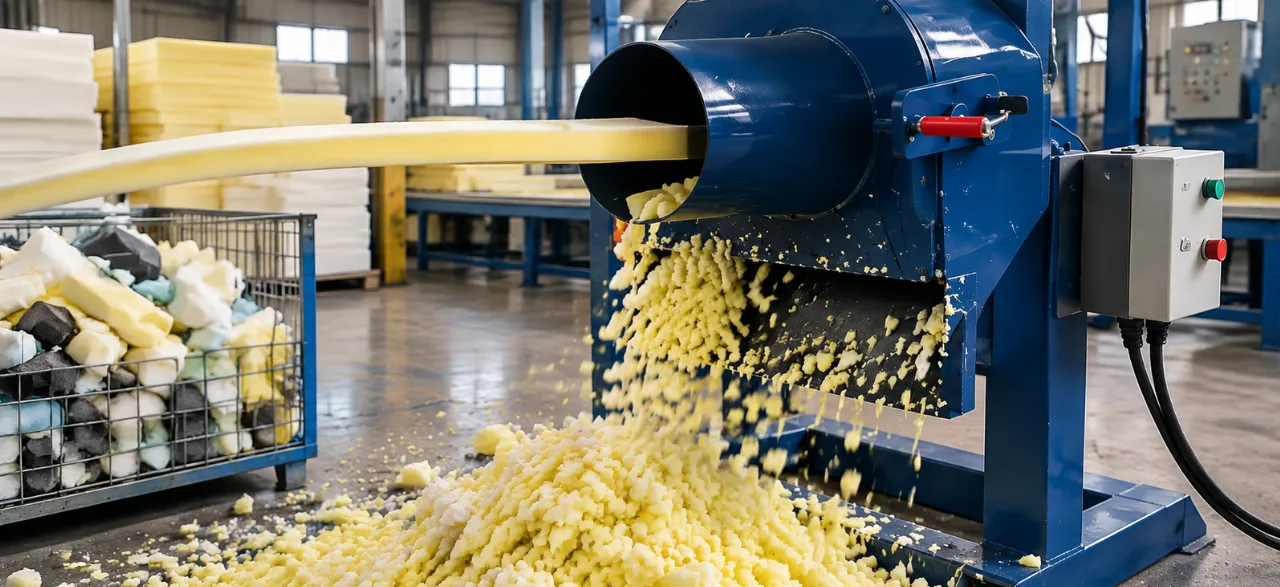
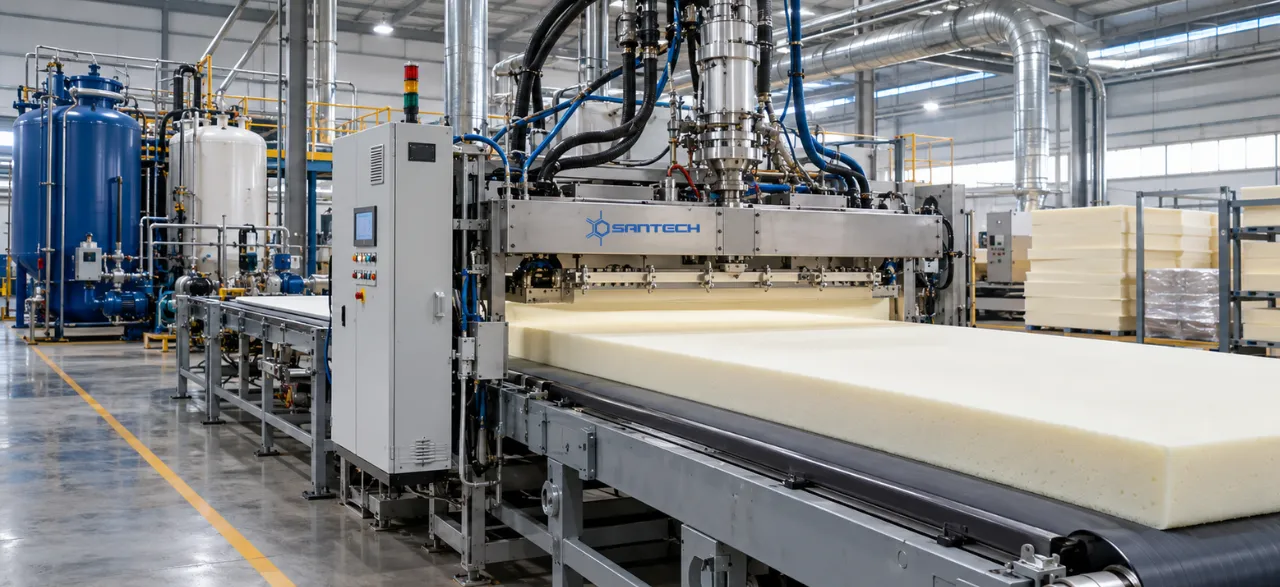
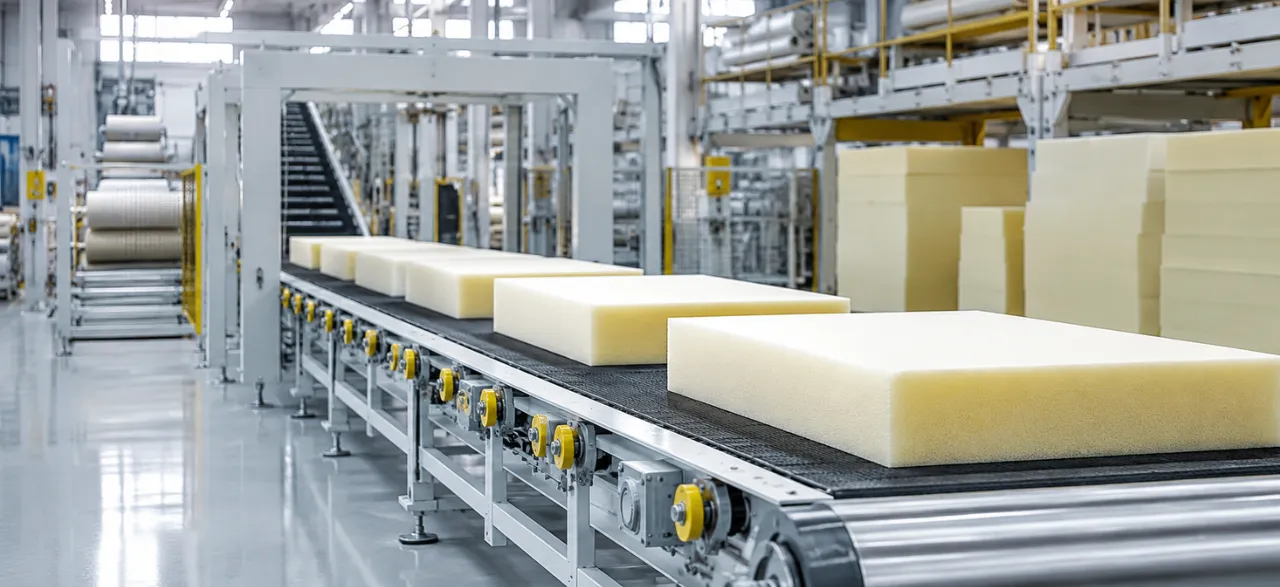
A typical PU foam production setup uses a foam making machine to mix and process the required chemical components and produce foam blocks. Depending on the required output, manufacturers can choose between batch and continuous foaming systems. Foam cutting machines are then used to convert cured foam blocks into sheets, blocks, or other required dimensions.
The main machines used in PU foam manufacturing include:
1. Automatic Batch Foaming Machine
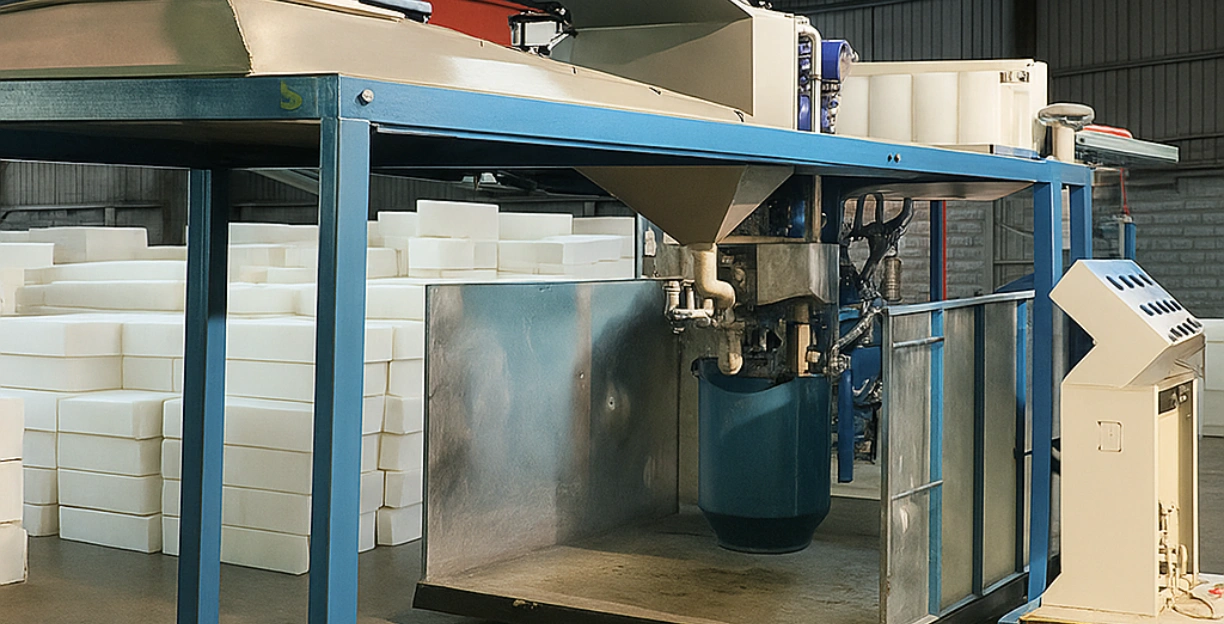
Automatic Batch foaming machine is used to produce foam on medium scale. It is perfectly suited for small-scale businesses with few production requirements and limited production needs and a smaller workforce. It suits best when you wish to begin on very little money and produce foam for local furniture manufacturers or small cushion manufacturers. Batch sizes are small, which also supports the desire for close quality control.
2. Semi-Automatic Batch Foaming Machine
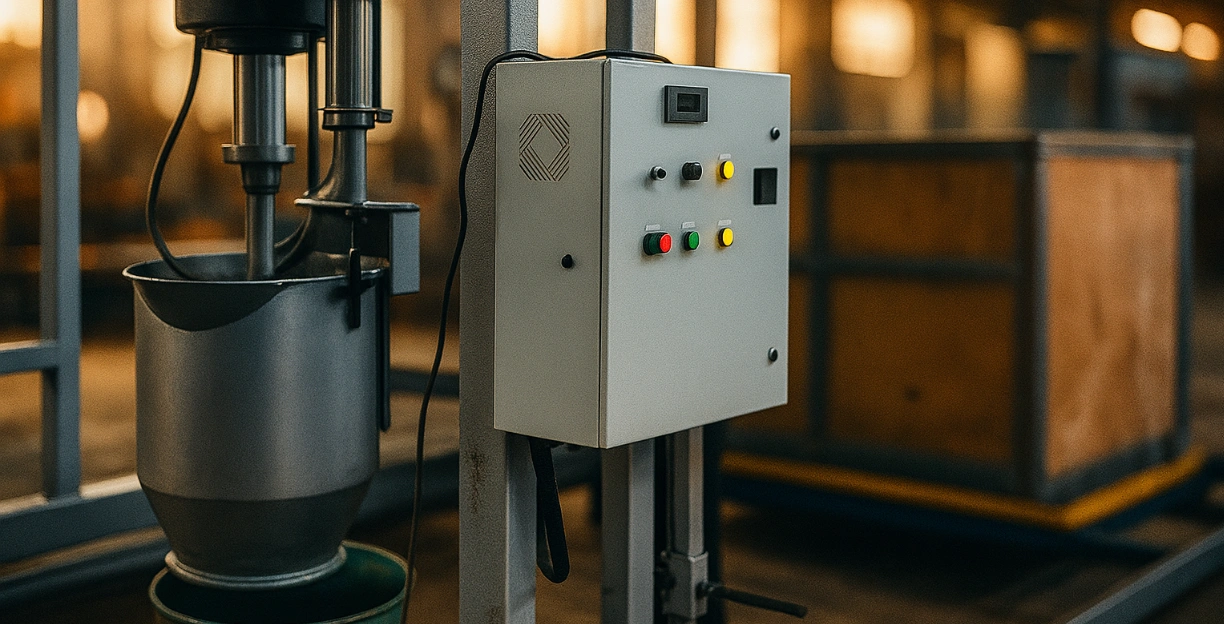
Semi Automatic batch foaming machine automates part of the production process and provides better consistency than manual blending. It is ideal for small to medium-sized companies, which require a greater level of quality control but not an extremely high investment. It minimises errors relative to the manual process and requires moderate manpower. It is ideal for companies that produce foam sheets utilised in furniture, seats, or packaging in medium sizes
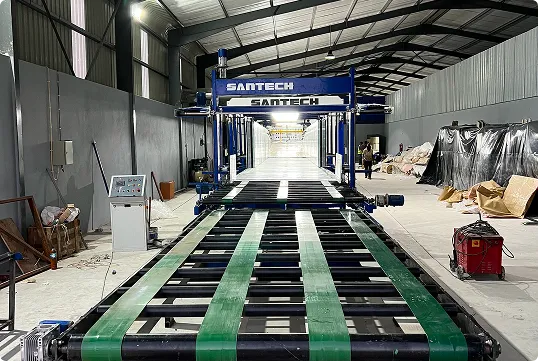
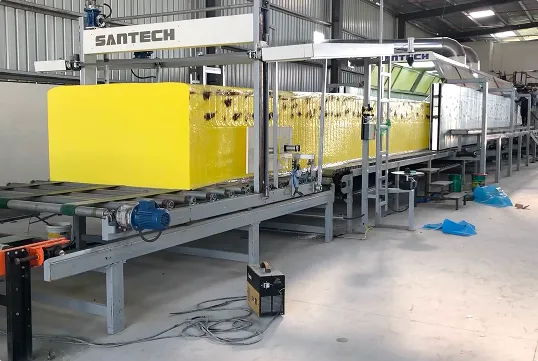
3. Continuous Foaming Machine
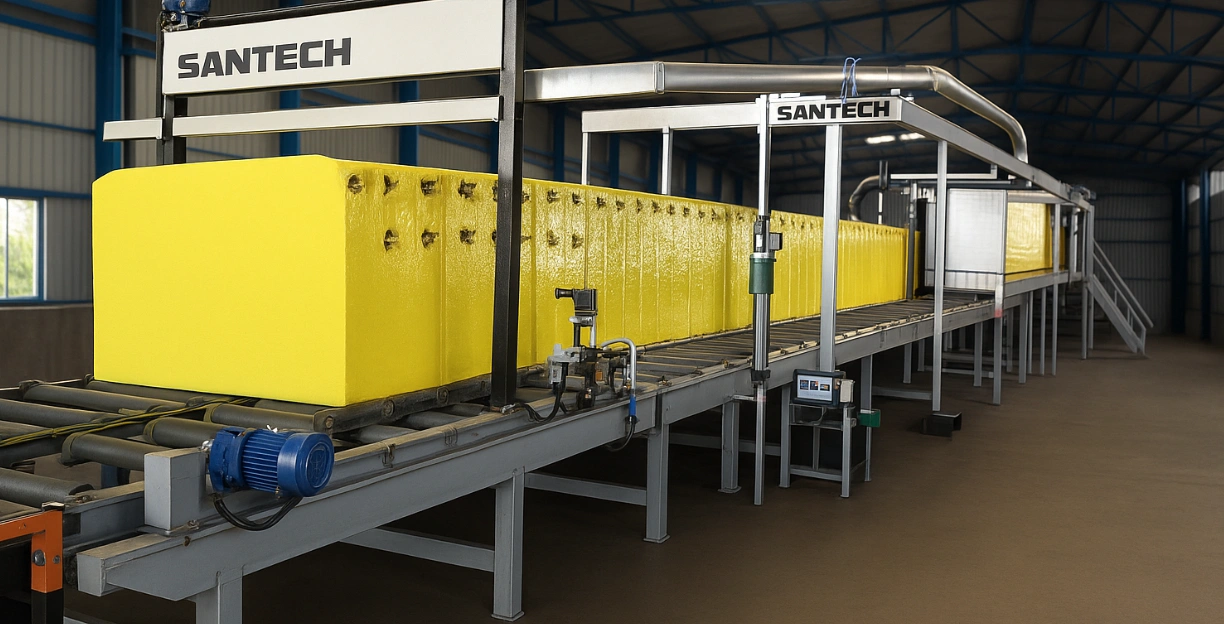
Continuous foaming machine is used to create massive foam blocks on an ongoing basis. It is suitable for large factories that require a great amount of production daily. This is suited when your PU foam making business has a highly efficient budget, adequately trained employees, and desires to supply mattress businesses, massive furniture chains, or packing firms. It generates massive foam slabs, which are then sliced to the preferred sizes, making it easy to achieve bulk orders.
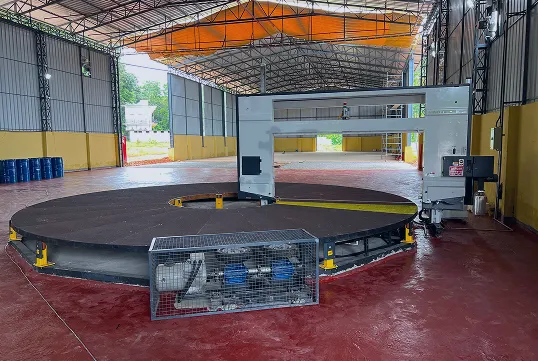
4. Vertical Cutting Machine
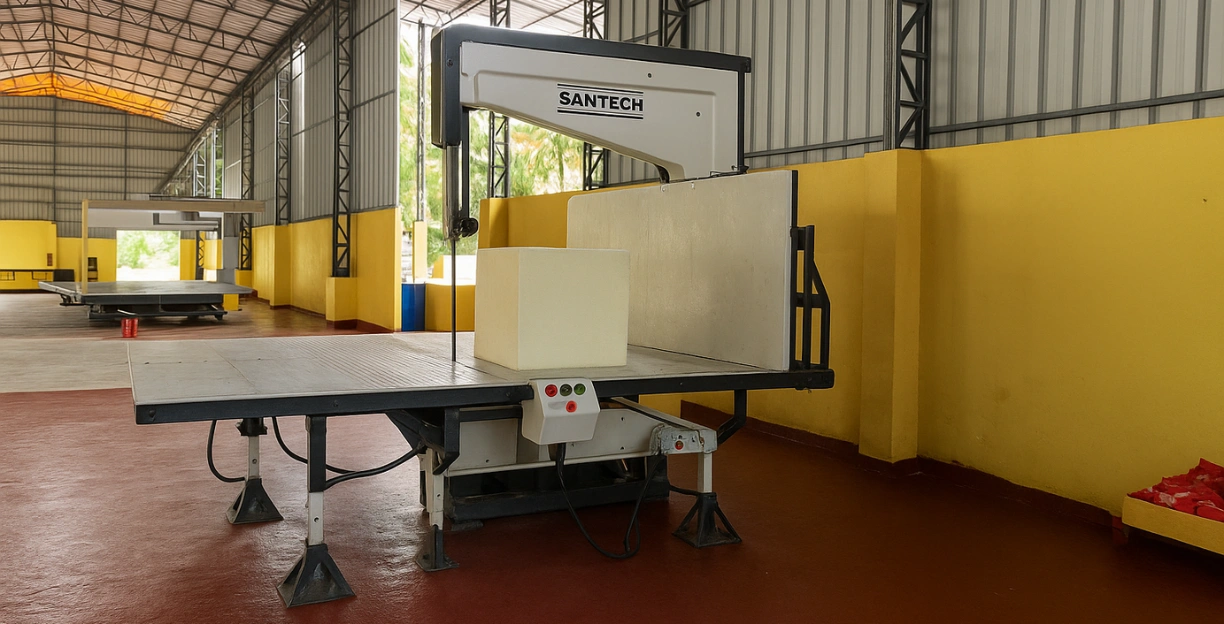
After making foam blocks, you’ll need to slice them into smaller blocks or sheets. A vertical cutting machine is perfect for cutting large foam blocks vertically. It is used by businesses supplying foam to upholstery and mattress manufacturers. This machine ensures neat, precise cuts and suits units where quality finishing is important.
5. Horizontal Foam Cutting Machine
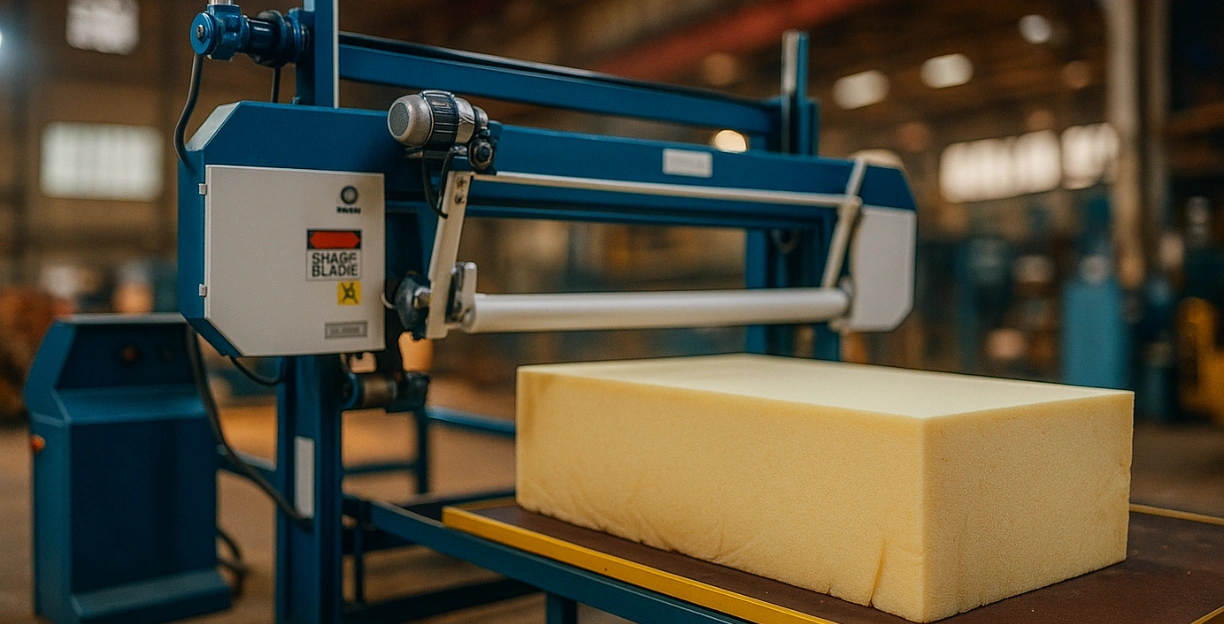
Horizontal foam cutting machine is employed to cut foam horizontally into uniform sheets of equal thickness. It is needed by businesses that are obligated to provide foams in layers for laminated items, mattresses, or sofas. It is appropriate for medium to large production facilities and saves time and labour through the provision of even cuts.
What Supporting Equipment Is Required for a PU Foam Plant?
A PU foam manufacturing plant requires more than a primary foam making machine. Supporting equipment helps with chemical storage, material transfer, temperature control, quality testing, safety, and movement of foam blocks throughout the facility.
Depending on the plant size, production system, and level of automation, commonly required supporting equipment may include:
- Chemical Storage Tanks: Used to store raw materials such as polyols and isocyanates under appropriate conditions.
- Chemical Transfer Pumps: Transfer raw materials from storage tanks to the foaming and dosing system.
- Temperature-Control Equipment: Helps maintain suitable temperatures for chemical storage and processing.
- Dosing and Mixing Systems: Provide controlled measurement and mixing of chemical components before foaming.
- Material-Handling Equipment: Helps move large foam blocks safely and efficiently around the production area.
- Quality-Testing Equipment: Used to evaluate properties such as foam density, hardness, dimensions, and other required specifications.
- Safety Equipment: Includes suitable PPE, ventilation systems, emergency equipment, and other measures required for safe chemical handling.
The exact equipment required will depend on the PU foam manufacturing machine, production capacity, foam formulation, factory layout, and applicable safety requirements. Planning these supporting systems alongside the main machinery can help create a more efficient and well-organised production setup.
What Raw Materials Are Used to Make PU Foam?
Producing polyurethane foam requires a carefully controlled combination of chemical components. The exact formulation depends on the type of foam, required density and hardness, cell structure, and final application.
Common raw materials used in PU foam production include:
- Polyol: One of the primary components that reacts with isocyanate to form polyurethane.
- Isocyanate: Commonly TDI or MDI, depending on the formulation and application. It reacts with polyol during the foaming process.
- Blowing Agents: Help create the cellular structure and expand the foam during production.
- Catalysts: Control and promote the chemical reactions involved in foam formation.
- Surfactants: Help stabilise the foam structure and influence cell formation.
- Additives: Used to provide specific properties according to the intended application.
- Flame Retardants: Added to formulations where improved flame performance is required.
- Pigments: Used when a particular foam colour is required.
Accurate chemical dosing and consistent mixing are essential for maintaining foam quality. Variations in the formulation or processing conditions can affect foam density, hardness, cell structure, and overall product performance.
For manufacturers starting a PU foam manufacturing business, selecting suitable raw materials and using a properly calibrated foam making machine are important for achieving consistent production results.
What Licenses and Permits Are Required for a PU Foam Manufacturing Plant?
Before starting a PU foam manufacturing business in India, manufacturers need to identify the registrations, approvals, and safety requirements applicable to their location, plant size, production process, and chemicals handled.
Depending on the specific setup, requirements may include:
| License / Approval | Purpose / Requirement |
|---|---|
| Factory License | Required where the plant falls under applicable factory legislation. |
| GST Registration | Required for businesses that meet the applicable GST registration criteria. |
| MSME/Udyam Registration | Can help eligible businesses access government schemes and other benefits. |
| Pollution Control Board Approvals | Manufacturing units may need Consent to Establish and Consent to Operate, depending on applicable state requirements. |
| Fire Safety Approval / NOC | May be required based on the building, plant configuration, and local fire-safety regulations. |
| Environmental Permissions | Additional environmental approvals may apply depending on the nature and scale of the manufacturing operation. |
| Chemical Storage and Handling Approvals | Requirements can apply when storing or handling regulated chemicals. |
| Labour-Related Registrations | Applicable registrations depend on workforce size and the nature of the establishment. |
Because requirements vary by state and plant configuration, manufacturers should confirm the applicable approvals with the relevant government and regulatory authorities before establishing the facility.
How Much Space Is Required for a PU Foam Manufacturing Plant?
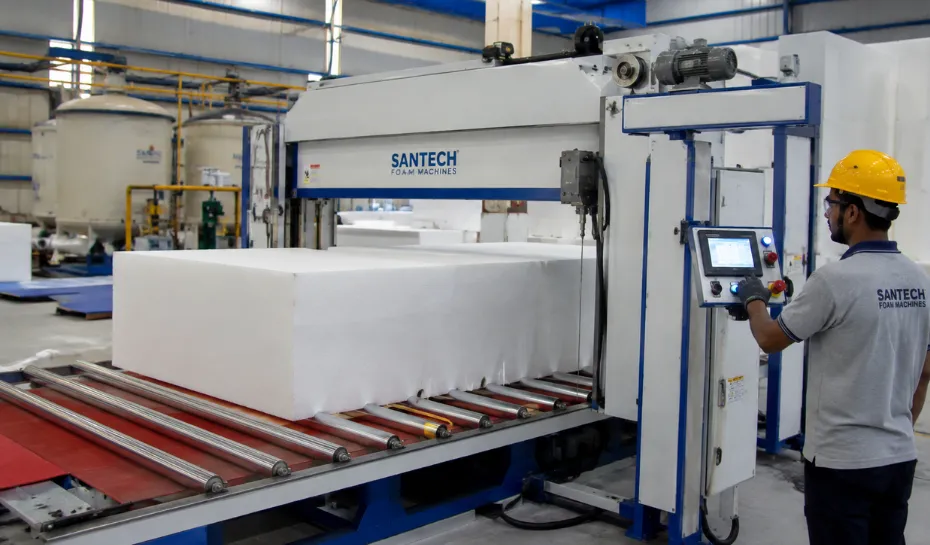
The space required for a PU foam manufacturing plant depends on production capacity, machinery dimensions, raw-material storage, finished-product storage, utilities, worker facilities, safety requirements, and future expansion plans.
A well-planned plant may need separate areas for:
- Raw-material and chemical storage
- Foaming and production
- Foam curing
- Foam cutting and processing
- Finished-product storage
- Quality testing
- Utilities and electrical systems
- Material handling and movement
- Worker facilities
- Emergency and fire access
Instead of using the same space requirement for every business, manufacturers should design the factory layout around their selected foam making machine, production capacity, storage needs, and applicable safety requirements.
For a detailed breakdown of plant space, layout planning, and infrastructure considerations, see our guide on foam manufacturing plant space requirements.
How Much Does It Cost to Start a PU Foam Manufacturing Business?
The investment required to start a PU foam manufacturing business varies depending on the production capacity, machinery, factory location, building, raw materials, utilities, labour, automation level, and working capital.
Major investment areas can include:
- Land or factory premises
- Factory construction and infrastructure
- PU foam manufacturing machinery
- Foam cutting equipment
- Chemical storage and handling systems
- Electrical and utility infrastructure
- Safety equipment
- Raw-material inventory
- Installation and commissioning
- Labour and training
- Working capital
- Maintenance and operating expenses
A small production setup and a high-capacity continuous production plant can have significantly different investment requirements. Therefore, entrepreneurs should prepare a detailed project estimate based on their target production capacity and machinery configuration.
For a detailed discussion of investment requirements, link this section to your foam manufacturing plant cost guide.
What Are the Common Challenges in PU Foam Manufacturing?
Starting and operating a PU foam manufacturing business involves several challenges that can affect product quality, production efficiency, and operating costs. Understanding these issues early can help manufacturers choose the right equipment, processes, and quality-control measures.
Common challenges include:
- Inconsistent Foam Density: Variations in chemical ratios, temperature, mixing, or machine settings can result in uneven foam density and hardness.
- Foam Quality Problems: Issues such as foam collapse, poor cell structure, scorching, or shrinkage can occur when processing conditions are not properly controlled.
- High Raw-Material Costs: Fluctuations in the prices of polyols, isocyanates, additives, and other chemicals can increase production costs.
- Machine Downtime: Poor maintenance, incorrect calibration, or equipment wear can interrupt production and increase operating expenses.
- Material Waste: Incorrect chemical dosing, production defects, and inaccurate cutting can lead to higher material waste and lower yield.
- Skilled Operator Requirements: PU foam production requires operators who understand chemical handling, machine settings, production controls, and safety procedures.
- Safety and Environmental Requirements: Chemical handling, ventilation, fire safety, emissions, and waste management require appropriate systems and compliance measures.
Using a properly selected PU foam manufacturing machine, maintaining accurate chemical dosing, following standard operating procedures, and implementing preventive maintenance can help manufacturers overcome many of these challenges.
For a detailed look at production problems and their solutions, see our guide on troubleshooting continuous foam production challenges.
How to Set Up a PU Foam Manufacturing Plant Step by Step
Setting up a PU foam manufacturing plant involves several stages, from identifying the target market to installing machinery and starting
commercial production.
| Step | What to Do |
|---|---|
| 1. Identify Your Target Market | Determine which industries you plan to supply, such as mattresses, furniture, automotive, packaging, footwear, or insulation. |
| 2. Define Your Foam Products | Decide which foam grades, densities, hardness levels, dimensions, and applications you intend to manufacture. |
| 3. Estimate Your Investment | Prepare an initial budget covering machinery, factory infrastructure, raw materials, utilities, labour, installation, safety systems, and working capital. |
| 4. Select a Suitable Location | Choose a location with suitable infrastructure, transportation access, utilities, and sufficient space for production, storage, and future expansion. |
| 5. Choose the Right Machinery | Select the appropriate PU foam manufacturing machine and foam cutting equipment based on your production capacity and product requirements. |
| 6. Plan the Factory Layout | Allocate suitable areas for chemical storage, foaming, curing, cutting, quality testing, finished products, utilities, and safe material movement. |
| 7. Arrange Raw Materials | Establish reliable suppliers for polyols, isocyanates, catalysts, surfactants, blowing agents, and other required formulation components. |
| 8. Complete Applicable Registrations and Approvals | Identify and obtain the registrations, licenses, environmental permissions, and safety approvals applicable to your plant and location. |
| 9. Install and Commission the Machinery | Install the equipment according to the plant layout and complete testing, calibration, commissioning, and operator training. |
| 10. Conduct Trial Production | Run controlled production trials to verify chemical dosing, machine settings, foam quality, cutting accuracy, and overall process performance. |
| 11. Establish Quality-Control Procedures | Monitor relevant properties such as density, hardness, dimensions, appearance, and cell structure according to your product requirements. |
| 12. Start Commercial Production | Once machinery, raw materials, operators, safety systems, and quality procedures are ready, begin commercial production according to the planned capacity. |
|
A carefully planned setup can help manufacturers establish a more reliable production process and avoid unnecessary investment in unsuitable machinery or infrastructure. |
|
Conclusion
Starting a PU foam manufacturing business in India requires careful planning of your target market, production capacity, machinery, raw materials, factory space, applicable approvals, and working capital. Choosing the right PU foam manufacturing machine and establishing proper quality-control and safety procedures can help create a more efficient and reliable production process.
For manufacturers planning a new plant or upgrading an existing facility, Santech Foam Machines provides advanced foaming and foam cutting machinery designed for different production requirements. With the right equipment, factory setup, and production strategy, businesses can build a scalable PU foam manufacturing operation and serve growing demand across furniture, mattresses, automotive, packaging, and other industries.
Looking to start or expand your PU foam manufacturing business? Contact Santech Foam Machines to discuss the right machinery for your production requirements.