

The right cutter depends more on the type of cut and production process than on the industry itself.
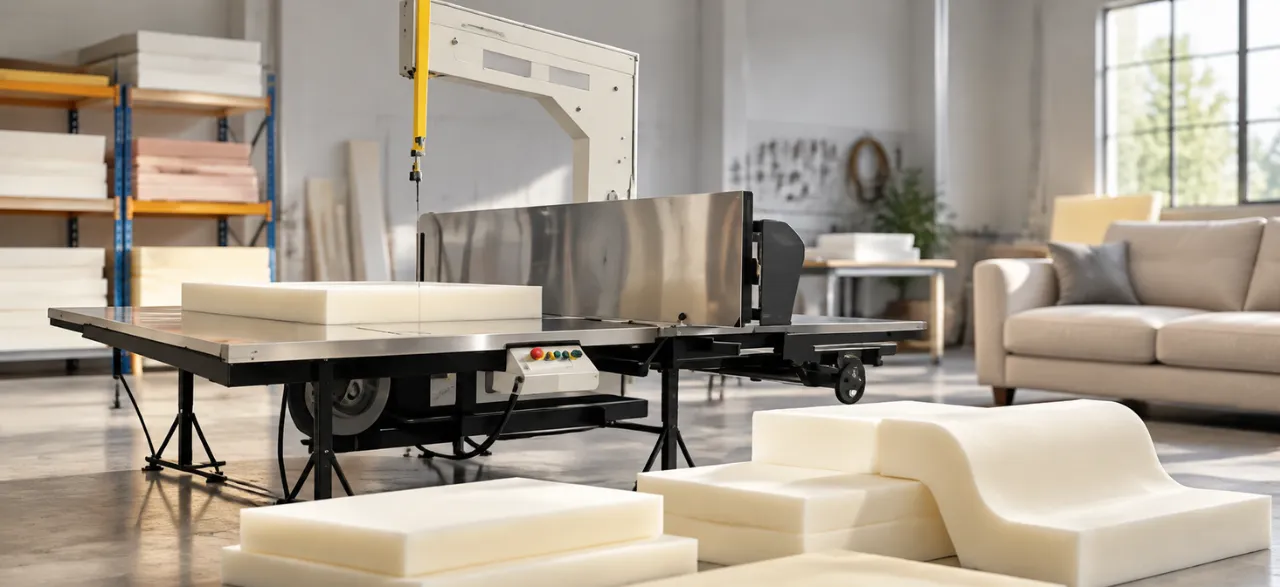
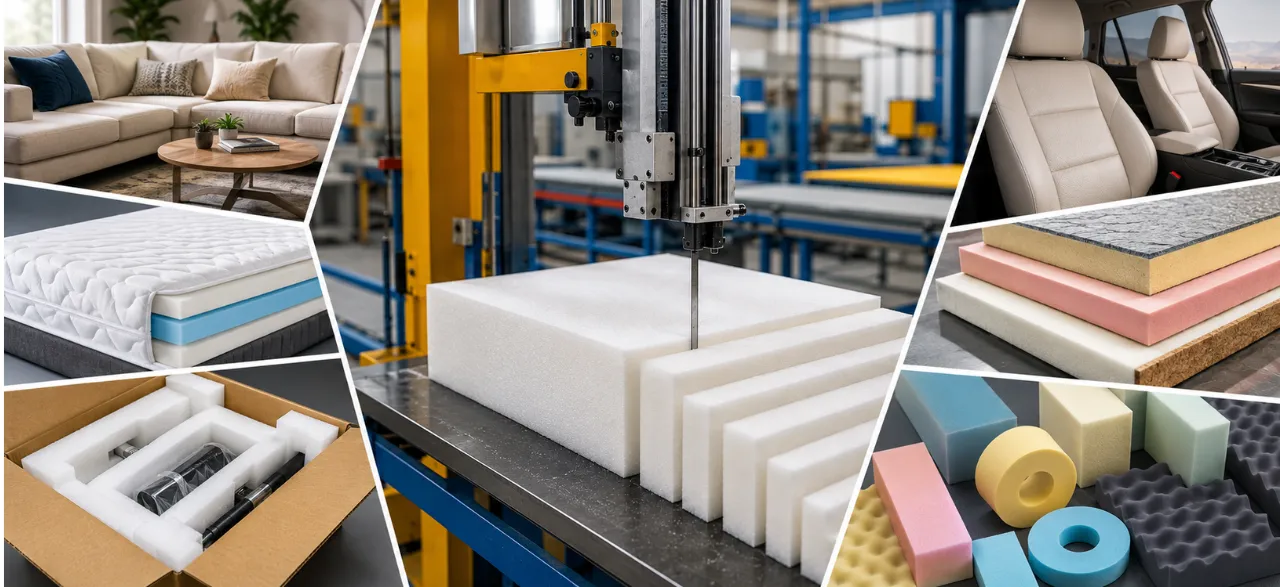
Foam cutters are used across industries such as mattress manufacturing, furniture, packaging, automotive, upholstery, and insulation to cut foam blocks and sheets into the required sizes, thicknesses, and shapes. The applications of foam cutters vary according to the foam type, cutting requirements, product dimensions, and production volume. Manufacturers can use foam cutting machines to achieve more consistent cuts and prepare foam for different production processes.
For example, mattress manufacturers may need uniform foam layers, while furniture manufacturers may require accurately sized cushion components. Packaging manufacturers often need customised foam inserts, whereas automotive manufacturers may process foam for seats, headrests, armrests, and interior components. Horizontal and vertical foam cutters can be selected based on the type of cut and the requirements of the finished product.
In this guide, we’ll look at the main applications of foam cutters, how horizontal and vertical cutters are used, and the factors manufacturers should consider before choosing the right cutting solution.
Looking for a foam cutting solution for your production line? Contact Santech Foam Machines to discuss your foam type, dimensions, cutting requirements, and production volume.
What Are the Applications of Horizontal Foam Cutters?
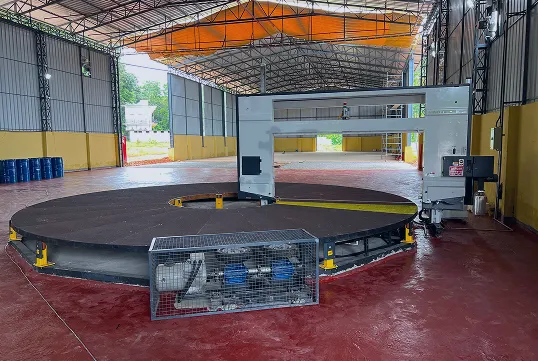
Horizontal foam cutters are commonly used when large foam blocks need to be converted into consistent sheets or slabs. Horizontal foam cutting machines are particularly useful when manufacturers need uniform thickness, repeatable dimensions, and efficient processing. Their applications depend on the required thickness, foam dimensions, and final product.
What Are the Applications of Vertical Foam Cutters?
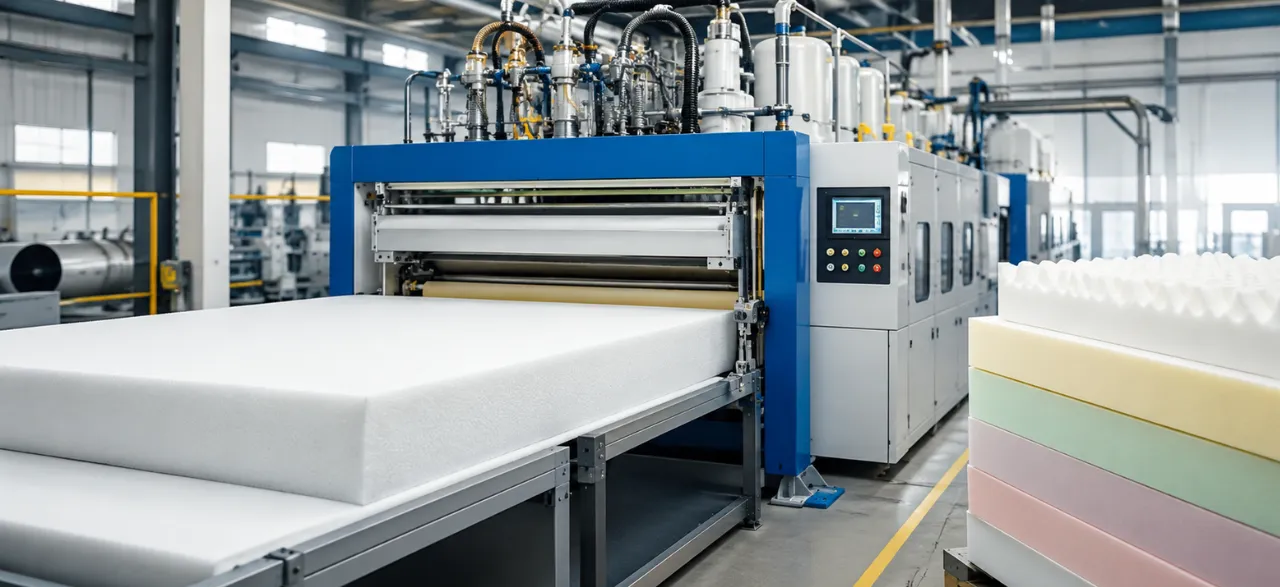
Vertical foam cutters are useful when foam needs to be cut into specific widths, lengths, sections, or customised components. Vertical foam cutting machines are commonly used when foam sheets or blocks require further sizing after initial processing, making them suitable for applications where manufacturers need consistent dimensions and repeatable cuts.
1. Furniture and Upholstery
Vertical foam cutters are widely used for cutting foam components for sofas, chairs, cushions, mattresses, and other upholstered products.
For example, a manufacturer may first process a large foam block into sheets and then use a vertical cutter to cut those sheets into individual cushion or upholstery pieces.
This two-stage approach can make it easier to produce repeatable components in different sizes.
2. Packaging Inserts
Packaging manufacturers may require foam to fit closely around a particular product. Vertical cutting can be used to produce foam sections, pads, and customised packaging components according to the required dimensions.
This is particularly useful when different products require different insert sizes rather than a standard foam shape.
3. Sports and Fitness Products
Foam is used in products such as exercise mats, protective padding, sports equipment, and fitness accessories. Vertical foam cutters can be used to size foam components according to the requirements of the finished product.
The ability to produce repeatable dimensions is useful when manufacturers are producing multiple units of the same product.
4. Medical and Support Products
Foam is also used in cushions, padding, supports, and other specialised products. Vertical cutting can help manufacturers produce components to specified dimensions for different applications.
For these products, consistent sizing is important because the finished foam component needs to match the intended design and application.
Horizontal vs Vertical Foam Cutters: Which One Do You Need?
| Requirement | Horizontal Foam Cutter | Vertical Foam Cutter |
|---|---|---|
| Main cutting direction | Horizontal | Vertical |
| Large foam blocks | Suitable for processing into sheets/slabs | Suitable for further component cutting |
| Foam sheets | Suitable for thickness processing | Suitable for sizing and profiling |
| Mattress applications | Foam layer production | Component sizing |
| Furniture applications | Foam slab and sheet processing | Cushion and component cutting |
| Packaging | Foam sheets and sections | Inserts and customised components |
| Best suited for | Consistent slab or sheet production | Individual components and specific dimensions |
A manufacturer may also use both horizontal and vertical cutting equipment as part of the same production process. For example, a large foam block can first be processed into sheets and then cut into individual components.
What Are the Main Benefits of Using Foam Cutters?
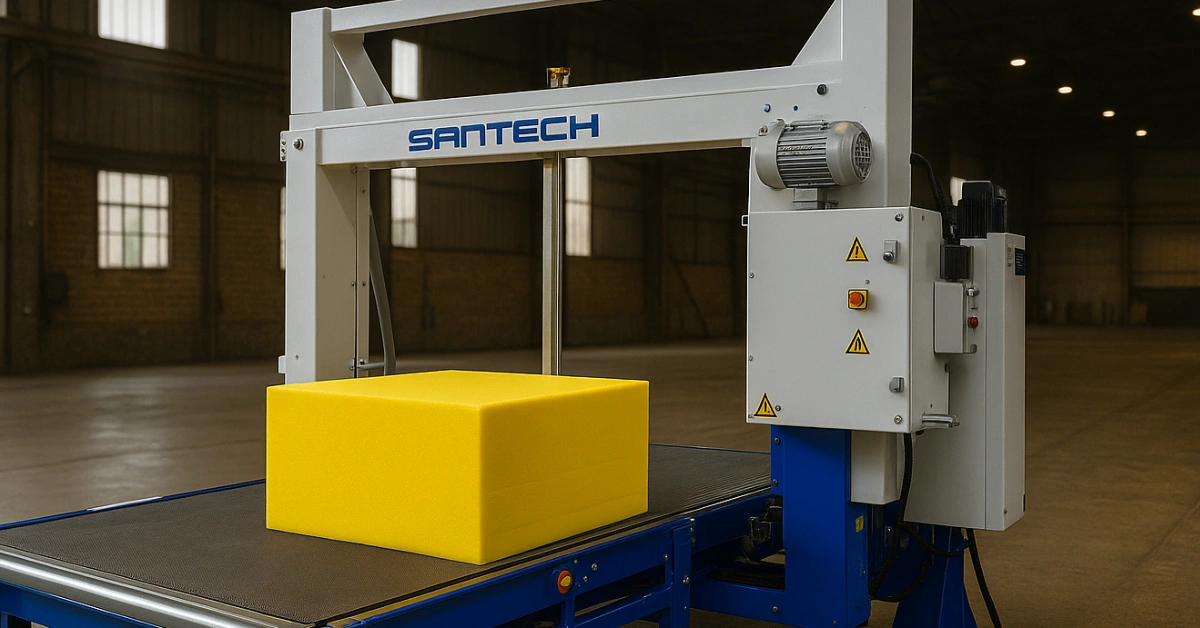
The benefits depend on the machine configuration and production process, but industrial foam cutters can offer several practical advantages.
1. Consistent Dimensions
Machine-based cutting helps maintain repeatable dimensions across production runs. This is particularly important when multiple foam components need to match.
2. Faster Repetitive Cutting
For manufacturers handling foam regularly, dedicated cutting equipment can reduce the time spent on repetitive manual cutting and improve production flow.
3. Better Material Utilisation
Accurate cutting can help reduce unnecessary trimming and dimensional variation. The amount of material saved will depend on the foam dimensions, cutting pattern, and production method.
4. Reduced Manual Work
Using dedicated equipment for repetitive cutting tasks can reduce operator workload and allow workers to concentrate on material handling, quality checks, assembly, and other production activities.
5. Flexible Production
Depending on the machine configuration, foam cutters can be used for different foam dimensions and applications. This makes them useful for manufacturers serving multiple product categories.
How Do You Choose the Right Foam Cutter?
Before selecting a machine, consider the actual requirements of your production process rather than choosing equipment based only on cutting direction.
Check:
- Type of foam: Identify the foam type, density, and characteristics you process.
- Foam dimensions: Consider the maximum block or sheet size.
- Required cut: Determine whether you need sheets, slabs, sections, profiles, or customised components.
- Production volume: A high-volume operation may require a different configuration from a small workshop.
- Finished product: Consider the dimensions and tolerances required for the final application.
- Future requirements: If you plan to expand your product range, choose equipment that can accommodate your expected production needs.
If you are unsure which configuration is suitable, discussing your actual foam dimensions, products, and production volume with a machine manufacturer is a better starting point than selecting equipment based only on specifications.
Bottom Line
The applications of foam cutters cover a wide range of manufacturing needs, from mattress and furniture production to packaging, automotive components, upholstery, insulation, and specialised foam products. Horizontal cutters are generally used when large foam blocks need to be processed into consistent sheets or slabs, while vertical cutters are useful for sizing foam into individual components and specific dimensions.
Choosing the right cutter depends on the type of foam, block or sheet size, required cut, production volume, and finished product requirements. Santech Foam Machines provides foam cutting solutions for different industrial applications and can help manufacturers select a suitable machine based on their actual production needs.
Looking for the right foam cutter for your application? Contact Santech Foam Machines to discuss your foam type, cutting requirements, and production goals.