

In the world of foam production, choosing between Indian and imported foam machines can significantly impact your overall manufacturing success. Whether you’re producing mattress foam, furniture cushioning, or industrial insulation, the machinery you choose will impact reliability, maintenance hassles, and overall production flow.
Many manufacturers often find themselves in a fix about which option will help them in creating fewer production issues and provide better value in the long run. So, let’s explore and compare Indian and imported foam machines and understand which option will be a better choice for your foaming business.
What is the Importance of Machine Source for Foam Production?
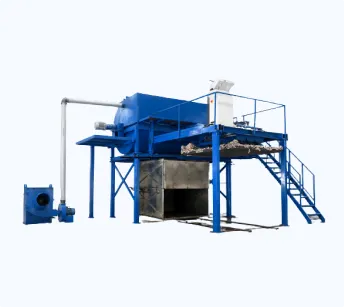
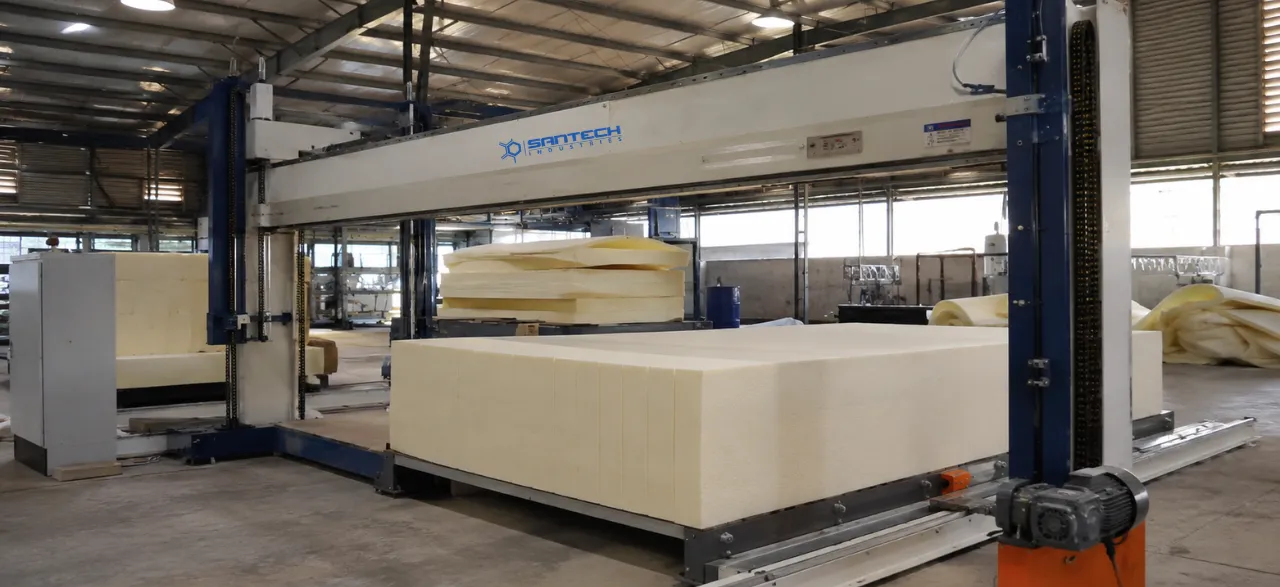
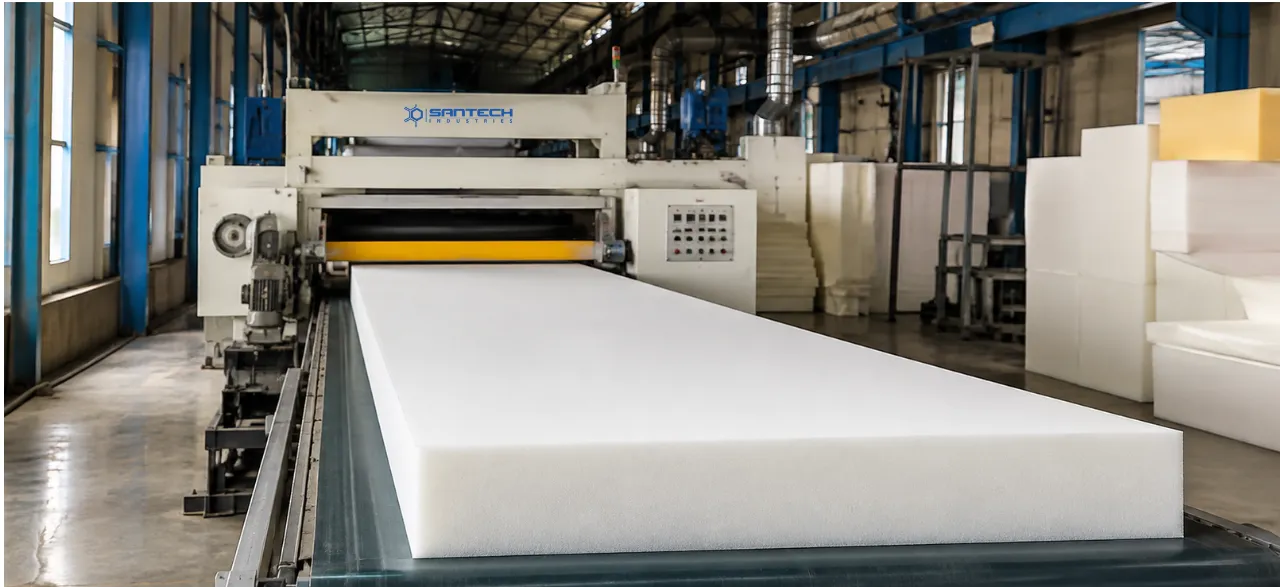
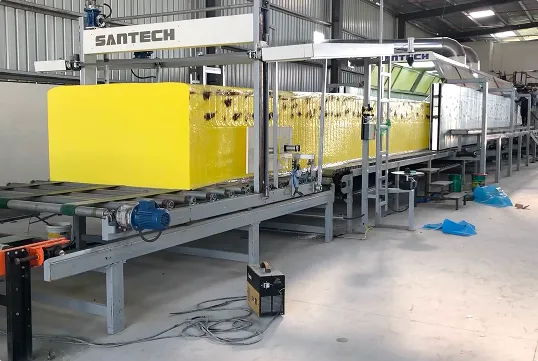
A PU foam machine is the heart and soul of flexible foam manufacturing. It basically mixes polyols, isocyanate, catalysts, blowing agents, and other additives to create a uniform and high-quality foam. The machinery should function reliably, deliver uniform mixes, and be able to integrate with your factory processes smoothly.
The quality and consistency of foam largely depend on the machinery used during the manufacturing process. To better understand why equipment selection matters, it is helpful to first understand how foam is made and the critical role machinery plays at every stage of production.
Back in the earlier days, Indian producers used to depend heavily on imported foam plants due to their early advantage in advanced engineering and automation. But, in recent years, domestic manufacturing has undergone a major transformation, thereby providing competitive solutions for the majority of production needs.
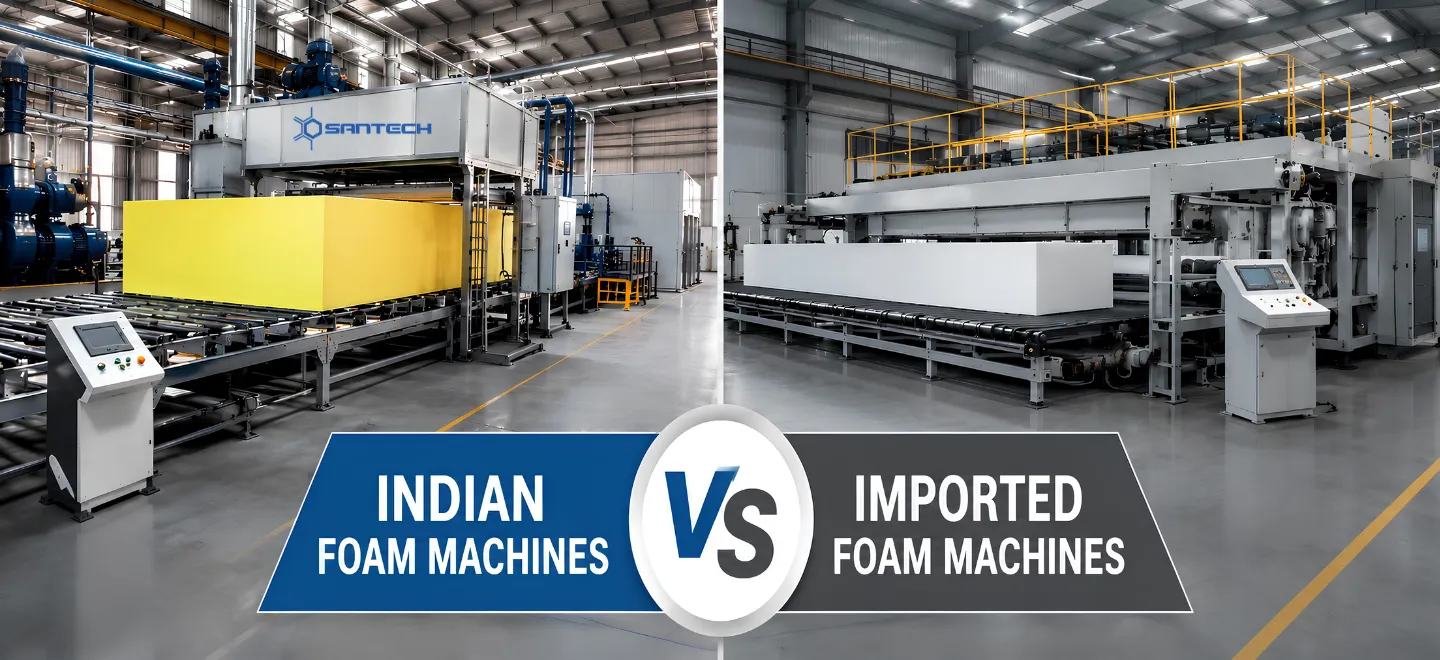
Major Differences: India vs. Imported Foam Machines
Let’s take a look at both the options and see who is more powerful in which area.
| Factor | Indian Foam Machines | Imported Foam Machines |
|---|---|---|
| Build Quality & Performance | Many Indian manufacturers now produce robust machines designed to deliver uniform performance without a hefty price tag. These machines are engineered for local conditions, including voltage stability, raw material variations, and factory environments. | Imported machinery, particularly from Europe and East Asia, features refined control systems, precision-engineered components, and advanced automation. These qualities help reduce production issues, especially for complex foam grades and high-precision applications. |
| Maintenance & Downtime | Indian manufacturers typically provide faster on-site support, and spare parts are readily available. This helps reduce downtime, simplifies troubleshooting, and keeps production lines running efficiently. | Imported machines often require specialized parts and overseas technical expertise. Replacement part delays can increase downtime and impact production schedules. |
| Customization & Adaptability | Indian manufacturers commonly offer tailor-made solutions, adjustable controls, and modular configurations. Working directly with local vendors makes it easier to customize machines according to specific production requirements. | Imported machines may offer limited flexibility. Customization often involves longer lead times and higher costs, making rapid product adjustments more challenging. |
| Cost, Value & Total Ownership | Indian machines generally have lower upfront costs while providing a strong balance of performance, reliability, and affordability, resulting in a lower total cost of ownership. | Imported machines may appear superior in terms of technology, but their higher purchase price, service expenses, and spare part costs can significantly increase the total cost of ownership. |
Production Problems: Where Things Can Go Wrong
No matter how advanced a foam machine is, production issues can still arise if the equipment is not maintained properly or does not match the manufacturer’s production requirements. In many cases, problems are caused not by the machine itself but by factors such as operator errors, inconsistent raw materials, delayed maintenance, or inadequate technical support.
Some of the most common challenges faced by foam manufacturers include:
Uneven Foam Density
One of the most frequent production issues is inconsistent foam density. This usually happens when chemical dosing is inaccurate or the mixing process is not properly controlled. The result can be variations in foam quality, increased material waste, and products that fail to meet customer expectations.
Poor Foam Rise and Cell Structure
Achieving a uniform foam rise is essential for producing high-quality foam blocks. If the chemical ratios are not balanced correctly or the machine settings are not optimized, the foam may develop irregular cell structures, affecting both durability and performance.
Block Cracking and Shrinkage
Foam blocks can sometimes crack, shrink, or lose their shape during curing. This problem is often linked to incorrect process settings, fluctuations in raw material quality, or inadequate curing conditions within the production environment.
Unexpected Machine Downtime
Production schedules can be disrupted when machines break down unexpectedly. While component quality plays a role, delays in maintenance and limited access to replacement parts can significantly increase downtime. This is one area where strong local service support often makes a noticeable difference.
Mixing Head and Pump Performance Issues
The mixing head and metering pumps are among the most critical components of a PU foam machine. Wear and tear over time can affect chemical accuracy and mixing consistency, ultimately impacting foam quality if not addressed promptly.
Delays in Technical Support
Even a minor machine issue can become a major production challenge if technical assistance is not readily available. Quick troubleshooting and timely support help manufacturers maintain productivity and avoid costly interruptions.
Ultimately, whether you choose an Indian or imported foam machine, reducing production problems depends on more than just the equipment itself. Proper operator training, preventive maintenance, process monitoring, and reliable after-sales support all play an important role in ensuring consistent foam production and long-term operational efficiency.
Why Choose Indian Foam Machines?
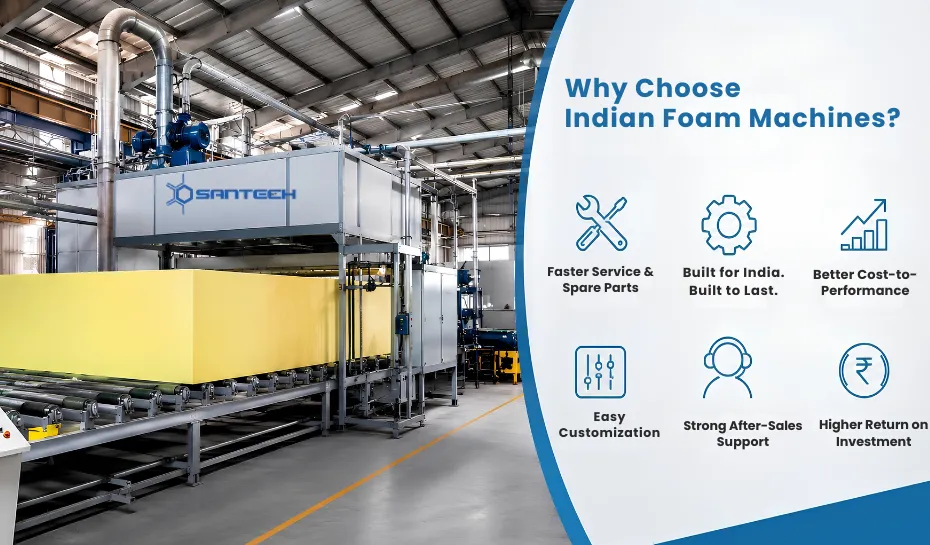
Over the last decade, the Indian foam manufacturing industry has changed dramatically. What was once seen as a market that relied heavily on imported machinery is now home to several trusted foam machine manufacturers India that offer advanced technology, automation, and dependable performance for both small and large production units.
Faster Service and Spare Parts Availability
One of the biggest practical advantages of choosing an Indian foam machine is the speed of support. If a machine stops unexpectedly, waiting days or weeks for a technician or spare part can disrupt your entire production schedule. With Indian manufacturers, service engineers and replacement parts are usually much easier to access, helping you get back to production quickly and reduce costly downtime.
Designed for Indian Manufacturing Conditions
Indian manufacturers understand the realities of local factory environments — from power fluctuations and temperature changes to raw material variations and day-to-day shop floor conditions. Because the machines are built with these factors in mind, they tend to perform more consistently in real-world Indian manufacturing setups.
Better Cost-to-Performance Ratio
Imported machines may look impressive on paper, but they often come with higher purchase costs, expensive servicing, and longer lead times for parts. Indian foam machines, on the other hand, usually offer a strong balance between performance and affordability. You get reliable production capability without putting unnecessary pressure on your investment budget.
Easier Customization
Every foam manufacturer has slightly different production needs. Some focus on mattress foam, others on furniture cushions or industrial applications. Indian manufacturers are often more flexible when it comes to customizing machine capacity, automation features, and production configurations, making it easier for businesses to scale as they grow.
Strong After-Sales Support
A foam machine is not just a one-time purchase — it’s a long-term production partner. Good after-sales support makes a huge difference in day-to-day operations. Leading foam machine manufacturers India provide installation assistance, operator training, troubleshooting support, and maintenance guidance to help manufacturers keep their production lines running smoothly.
Improved Return on Investment
When you combine reliable production output, lower maintenance costs, faster support, and easier spare part availability, Indian foam machines often deliver a better long-term return on investment. For many manufacturers, the real savings come not just from the purchase price, but from fewer disruptions and smoother operations over time.
Wrapping Up
Choosing between Indian and imported foam machines ultimately comes down to reliability, service support, production requirements, and long-term operating costs. While imported systems may offer advanced engineering, modern Indian machines have become a preferred choice for many manufacturers due to their cost-effectiveness, faster maintenance support, and adaptability to local production conditions.
Partnering with trusted foam machine manufacturers India can help reduce production downtime, improve foam quality consistency, and ensure seamless operations. A well-engineered PU foam machine supported by experienced technicians and readily available spare parts can significantly enhance manufacturing efficiency and profitability.
As one of the leading foam machine manufacturers India, Santech Foam Machines delivers advanced foam production solutions designed for modern manufacturing needs. Our range of PU foam machines and complete foam processing equipment combines performance, durability, and reliable after-sales support, helping businesses achieve consistent production quality and long-term operational success.