

Why Is Accurate Foam Mattress Cutting Important for Manufacturers?
Accurate foam mattress cutting is important because the size and thickness of each foam component directly affect the quality and consistency of the finished mattress. Even a small cutting variation can cause problems during assembly, affect the fit of the mattress cover, or result in unnecessary foam waste.
For manufacturers producing mattresses in large quantities, consistency is especially important. Every foam piece needs to meet the required dimensions so that the same product quality can be maintained across the production run. Accurate cutting also reduces rework, improves material utilisation, and helps manufacturers manage production costs.
Foam density is another factor that manufacturers should consider when assessing cutting requirements. Density can influence the feel, support, durability, and processing behaviour of foam. Understanding how to calculate density of foam helps manufacturers verify the material before selecting suitable cutting methods and machine settings. This can make it easier to maintain consistent foam quality and accurate mattress dimensions throughout production.
A slight variation during cutting can lead to the following problems:
| Cutting Issue | Impact on Mattress Manufacturing |
|---|---|
| Uneven edges | Can affect mattress appearance, fitting, and finishing quality. |
| Incorrect thickness | May affect comfort, support, and consistency between mattresses. |
| Excess material removal | Increases foam waste and overall production costs. |
| Inaccurate sizing | Can create difficulties during mattress assembly, covering, and packaging. |
| Surface damage | Can reduce the appearance and perceived quality of the finished mattress. |
How Do Manufacturers Achieve Accuracy in Foam-Cutting?
Manufacturers achieve accurate foam cutting by combining the right machine, correct operating settings, proper foam positioning, and regular quality checks. The goal is not only to make one precise cut but to produce the same dimensions consistently across every mattress component. Machine selection also plays an important role because different foam types, thicknesses, block sizes, and production volumes require different cutting solutions.
1. Choosing the Right Foam-Cutting Machine
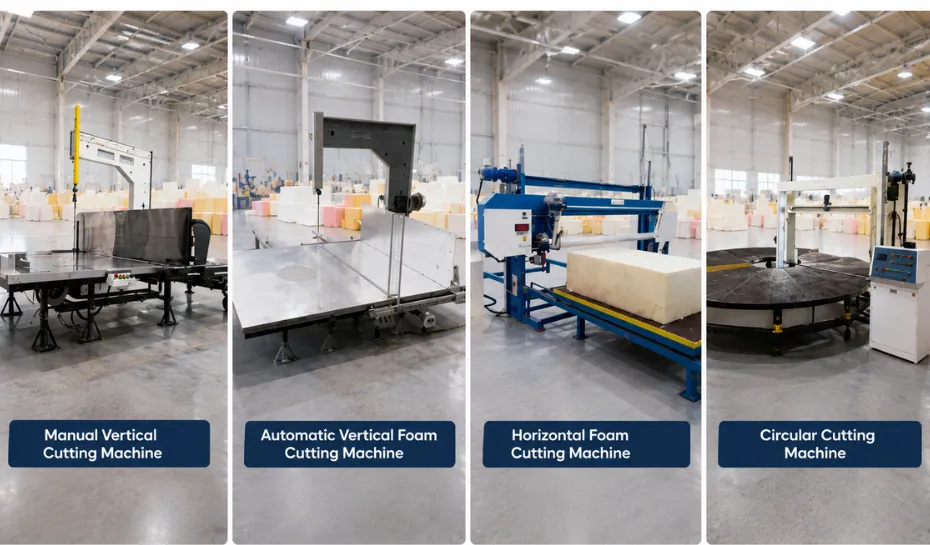
As a first and foremost step, it is very important to choose equipment that will easily match the manufacturing requirements.
A professional-level foam cutting machine will allow the manufacturers to achieve uniform cuts across different foam densities and sizes. Compared to manual cutting methods, automated solutions offer better control over dimensions and also help in reducing human errors.
The selection relies on several factors, including:
- The type of foam being processed
- Production volume
- Required cutting thickness
- Variations in the mattress size
- Level of automation needed
Manufacturers producing different mattress formats require flexible machinery that can easily handle multiple cutting requirements.
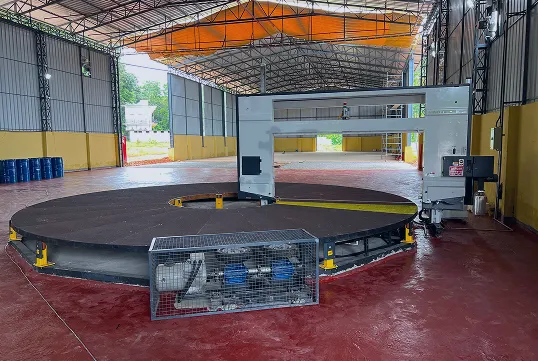
2. Using PU Foam Cutting Machines for Uniform Results
Polyurethane foam is widely used in mattress manufacturing due to its versatility, durability, and comfort properties.
A PU foam cutting machine is specially designed to process PU foam blocks with better versatility, durability, and precision. These machines enable manufacturers to achieve clean cuts while maintaining the required shape and dimensions. Consistent foam properties, including density and firmness, can also influence cutting performance and final product quality. For standardized information on material testing and evaluation, manufacturers can refer to ASTM International standards.
The benefits include the following:
| Features | Manufacturing Benefit |
|---|---|
| Precision cutting | Consistent mattress dimensions |
| Controlled movement | Reduced cutting errors |
| Better blade performance | Cleaner foam surfaces |
| Repeatable operation | Uniform production quality |
For manufacturers handling high production volumes, uniformity becomes as important as speed.
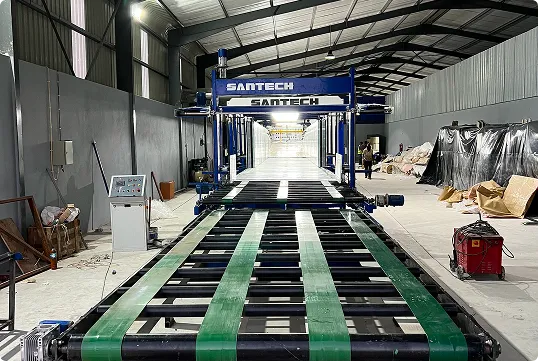
3. Using Horizontal Foam Cutting Machines for Large Foam Blocks
Large foam blocks demand specialised equipment that will help you in achieving precise horizontal cuts.
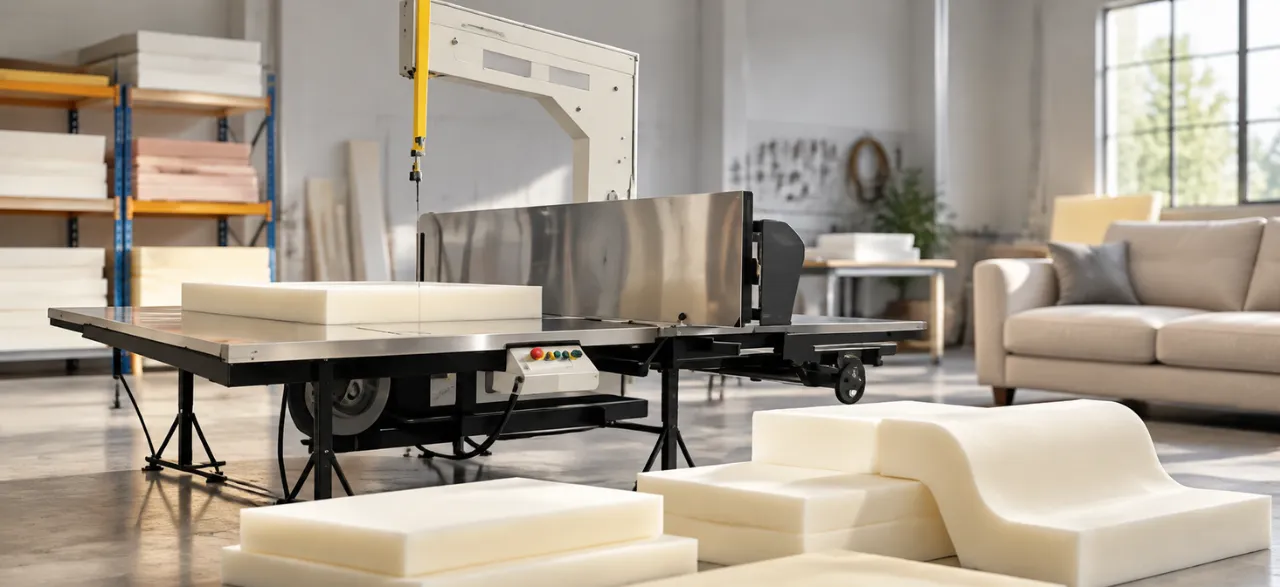
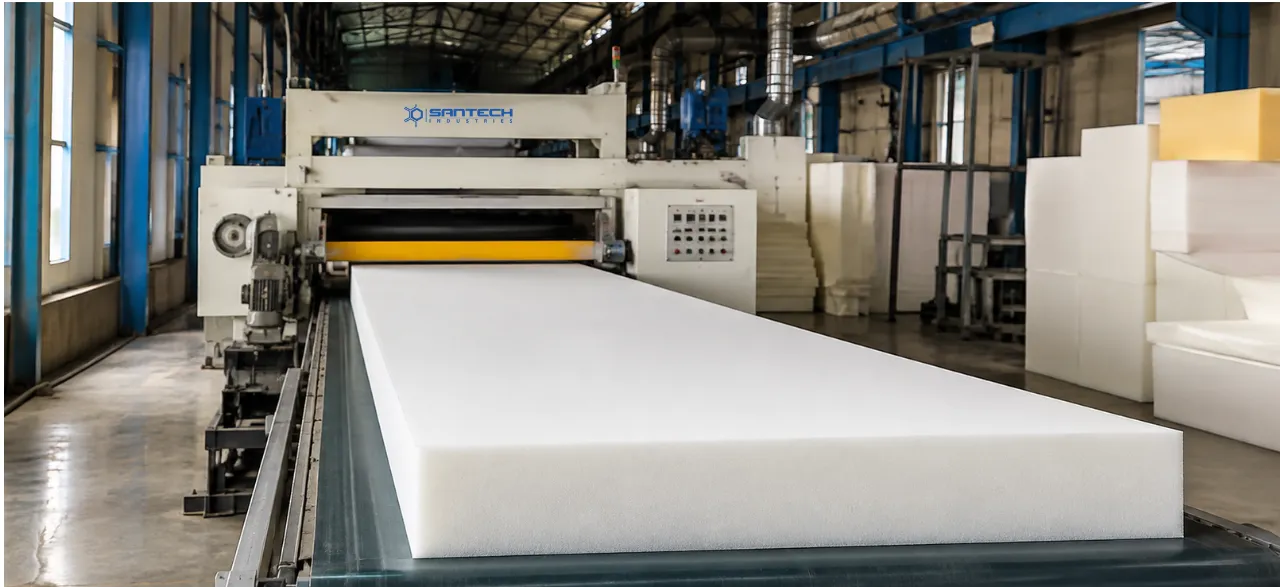
A horizontal foam cutting machine will enable the manufacturers to slice foam blocks into the required thickness before further processing. These machines are commonly used where uniform layers or sheets of foam are needed.
Horizontal cutting enables the manufacturers to:
- Maintain uniform thickness levels.
- Efficiently process larger foam blocks.
- Reduce manual handling.
- Improve overall production flow.
The machine configuration will depend on the size of the foam blocks and also the needed output capacity.
How Does a Foam Cutting Machine Cut Mattress Foam?
A foam cutting machine follows a controlled process to turn larger foam blocks into accurately sized mattress components. Using the right settings and a horizontal foam cutting machine can help manufacturers achieve uniform thickness, clean cuts, and consistent dimensions.
| Cutting Stage | What Happens |
|---|---|
| 1. Foam Measurement | The foam block is measured according to the required mattress dimensions. |
| 2. Foam Positioning | The foam is placed securely on the cutting surface to minimise movement during cutting. |
| 3. Machine Setup | The operator sets the required cutting dimensions, thickness, and suitable machine parameters. |
| 4. Foam Cutting | The blade moves through the foam to create the required size, shape, or thickness. |
| 5. Dimension Checking | The finished foam component is checked for accurate dimensions, thickness, and clean edges. |
What Is the Best Foam Cutting Machine for Mattress Manufacturing?
There is no single foam cutting machine that is best for every mattress manufacturer. The right choice depends on the type of foam, block size, required thickness, mattress dimensions, production volume, and level of automation needed.
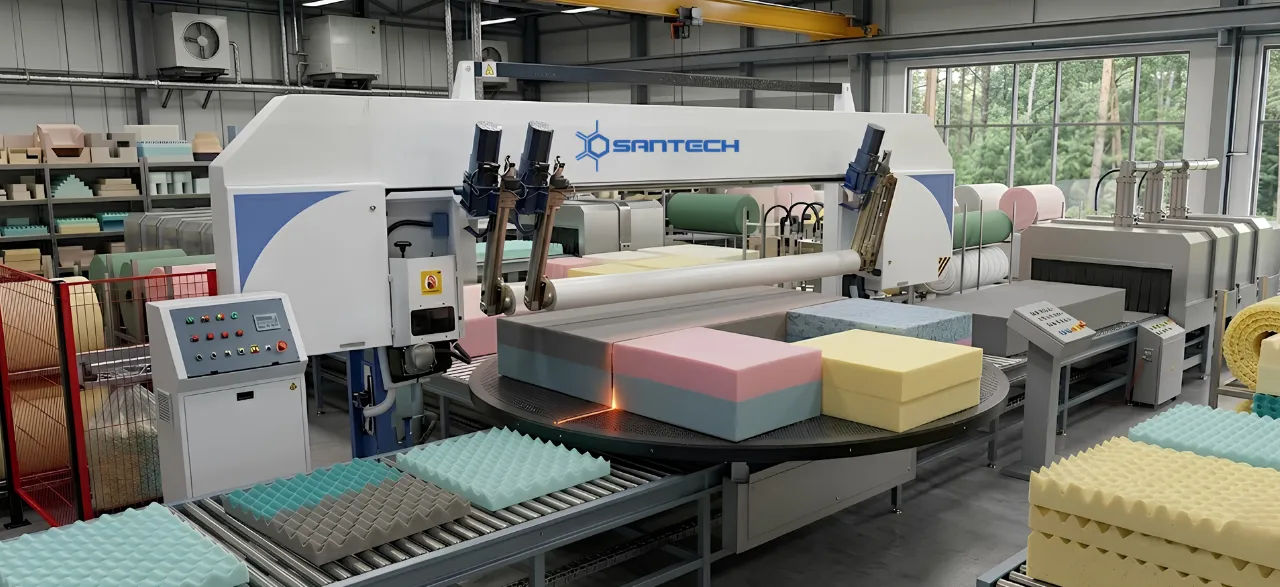
For manufacturers producing standard mattress components from large foam blocks, a horizontal foam cutting machine can be a practical choice for producing uniform sheets and layers. A vertical foam cutting machine may be more suitable when different sizes, shapes, or individual foam components need to be cut. For higher production requirements, an automatic machine can provide better repeatability and reduce dependence on manual handling.
Before choosing equipment, manufacturers should consider:
- Foam type and density: Different foam materials may require different cutting approaches.
- Block size: Larger foam blocks need equipment with suitable cutting capacity.
- Required thickness: The machine should provide consistent thickness according to the mattress design.
- Production volume: High-volume manufacturers may benefit from automated or faster cutting systems.
- Mattress designs: Different sizes and customised components may require greater cutting flexibility.
- Available floor space: Machine dimensions and workflow should fit the production area.
- Maintenance and operation: Easy machine operation and regular maintenance can help keep production consistent.
For mattress manufacturers, the best machine is ultimately the one that provides the required cutting accuracy, repeatability, production capacity, and material utilisation without adding unnecessary complexity to the manufacturing process.
Manual Cutting vs. Machine-Based Cutting
Well, the shift from manual methods to automated solutions has completely transformed how manufacturers approach foam processing.
| Factor | Manual Cutting | Machine Cutting |
|---|---|---|
| Accuracy | Depends heavily on operator skill and measurement | More consistent dimensions and cutting quality |
| Production Speed | Suitable for smaller quantities | Better suited for high-volume production |
| Material Wastage | Higher possibility of uneven cuts and excess material removal | Better material utilisation with controlled cutting |
| Repeatability | Difficult to maintain across large orders | Consistent results across multiple foam components |
| Customisation | Possible but often requires more manual effort | Faster adjustment for different sizes and designs |
| Cutting Thickness | Can vary due to manual pressure and technique | Better control over required foam thickness |
| Large Foam Blocks | More difficult to handle and cut evenly | Processes larger blocks more efficiently |
| Operator Dependency | High dependence on individual skill | Reduces dependence on manual cutting technique |
| Edge Quality | May vary between pieces | More uniform and cleaner edges with proper settings |
| Quality Control | Requires frequent manual checking | Easier to standardise and monitor cutting parameters |
| Production Consistency | Can vary from batch to batch | Better suited for maintaining consistent output |
| Labour Requirement | More manual handling and cutting work | Can reduce repetitive handling and cutting work |
Though manual cutting might still work for small operations, machine-based cutting offers better control for growing manufacturers.
Role of Technology in Improving Foam Cutting Accuracy
Modern foam manufacturing processes largely focus on improving efficiency through better and enhanced technology.
As per several industry reports, automation in manufacturing can significantly improve productivity by reducing repetitive manual tasks and improving process consistency. In foam processing, this simply means that the manufacturers can achieve better output while also maintaining quality standards.
Various features like programmable settings, automated movement controls, and improved blade systems enable the manufacturers to produce precise cuts repeatedly.
Here, the goal is not only faster production but also reducing avoidable material losses.
Essential Factors Manufacturers Should Consider Before Choosing Cutting Equipment
Selecting the right cutting equipment requires a basic understanding of the production needs.
Manufacturers should be able to evaluate the following:
| Factor | Why It Matters |
|---|---|
| Foam type | Different materials require suitable cutting methods. |
| Production capacity | Determines required machine size and speed. |
| Mattress designs | Custom shapes may require flexible solutions. |
| Space availability | Affects machine installation planning. |
| Maintenance requirements | Influences long-term operating efficiency. |
Investing in suitable equipment will also help the manufacturers to create a smoother production process.
Reducing Foam Waste Through Efficient Cutting Practices
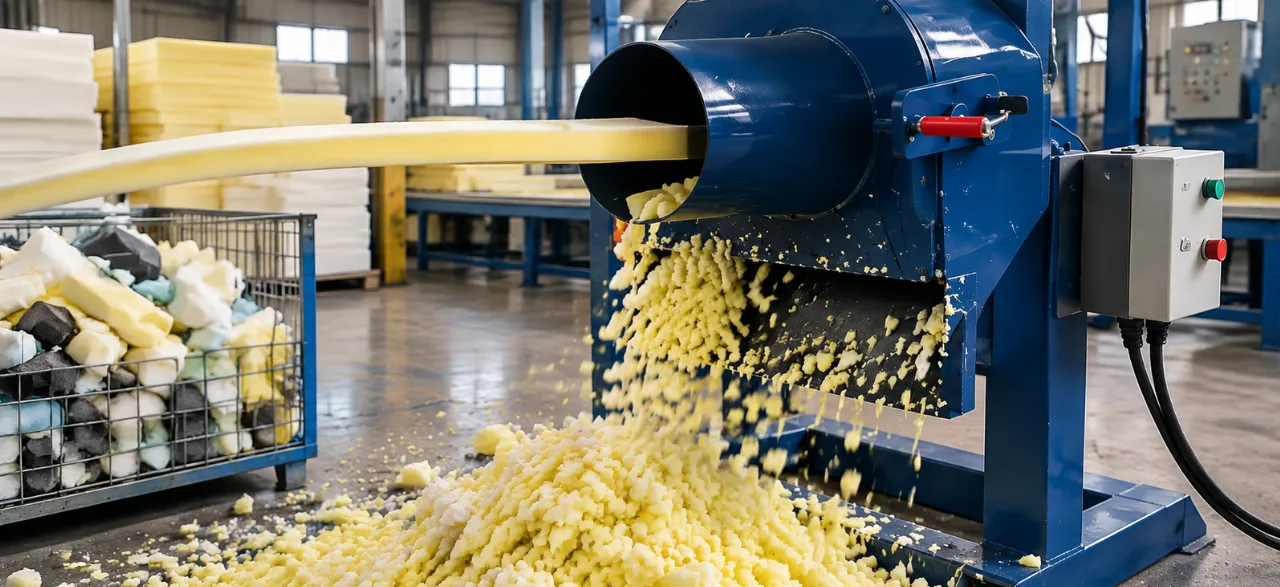
Material wastage directly affects manufacturing costs. Since foam is one of the major raw materials in mattress production, improving cutting precision can lead to major savings. Efficient cutting practices help manufacturers achieve accurate dimensions, reduce unnecessary trimming, and make better use of available foam. A Foam Shredding Machine can further support waste management by processing leftover foam into reusable material for suitable applications, helping manufacturers reduce waste and improve overall resource utilization.
Manufacturers can reduce wasteiny the following ways:
- Planning for cutting patterns before processing.
- Maintaining machine settings regularly.
- Properly training the operators.
- Using suitable blades and equipment.
- Monitoring foam dimension carefully.
Better cutting practices will help in improving both profit margins and sustainability by reducing unwanted material wastage.
How to Cut Memory Foam Mattress Accurately?
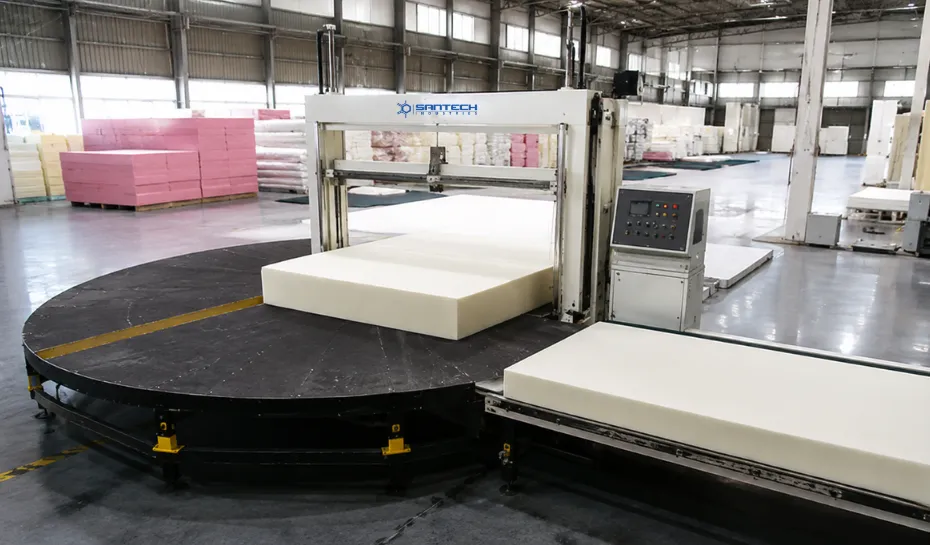
Cutting memory foam accurately starts with getting the measurements right. Before cutting, manufacturers should mark the required length, width, and thickness clearly on the foam. The foam should also be positioned properly so it does not shift during the cutting process.
It is also useful to understand how foam is made, because the way polyurethane foam is produced can affect its density, cell structure, and consistency. These properties can influence how the foam behaves during cutting. Consistent foam quality, combined with the right cutting equipment, makes it easier to achieve uniform mattress components.
For small-scale work, memory foam can be cut using suitable manual tools, but maintaining the same dimensions across multiple pieces can be difficult. In mattress manufacturing, a foam cutting machine provides better control and repeatability, especially when large foam blocks need to be processed into consistent mattress components.
The cutting method also depends on the foam thickness, density, block size, and required production volume. Using the appropriate blade and machine settings helps prevent rough edges, uneven thickness, and unnecessary foam loss. Manufacturers should also check blade condition and machine alignment regularly to maintain consistent results.
For high-volume production, the goal is not simply to cut memory foam quickly. The process should produce accurate dimensions, clean edges, consistent thickness, and minimal material waste from one mattress component to the next. Choosing the right cutting equipment and maintaining proper operating practices can make this process much more reliable.
The Future of Foam Mattress Cutting
As the demand for mattresses continues to rise, manufacturers are focusing more on precision, speed, and flexibility.
Future manufacturing processes are expected to include greater automation, improved digital controls, and smarter production monitoring systems.
For businesses, the precise foam mattress cutting is not just about getting the right shape, but it also helps in improving efficiency, reducing waste, and maintaining uniform product quality.
Conclusion
Accurate cutting foam mattress components is an important part of maintaining consistent quality, controlling material waste, and improving production efficiency. For manufacturers, choosing the right cutting machine and maintaining proper settings can make it easier to achieve the required dimensions, thickness, and finish across different mattress sizes.
The best equipment depends on the foam type, block size, production volume, and cutting requirements. A suitable foam cutting machine can provide repeatable results, while proper operator training, machine maintenance, and quality checks help maintain accuracy throughout production.
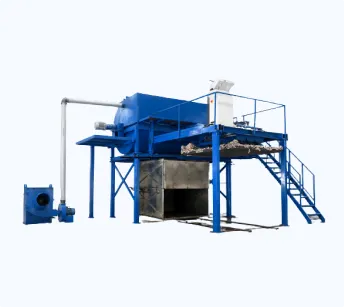
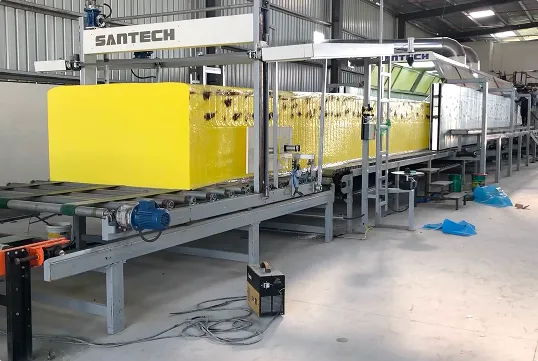
At Santech Foam Machines, we manufacture foam processing equipment designed around real production requirements. Along with foam cutting solutions, our foam making machine range helps manufacturers build an efficient foam production and processing setup. Choosing the right combination of foam making and cutting equipment can help businesses improve productivity, reduce unnecessary material loss, and maintain consistent mattress quality.