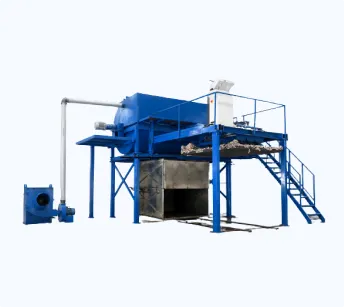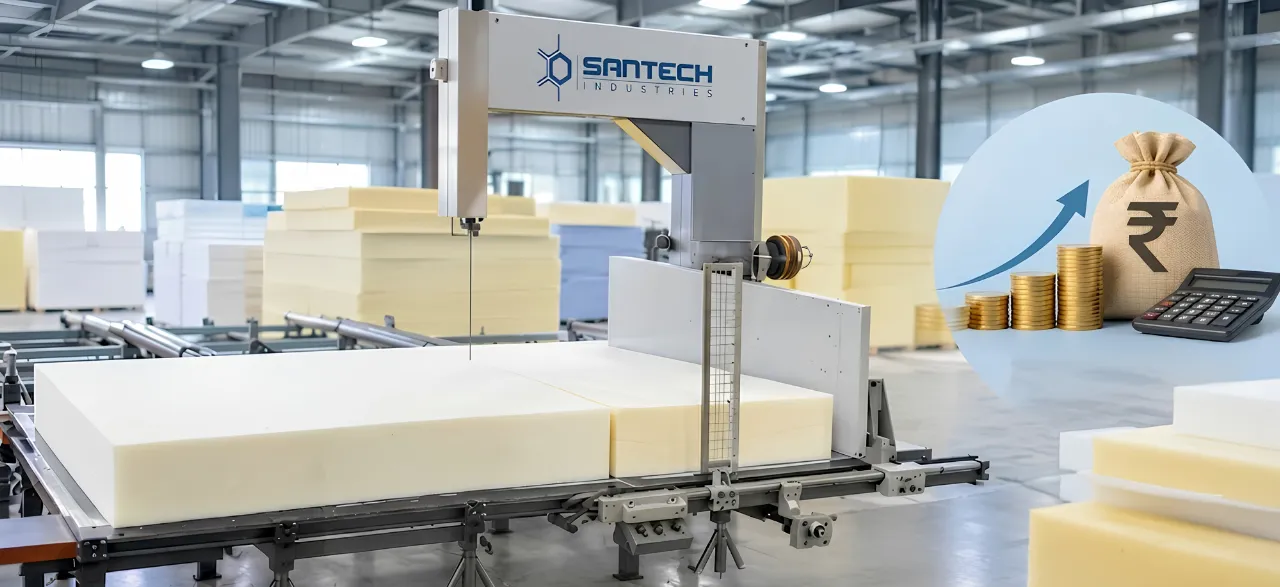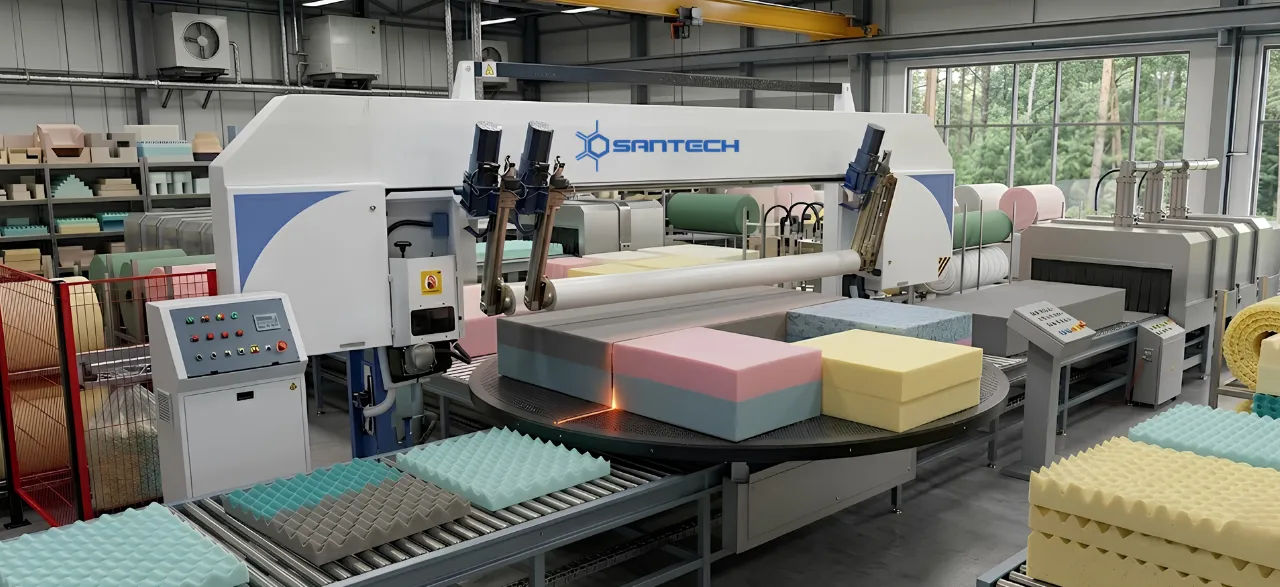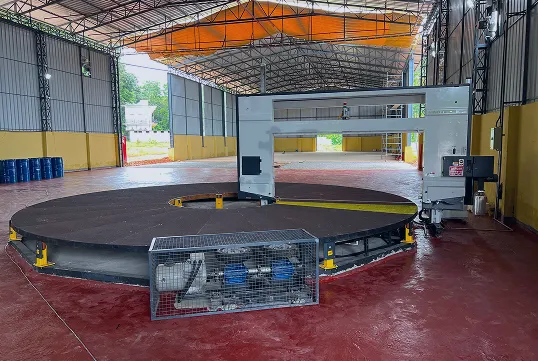
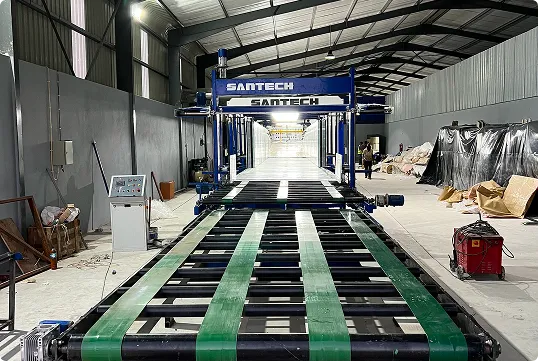
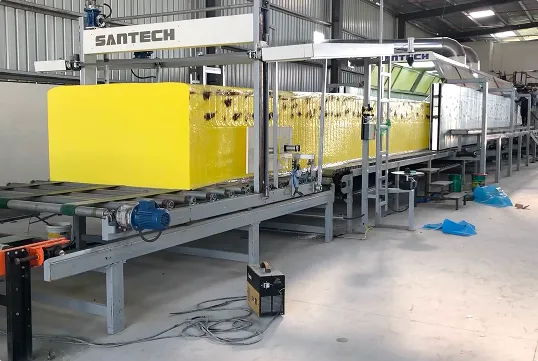
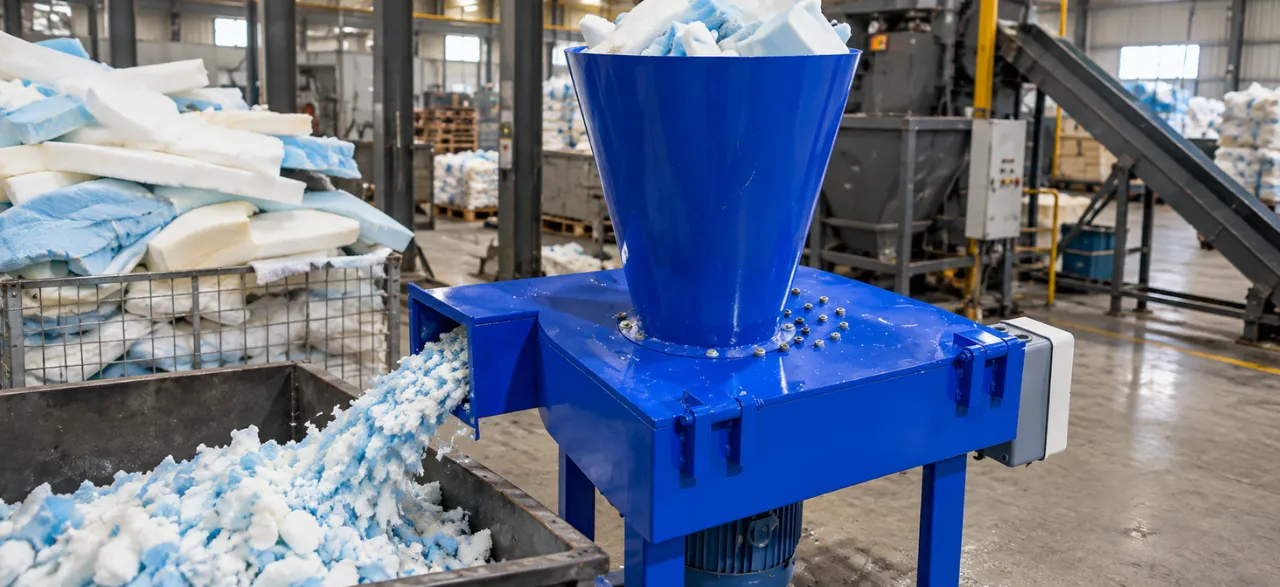


The foam shredding process converts suitable foam waste into smaller pieces using a foam shredding machine, making the material easier to handle, collect, and prepare for reuse or recycling. It typically involves sorting foam scraps, feeding them into the machine, shredding them into smaller pieces, and collecting the output.
Manufacturers use this process to manage offcuts from mattresses, sofas, cushions, and other foam products. Depending on the foam type and material quality, the shredded pieces may be used for cushion filling, rebonded foam production, or other suitable recycling applications.
Understanding how the process works helps manufacturers select compatible equipment, achieve the required output size, and identify practical ways to recover foam waste.
What Is the Foam Shredding Process?
The foam shredding process is a mechanical method of reducing larger foam scraps into smaller flakes, chips, or irregular pieces. A foam shredding machine uses cutting elements to break down suitable foam waste so it can be collected and prepared for further processing.
The equipment is useful in foam manufacturing plants, mattress factories, furniture production facilities, and recycling operations where foam offcuts accumulate.
Foam shredding is one part of the broader manufacturing workflow; our guide to the foam production process explains the wider context of foam manufacturing.
A typical machine includes a feeding arrangement and a cutting chamber. Depending on its design, it may also use a screen or other sizing mechanism to influence the size of the discharged pieces.
The main purpose is to prepare foam waste for its next use. Shredding does not automatically complete recycling; the resulting material must still be suitable for a particular application or recovery process.
How Does a Foam Shredding Machine Work?
The foam shredding machine working process consists of several stages, from preparing the input material to collecting the finished output. The exact arrangement depends on the machine design and the type of foam being processed.
| Stage | What Happens | Why It Matters |
|---|---|---|
| 1. Sorting | Suitable foam scraps are separated from fabric, metal, springs, and other unwanted materials. | Helps reduce contamination and prepares the material for processing. |
| 2. Feeding | Prepared foam enters the machine through a hopper or suitable feeding system. | Supports controlled material flow. |
| 3. Shredding | Cutting elements reduce the foam into smaller pieces. | Makes bulky, irregular scraps easier to handle. |
| 4. Output Sizing | Screens or other sizing features influence particle size where fitted. | Helps match the output to its intended application. |
| 5. Collection | The shredded material is directed into bags, bins, or a collection system. | Makes storage and transfer easier. |
| 6. Further Processing | Suitable material is sorted, blended, bonded, or sent to a recycling facility. | Prepares the foam for potential reuse or recovery. |
What Affects the Foam Shredder Working Process?
The foam shredder working process depends on several factors:
- Foam type: Flexible PU foam, memory foam, and rigid foam can have different processing requirements.
- Input dimensions: Large or irregular scraps may require different feeding arrangements.
- Blade condition: Worn cutting elements can affect machine performance and maintenance requirements.
- Machine configuration: The cutting arrangement, feeding system, and any fitted screen influence the output.
- Required particle size: Foam intended for cushion filling may have different requirements from foam intended for rebonding.
Manufacturers should test representative samples before purchasing equipment. A machine suitable for one foam grade may not produce the same results with another.
It is also important to distinguish shredding from downstream processing. The machine reduces the foam’s size, while rebonding, molding, and curing generally require separate equipment and operations.
Which Types of Foam Can Be Shredded?
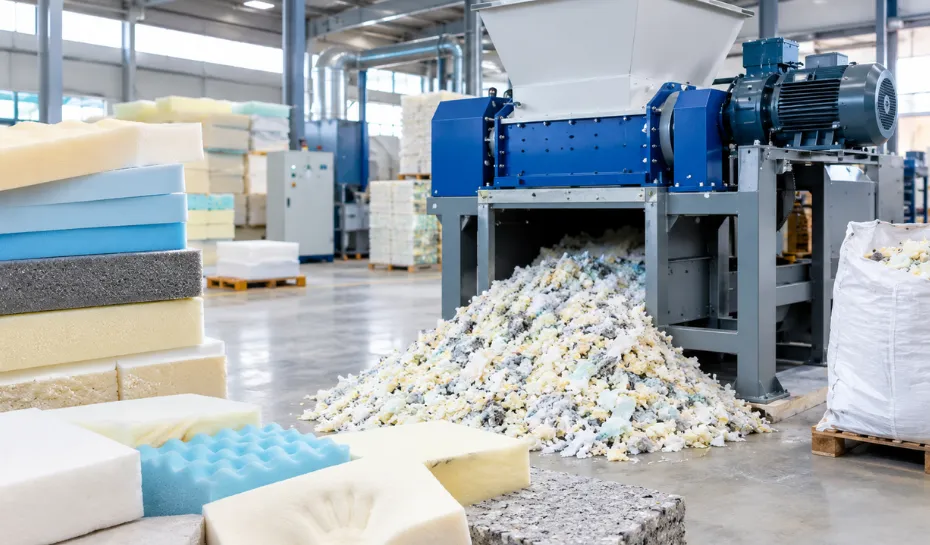
Flexible polyurethane (PU) foam from mattresses, sofas, cushions, and upholstery is a common material for shredding. Manufacturers involved in foam production can also explore a PU foam machine for their foam manufacturing requirements. Depending on the shredding machine’s specifications, other compatible foam grades may also be processed.
Before starting the process, check the following material categories.
- Flexible PU foam: Commonly generated during mattress, furniture, and cushioning production.
- Memory foam: May be suitable for compatible shredding equipment, subject to the manufacturer’s specifications.
- High-resilience foam: Requires confirmation that the machine can process the specific material.
- Rigid foam: May need a different machine design from equipment intended for soft, flexible foam.
- Recovered or mixed foam: May require additional sorting to remove fabric, metal, adhesives, and other contaminants.
Material cleanliness also matters. Foam intended for a particular reuse or recycling application must meet the receiving process’s requirements.
Before processing a new material, confirm compatibility with the equipment manufacturer. Do not assume that a machine designed for flexible foam can also handle rigid foam or contaminated mixed waste.
How Is Shredded Foam Used in Foam Waste Recycling?
Shredded foam is an intermediate material rather than a finished recycled product. Its next destination depends on the foam’s composition, cleanliness, particle characteristics, and intended application.
| Shredded Material | Potential Application | Additional Processing |
|---|---|---|
| Clean, suitable flexible foam pieces | Cushion or pillow filling | Sorting, blending, and filling |
| Compatible PU foam scraps | Rebonded foam production | Binder mixing, forming, and curing |
| Separated foam waste | Specialist recycling | Inspection and processing according to facility requirements |
| Material unsuitable for direct reuse | Appropriate recovery or disposal route | Assessment by a qualified waste processor |
How Is Shredded Foam Used to Make Rebonded Foam?
Rebonded foam is produced by combining suitable foam particles with a binder and forming the mixture into a product. The material is then processed and cured according to the manufacturing method.
The foam shredding process prepares suitable scraps for this stage by reducing them into smaller pieces. However, shredding alone does not produce rebonded foam.
To understand the next stages, including material preparation and product formation, explore our guide to the rebonded foam manufacturing process.
The finished product’s quality depends on factors such as the recovered foam’s composition, particle characteristics, binder, required density, and manufacturing conditions. Not every type of shredded foam is suitable for rebonding.
For this reason, manufacturers should identify the intended product and its material requirements before deciding how to process their foam waste.
Why Do Manufacturers Use Foam Shredding Machines?
Manufacturers use foam shredders to improve waste handling and prepare suitable scraps for potential material recovery.
1. Easier waste handling
Large, irregular foam offcuts can be difficult to move and store. Smaller pieces are generally easier to collect, transport, and manage.
2. Preparation for reuse
Suitable shredded foam can become feedstock for cushion filling, rebonded foam manufacturing, or another compatible application.
3. Improved recycling workflow
A shredder can form part of a wider foam waste recycling system that includes sorting, collection, material preparation, and downstream processing.
4. More manageable production scrap
Reducing irregular offcuts into smaller pieces can simplify storage and transfer within a manufacturing facility.
5. Potential material recovery
Where a suitable reuse or recycling route exists, manufacturers may recover value from material that would otherwise be difficult to use directly.
Shredding is one way to manage suitable offcuts; manufacturers can also explore practical strategies to reduce foam waste in mattress manufacturing and improve material utilisation.
The actual benefits depend on the incoming material, equipment suitability, operating costs, and availability of a reliable destination for the shredded output. Shredding alone does not guarantee lower disposal costs or successful recycling.
What Should You Check Before Choosing a Foam Shredding Machine?
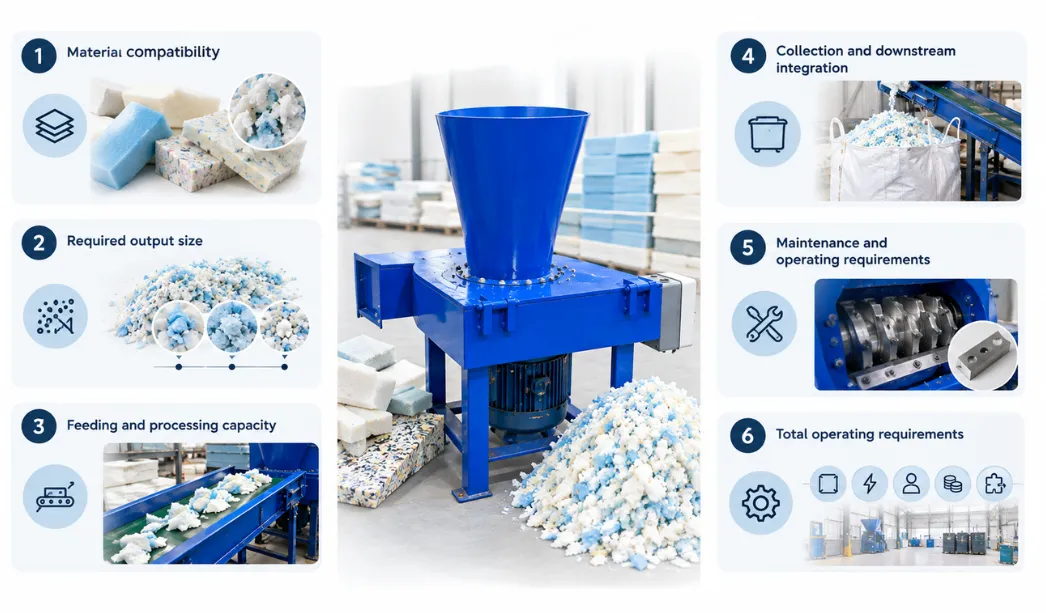
Selecting a machine based only on catalogue photographs or advertised capacity can lead to a poor equipment match. First, identify the foam you need to process and the characteristics required in the final output.
1. Material compatibility
Confirm whether the machine can process your foam type, density range, and typical scrap dimensions. Ask whether fabric or other attachments must be removed before feeding.
2. Required output size
Explain whether the material will be used for filling, rebonding, or another process. Ask how the machine controls particle size and whether its configuration can meet your requirements.
3. Feeding and processing capacity
Determine whether manual feeding is practical or whether your operation needs a conveyor or another feeding arrangement. Request performance information based on material similar to your own rather than relying solely on general capacity claims.
4. Collection and downstream integration
Plan how the shredded material will be collected, stored, and transferred. Depending on the production layout, this may involve bags, bins, conveyors, or other equipment.
When planning equipment and material movement across a facility, it is also useful to understand the wider foam plant production process and how individual operations fit together.
5. Maintenance and operating requirements
Ask about blade inspection, replacement, cleaning, blockage removal, spare parts, guarding, and operator training. Understand the expected maintenance requirements before purchasing.
6. Total operating requirements
Consider the available floor space, power supply, operator requirements, maintenance costs, and any additional equipment needed for collection or downstream processing.
Before making a decision, request a demonstration using representative foam samples. Compare the actual output with the requirements of your filling line, rebonding operation, or recycling partner.
The best machine is one that matches your material, output requirements, and production setup—not simply the one with the highest advertised capacity.
Safety Considerations When Operating a Foam Shredder
Industrial shredders contain moving cutting components that can cause serious injuries if operated incorrectly. Safe operation requires suitable guarding, functioning safety devices, operator training, and compliance with the manufacturer’s instructions.
Operating a foam shredding machine safely requires suitable operator training, machine guarding, and regular maintenance. Before starting the foam shredding process, manufacturers should check that the equipment is installed correctly and that all safety devices are functioning.
-
Inspect machine guards: Keep guards and protective covers in place during operation. Never bypass safety interlocks.
-
Follow safe feeding procedures: Feed foam according to the manufacturer’s instructions and keep hands and loose clothing away from moving parts.
-
Use appropriate protective equipment: Follow the machine manufacturer’s risk assessment for suitable eye, hearing, respiratory, and other protection.
-
Control dust and debris: Assess dust generation and provide suitable housekeeping and ventilation measures where needed.
-
Isolate power before maintenance: Switch off and isolate the machine’s energy sources, and verify that hazardous movement has stopped before clearing blockages, cleaning, or servicing.
-
Train operators: Ensure operators understand the machine’s controls, emergency-stop procedure, operating limits, and maintenance requirements.
Safety requirements depend on the machine design, the foam being processed, and the working environment. Always follow the equipment manufacturer’s operating manual and applicable workplace safety regulations.
For further guidance, consult the UK Health and Safety Executive’s resources on machinery safety and safe maintenance.
Conclusion
The foam shredding process helps manufacturers convert suitable foam scraps into smaller pieces for easier handling, reuse, and recycling. A foam shredding machine reduces foam waste into manageable particles that may be used for cushion filling, rebonded foam production, or other compatible recycling applications, depending on material quality and processing requirements.
Choosing the right machine involves evaluating foam compatibility, required particle size, processing capacity, maintenance needs, and the intended use of the shredded material. Proper material sorting and safe operation are equally important for effective foam waste management.
With 28+ years of industry experience, Santech Foam Machines supports manufacturers with foam processing equipment suited to their production requirements. Explore our foam making machine solutions to find equipment for your foam manufacturing needs.