

What makes one foam manufacturing operation deliver consistent, high-quality foam while another struggles with uneven density, production waste and inconsistent output? The answer often comes down to how well the foam production process is controlled. This guide to foam production explains how manufacturers use foaming machines to accurately process raw materials, control foaming conditions and produce polyurethane foam with the required density, structure and performance.
From selecting the right foam production machine to choosing between continuous and batch production, every decision can affect production efficiency and foam quality. Proper material handling, accurate mixing, process control and regular machine maintenance are equally important for achieving reliable results.
Whether you are planning a new foam manufacturing setup or looking to improve an existing production line, this comprehensive guide covers the foam production process, types of foaming machines, continuous vs batch production, factors affecting foam quality, machine selection, efficiency, maintenance and common production challenges.
Understanding Foam and Its Applications
Foam is a lightweight cellular material used across several industries because it can provide different combinations of softness, flexibility, resilience, cushioning and insulation.
Polyurethane foam is commonly used in applications such as:
- Mattresses and bedding
- Sofas and furniture
- Automotive seating
- Cushions and pillows
- Packaging
- Insulation
- Acoustic and cushioning applications
The characteristics of the finished foam depend on factors such as formulation, density, cell structure, processing conditions and the intended application.
Manufacturers looking to understand the complete process can also explore how foam is made, including the materials and major manufacturing stages.
The Role of Foaming Machines in Foam Production
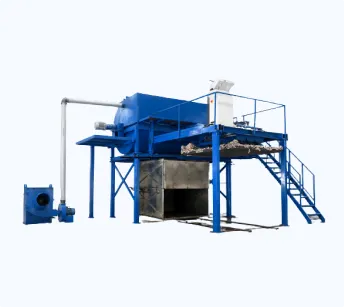
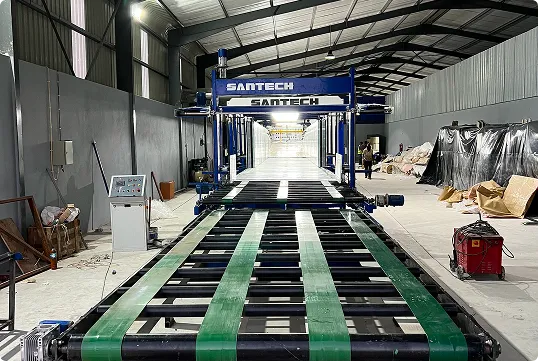
A foaming machine is an important part of an industrial foam production setup. It is designed to process foam-making raw materials under controlled conditions and support consistent production.
During production, the machine helps manage important operating factors such as:
- Material feeding
- Metering
- Mixing
- Chemical ratios
- Production speed
- Temperature and process conditions
- Foam output
Consistent control of these factors is important because variations during production can affect foam density, cell structure, block dimensions and overall quality.
Modern foaming equipment can also help manufacturers improve production consistency while reducing manual intervention and making the manufacturing process easier to manage.
Choosing the Right Foaming Machine for Production
The appropriate foaming machine depends on the manufacturer’s production requirements rather than simply the machine’s capacity.
Important factors to consider include:
1. Production Volume
Manufacturers with high production requirements may need continuous production equipment, while smaller or more flexible operations may consider batch-based systems.
2. Foam Requirements
The required foam density, hardness, flexibility, dimensions and application should be considered when selecting equipment.
3. Production Method
The production method has a direct impact on machine selection. Continuous and batch foam production systems operate differently and are suitable for different manufacturing requirements.
4. Automation Level
Automation can reduce manual intervention and provide greater control over important production parameters. The required automation level depends on production scale, workforce and process requirements.
5. Space and Plant Layout
Available factory space, material storage, production flow and equipment arrangement should also be considered before purchasing a foam production machine. Manufacturers can refer to our guide on foam manufacturing plant space to understand how space requirements can vary with production scale and equipment layout.
Continuous vs Batch Foam Production
Foam production can generally be carried out using continuous or batch production methods.
| Feature | Continuous Foam Production | Batch Foam Production |
|---|---|---|
| Production method | Continuous production | Individual batches |
| Suitable for | High-volume production | Flexible or smaller-scale production |
| Output | Consistent ongoing output | Batch-by-batch output |
| Production flexibility | Suited to standardized production | Greater flexibility for different batches |
| Automation | Can support higher automation | Available in different automation levels |
| Typical consideration | Production volume and consistency | Batch size and formulation flexibility |
The choice between continuous and batch production should be based on production volume, product requirements, available space, formulation needs and desired level of automation.
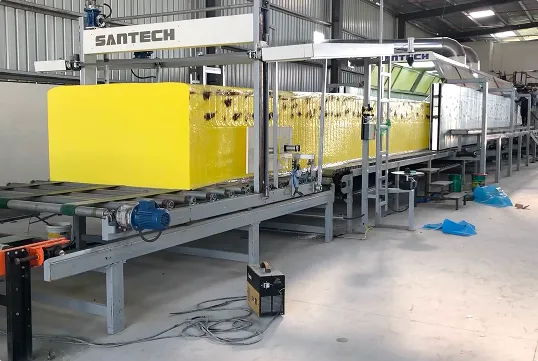
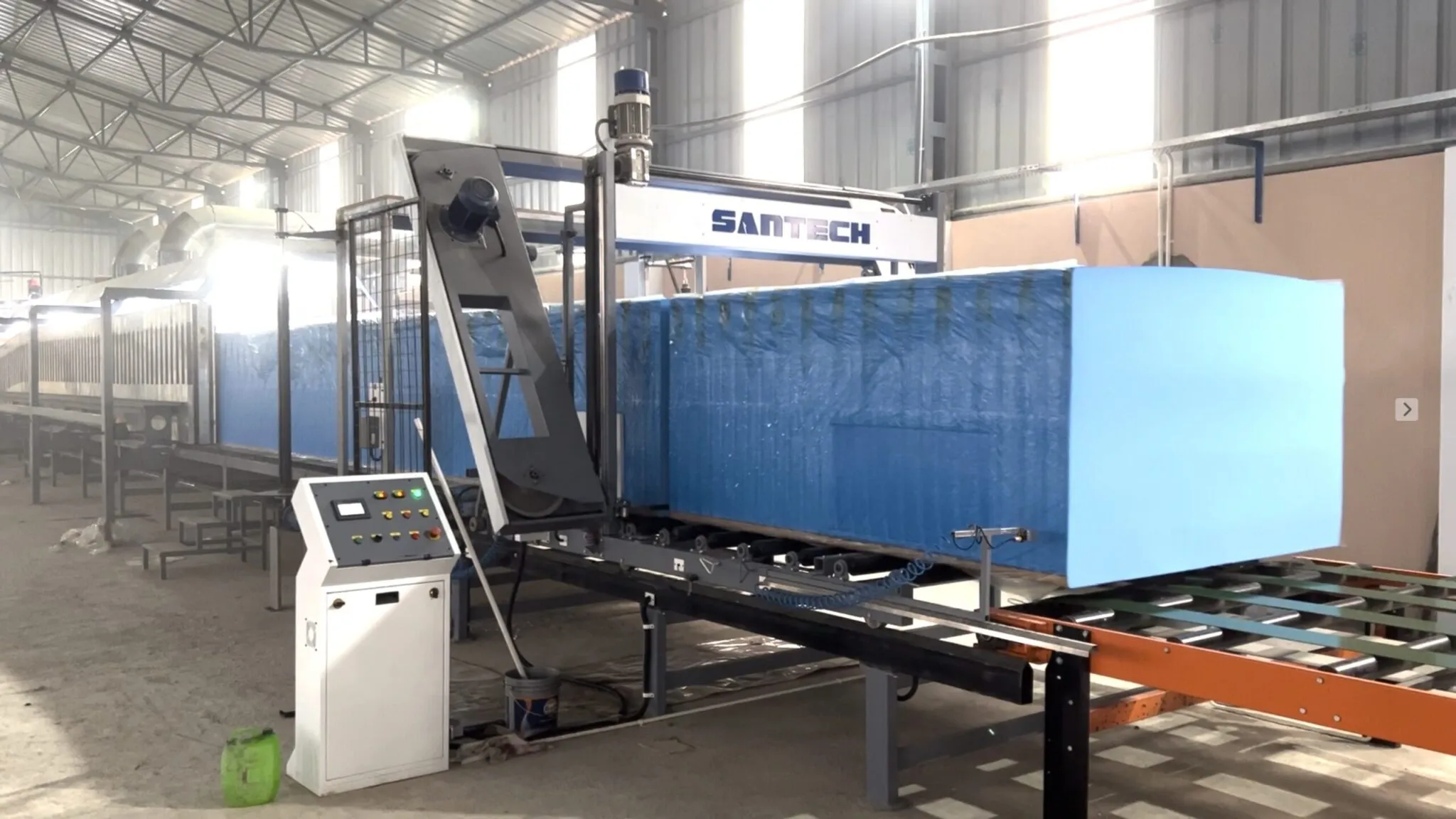
For manufacturers planning larger-scale foam production, a continuous foaming machine can be considered when continuous output and process consistency are key requirements.
How to Improve Foam Production Efficiency
Improving foam production efficiency involves more than increasing machine speed. Manufacturers should focus on maintaining stable production conditions while minimizing unnecessary material loss and downtime.
1. Maintain Consistent Material Feeding
Consistent material feeding helps maintain the required formulation and supports uniform foam characteristics
2.Control Production Conditions
Temperature, material ratios, mixing and other process conditions should be monitored according to the manufacturer’s process requirements.
3. Reduce Unplanned Downtime
Regular machine inspection and preventive maintenance can help identify problems before they interrupt production.
4. Monitor Foam Quality
Manufacturers should regularly check parameters such as density, dimensions, appearance and other product-specific quality requirements.
5. Train Machine Operators
Proper operator training helps ensure that machines are operated according to recommended procedures and production requirements.
6. Review Production Waste
Monitoring material waste can help manufacturers identify inefficient production practices and opportunities for improvement.
Maintenance of Foaming Machines
Regular maintenance is essential for maintaining reliable foam production.
Important maintenance activities include:
- Cleaning mixing and material-contact components
- Inspecting pumps and hoses
- Checking seals and connections
- Monitoring moving components
- Checking material flow
- Verifying machine settings
- Calibrating equipment when required
- Following the manufacturer’s maintenance schedule
Maintenance requirements can vary depending on machine design and production conditions. Manufacturers should always follow the equipment supplier’s recommended maintenance procedures.
Proper maintenance can help reduce unexpected downtime and support stable machine performance over the long term.
Common Foam Production Challenges
Common foam production challenges include inconsistent foam density, foam collapse, uneven foam structure, material leakage and unexpected production downtime. These issues can result from variations in raw materials, material ratios, machine settings, mixing, equipment condition or overall process control.
| Foam Production Issue | Possible Cause & Solution |
|---|---|
| Inconsistent Foam Density | Inconsistent foam density can occur when material ratios, feeding conditions or other production parameters vary during manufacturing. Consistent material metering and regular process monitoring can help manufacturers maintain more uniform foam density. |
| Foam Collapse | Foam collapse can occur when formulation or processing conditions do not support stable foam formation. Manufacturers should check the relevant material and production conditions to identify the underlying cause before making process adjustments. |
| Uneven Foam Structure | An uneven foam structure may result from inconsistent mixing, material flow or changing production conditions. Maintaining stable material feeding and mixing conditions can help support a more uniform foam structure. |
| Material Leakage | Material leakage can occur around hoses, seals, fittings or connections and may affect machine performance and production stability. Regular inspection of these components can help identify leaks before they lead to larger production interruptions. |
| Production Downtime | Production downtime can result from equipment wear, inadequate maintenance, unexpected machine issues or process interruptions. Preventive maintenance and regular equipment inspections can help manufacturers reduce avoidable downtime. |
How Can Foam Production Problems Be Prevented?
Manufacturers can reduce common foam production problems by:
- Maintaining consistent raw material feeding
- Monitoring important production parameters
- Keeping mixing systems properly maintained
- Inspecting hoses, seals and connections
- Following preventive maintenance schedules
- Training machine operators
- Monitoring foam quality throughout production
Identifying the specific cause of a foam production problem is important before changing machine settings or production parameters. For issues related specifically to continuous production, see our guide to continuous foam production challenges.
Conclusion
Foam production depends on the right combination of raw materials, controlled processing, suitable machinery and consistent quality monitoring. This guide to foam production shows how foaming machines support accurate material processing, mixing and foam formation, while continuous and batch systems provide different options for manufacturers based on production volume and process requirements.
Choosing the right foam machine is an important step toward achieving consistent output, efficient production and reliable foam quality. Manufacturers should consider production capacity, foam specifications, automation, plant layout, maintenance and long-term production requirements before selecting equipment.
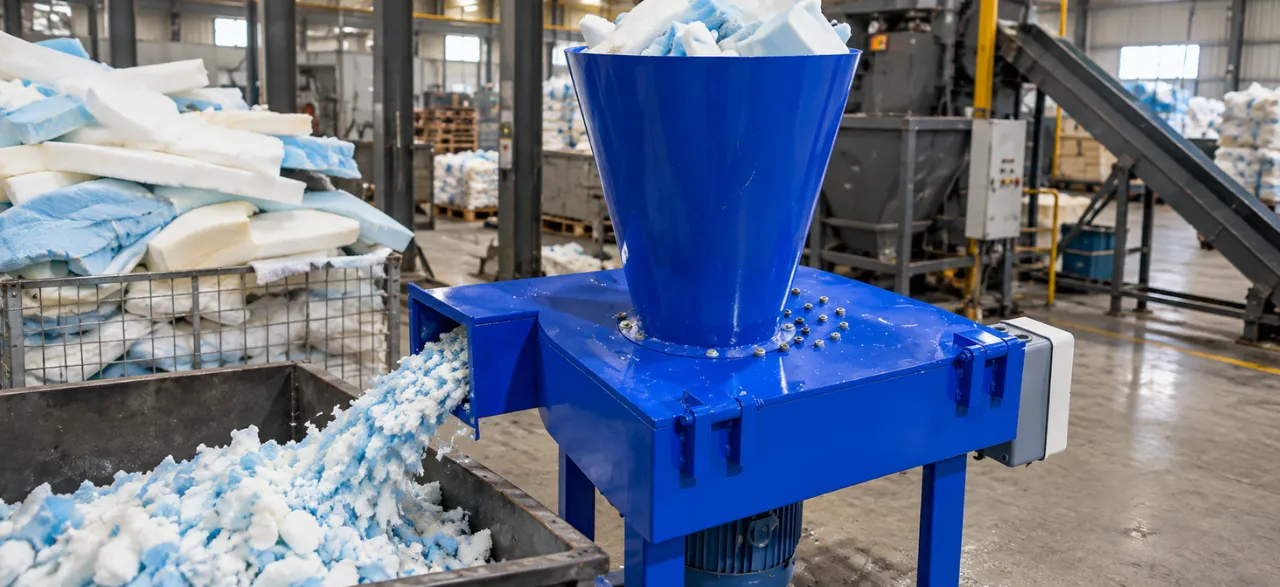
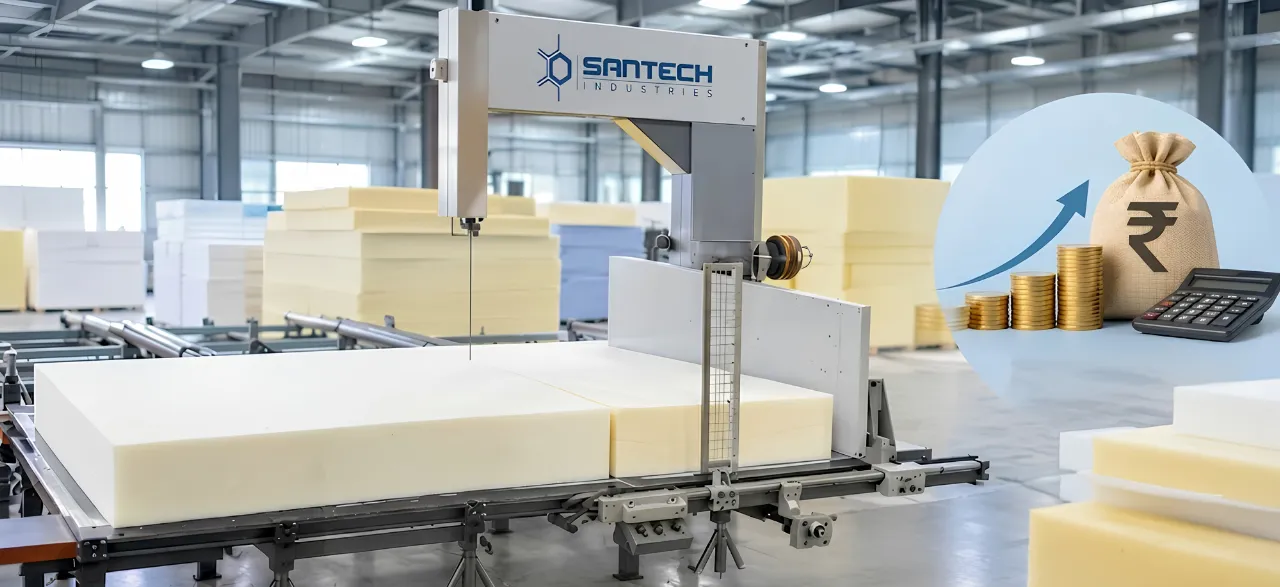
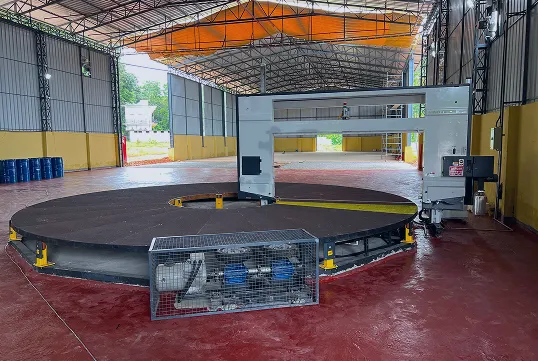
For businesses looking for foam machine manufacturers in India, Santech Foam Machines provides foaming and foam-cutting solutions designed for different industrial production requirements. Its range includes continuous foaming machines, automatic and semi-automatic batch foaming machines, rebonding machines, foam shredding machines and foam cutting equipment.
With experience in polyurethane foam machinery and customised manufacturing solutions, Santech supports manufacturers from equipment selection through installation, training, maintenance and production optimisation.
If you are planning a new foam manufacturing setup or upgrading an existing production line, choosing the right foam machine and manufacturing partner can help build a more consistent and efficient production process.