

The most common types of foam include conventional polyurethane (PU) foam, high-resilience foam, memory foam, rebonded foam and rigid foam. These materials differ in flexibility, density, firmness, resilience and structure, making each suitable for specific applications.
Foam is widely used in mattresses, sofas, furniture, automotive seating, packaging, sports mats, carpet underlay and insulation. The right type depends on how the foam will be used, how much support or cushioning is required, and how frequently it will be compressed.
This guide explains the different types of foam, the types of foam mattresses commonly use, how foam padding works, what high-density foam means, and where rebonded foam is used.
What Is Foam?
Foam is a lightweight cellular material containing many small gas-filled cells within a solid or flexible structure. Different manufacturing processes and formulations can create foams with different levels of softness, firmness, resilience, density and durability. If you want to understand the complete manufacturing process, learn how foam is made from raw materials to finished foam.
Foam can be made from several materials, including polyurethane, latex and other polymers. Among these, polyurethane foam is widely used for mattresses, furniture, upholstery, cushions and industrial applications because its properties can be adjusted for different requirements.
Foam should therefore be selected according to its intended application rather than by appearance or thickness alone.
What Are the Main Types of Foam?
The main types of foam used across mattresses, furniture and industrial applications include:
- Conventional PU foam
- High-resilience (HR) foam
- Memory foam
- Rebonded foam
- Latex foam
- Rigid PU foam
Each type has different characteristics and applications.
| Type of Foam | Main Characteristics | Common Applications |
|---|---|---|
| Conventional PU Foam | Flexible, cushioning and available in different grades | Mattresses, sofas, cushions and packaging |
| HR Foam | Responsive and quicker recovery after compression | Seating and supportive mattress layers |
| Memory Foam | Slow recovery and body-conforming response | Mattresses, pillows and toppers |
| Rebonded Foam | Dense structure made from bonded foam pieces | Mats, carpet underlay and support applications |
| Latex Foam | Resilient and responsive | Mattresses and pillows |
| Rigid PU Foam | Firm cellular structure with insulation properties | Building and appliance insulation |
1. Conventional PU Foam
Conventional polyurethane foam is a flexible foam commonly used for general cushioning and support. It can be manufactured in different grades to provide different combinations of density, firmness and resilience.
It is commonly found in mattresses, sofa cushions, upholstered furniture, backrests and packaging.
For frequently used products, the foam specification should be matched to the expected load and frequency of use rather than selecting material based only on thickness or price.
2. High-Resilience Foam
High-resilience (HR) foam is designed to recover more readily after compression and provide a responsive cushioning feel. It is commonly used where users want support without an overly slow recovery response.
HR foam is frequently considered for sofa seats, upholstered furniture and mattress support or comfort layers.
However, high resilience does not automatically mean high durability or high firmness. Density, formulation, firmness and application requirements should also be evaluated.
3. Memory Foam
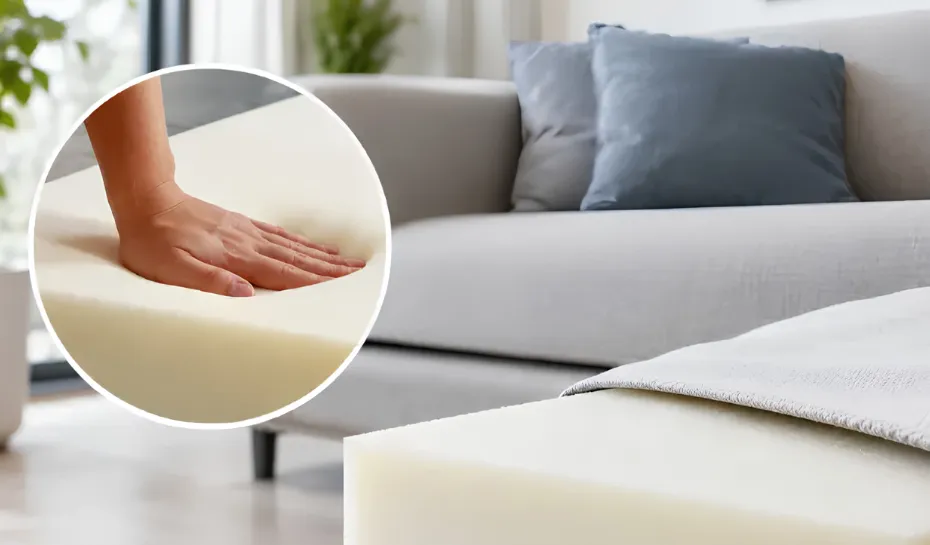
Memory foam is a type of viscoelastic polyurethane foam that responds more slowly to pressure and can conform to the shape of an applied load.
It is widely used in mattress comfort layers, pillows and toppers. Its slower recovery gives it a different feel from conventional and HR foam.
In mattresses, memory foam is generally one part of a multilayer construction. The supporting layers underneath also affect the overall feel and performance of the mattress.
4. Rebonded Foam
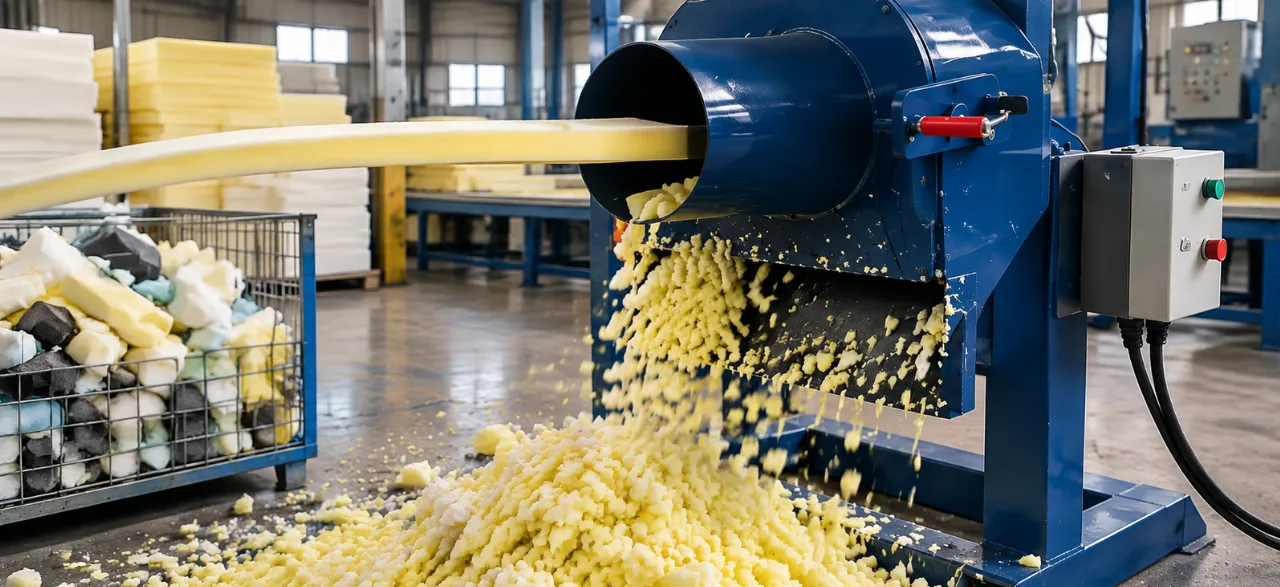
Rebonded foam is manufactured by bonding shredded or cut pieces of flexible polyurethane foam into a consolidated block or sheet. The resulting foam is generally dense and firm compared with many conventional cushioning foams.
Rebonded foam is commonly used for:
- Carpet underlay
- Sports and exercise mats
- Floor cushioning
- Selected support layers
- Other applications requiring dense cushioning
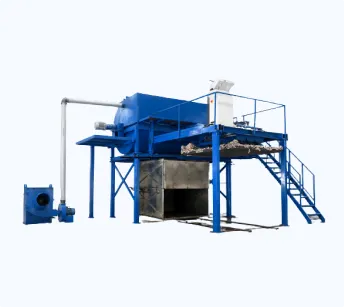
Rebonding can also provide a way to reuse suitable foam pieces generated during manufacturing and processing. Manufacturers producing rebonded foam can use specialized equipment such as a rebonding machine to process foam pieces into consolidated blocks.
Because rebonded foam has a different structure from conventional and memory foam, it should be selected according to the required application and performance.
What Are the Different Types of Foam Mattresses?
The types of foam mattress construction can vary depending on the materials and layers used. Common foam mattress materials include conventional PU foam, HR foam, memory foam, latex foam and combinations of different foam types.
1. Conventional PU Foam Mattress
Conventional PU foam can be used for general cushioning and support. Different grades can provide different levels of firmness and resilience.
2. Memory Foam Mattress
Memory foam is one of the most widely discussed types of foam used in mattresses because of its slow recovery and conforming response. If you want to understand how this foam is manufactured, see our detailed guide on how memory foam is made, including its materials, production process and the machines used.
3. HR Foam Mattress

HR foam can provide a more responsive feel and may be used in comfort or support layers depending on the mattress design.
4. Latex Foam Mattress
Latex foam generally provides a resilient and responsive feel and can be used as a comfort or support material.
The best foam mattress is not determined by foam type alone. Layer construction, firmness, density, thickness and the intended sleeping experience all influence mattress performance.
What Is Foam Padding Used For?
Foam padding is used to provide cushioning, comfort, support, protection or vibration and impact absorption. The appropriate foam depends on the product and the type of load it will experience.
Common applications include:
- Sofa and chair cushions
- Mattress layers
- Automotive seats
- Upholstered furniture
- Packaging protection
- Sports equipment
- Protective padding
- Carpet underlay
For example, sofa seat foam may need greater resistance to repeated compression than decorative furniture padding. Packaging foam may instead be selected primarily for its cushioning and protective properties.
Therefore, foam padding should be selected according to its application, required firmness, density, thickness and expected usage.
What Does High-Density Foam Mean?
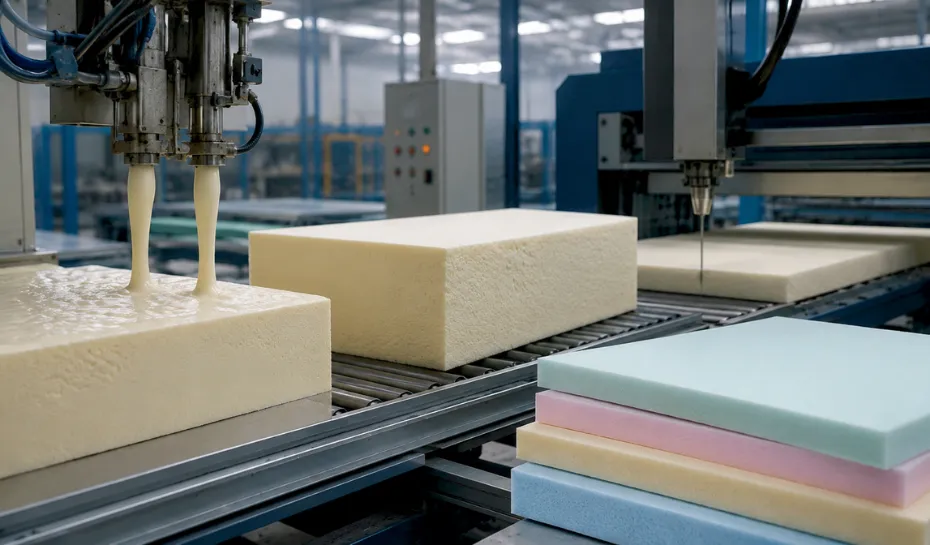
High-density foam contains more foam material by volume than a lower-density foam and is commonly specified in kilograms per cubic metre (kg/m³).
For example, a foam with a density of 30 kg/m³ has a mass of approximately 30 kg per cubic metre.
Density is an important foam specification, but it does not directly determine firmness.
Foam density is an important specification when comparing different types of foam, particularly for mattresses and furniture. It helps indicate the amount of foam material contained within a given volume, but density should not be confused with firmness. For a detailed explanation of how foam density is measured and calculated, see our guide on how to measure foam density in mattresses.
Is High-Density Foam Always Firmer?
No. High-density foam is not automatically firmer.
Density measures the mass of foam material per unit volume, while firmness describes the resistance of foam to compression. These are separate properties.
When comparing foam, consider:
| Property | What It Means |
|---|---|
| Density | Amount of foam material per unit volume |
| Firmness | Resistance to compression |
| Resilience | How quickly foam recovers after compression |
| Thickness | Depth of the foam layer |
| Durability | Ability to maintain properties during use |
This distinction is particularly important when selecting high-density foam for mattresses, sofas and other frequently used products.
Which Type of Foam Is Best for Different Applications?
There is no single best type of foam for every application. The appropriate choice depends on the required performance.
| Application | Foam Types Commonly Considered |
|---|---|
| Mattresses | PU foam, HR foam, memory foam, latex foam |
| Sofa cushions | Conventional PU foam, HR foam |
| Pillows | Memory foam, latex foam, flexible PU foam |
| Furniture padding | PU foam, HR foam |
| Carpet underlay | Rebonded foam |
| Sports mats | Rebonded foam and other dense foams |
| Packaging | Flexible PU foam and other cushioning foams |
| Building insulation | Rigid PU foam |
For mattresses and upholstered furniture, comfort and support are important. For mats and underlay, density and cushioning may be more important. For insulation, rigid foam provides properties that flexible cushioning foams do not.
How Is Foam Manufactured?
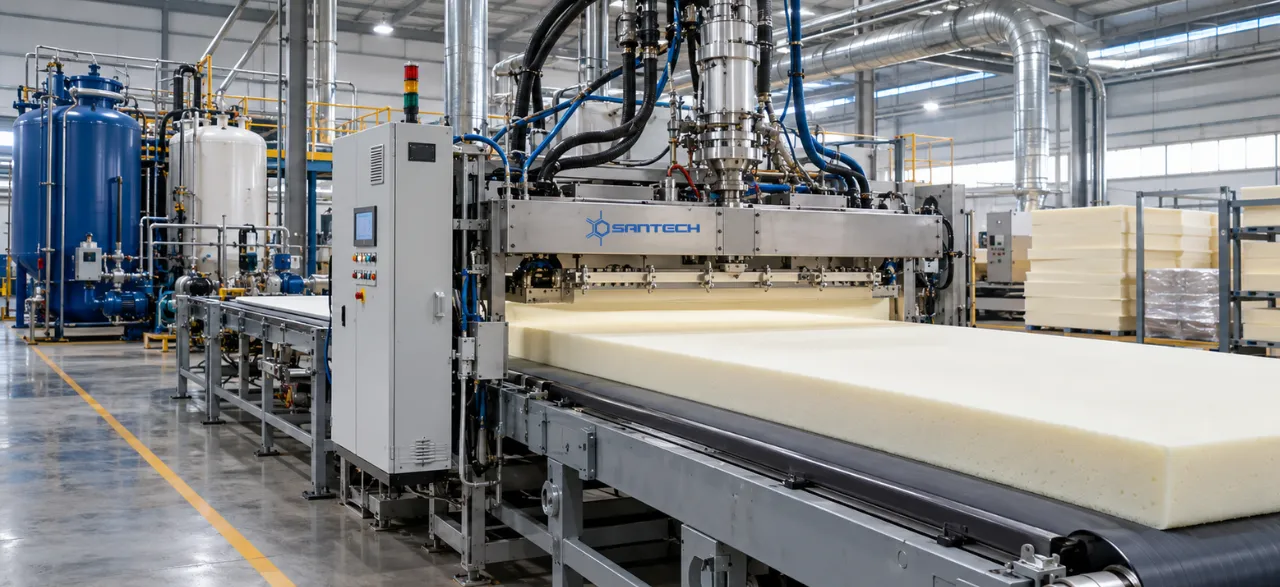
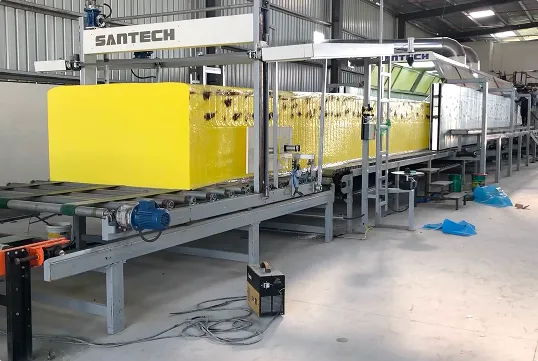
The manufacturing process depends on the type of foam being produced. Flexible PU foam production generally involves preparing and metering the required materials, controlled mixing, foam formation, curing and subsequent cutting or processing.
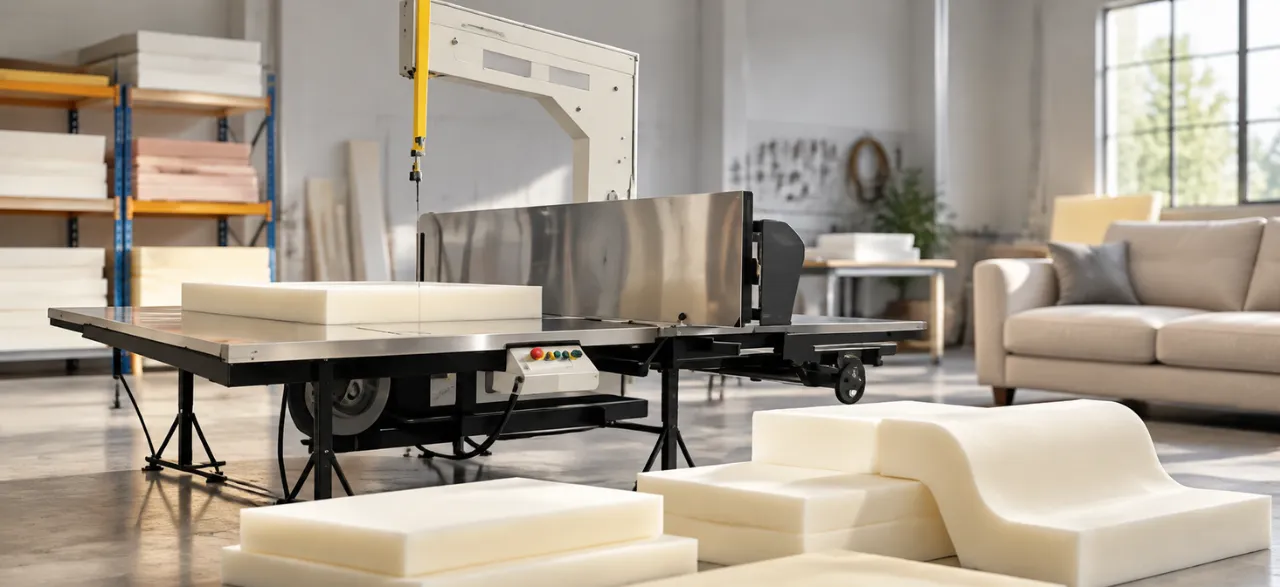
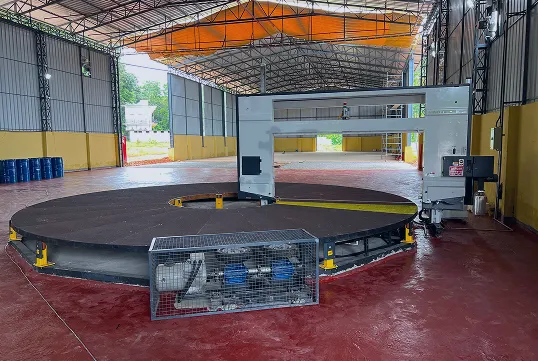
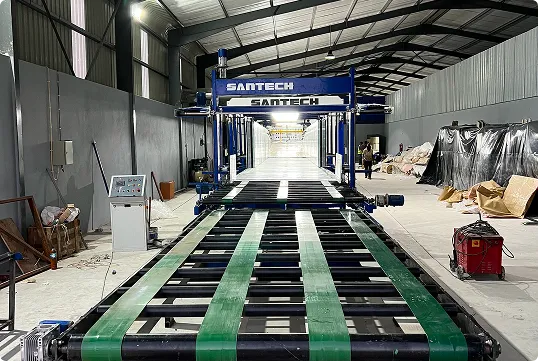
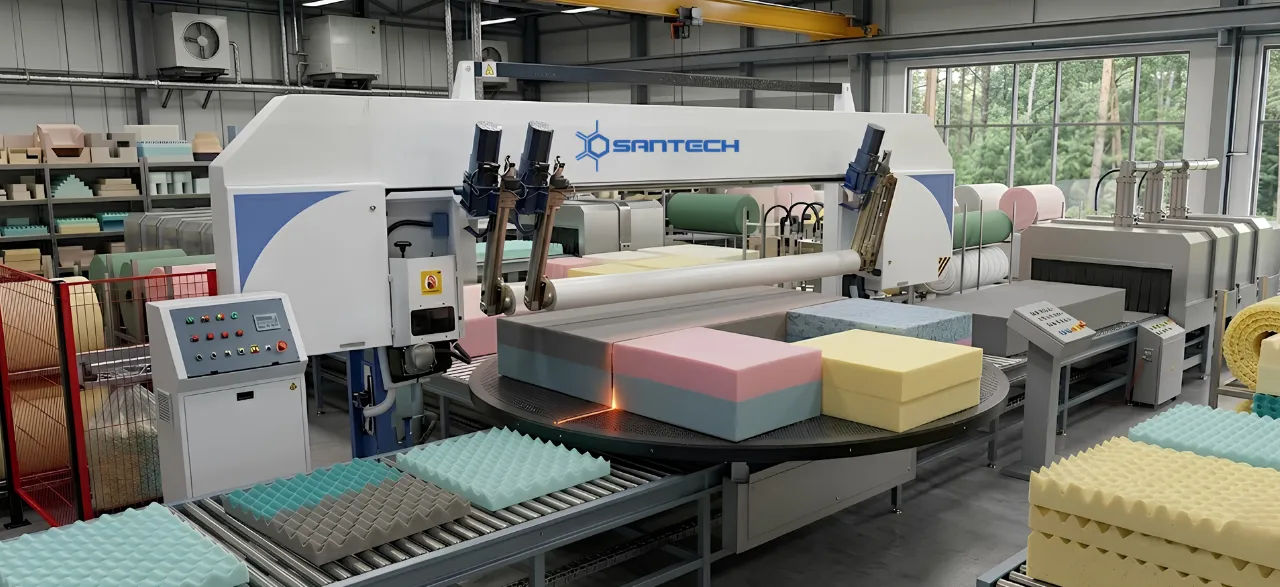
Once foam blocks are produced, different types of foam machines can be used for cutting, shaping and processing foam into the required sizes, shapes or components for mattresses, furniture and other products.
For manufacturers, equipment selection should consider the foam formulation, production method, required capacity, block dimensions and finished-product requirements.
This is why choosing suitable foam manufacturing equipment is an important part of establishing an efficient foam production process.
Conclusion
The different types of foam including conventional PU foam, high-resilience foam, memory foam, rebonded foam and rigid foam—are designed for different applications. The right choice depends on factors such as density, firmness, resilience, thickness and intended use, whether the foam is required for mattresses, sofas, furniture, foam padding, packaging or other products.
For manufacturers, selecting the right foam material is only one part of the production process. Consistent foam production also requires suitable machinery matched to the required foam type, production capacity, block size and finished-product specifications.
Santech Foam Machines is one of the established foam machine manufacturers in India, offering foam manufacturing and cutting machine solutions for different production requirements. Choosing the right equipment can help manufacturers achieve more consistent processing and efficient foam production.
Understanding the different types of foam and matching them with the right manufacturing equipment makes it easier to produce foam products according to specific application and performance requirements.