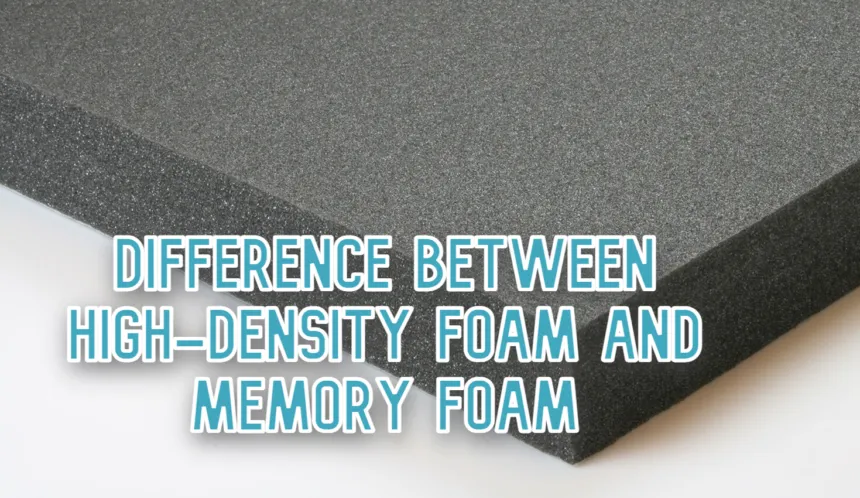


High-density foam and memory foam are both types of polyurethane (PU) foam, but they differ in structure, performance, and applications. High-density foam is designed for strength, durability, and long-term support, while memory foam is formulated with viscoelastic properties that allow it to contour to the body and provide pressure relief. The main difference between high-density foam and memory foam lies in their density, firmness, recovery time, comfort level, and manufacturing process. Understanding these differences helps mattress manufacturers and buyers choose the right foam based on durability, support, and application requirements.
What Is High-Density Foam?
High-density foam is a type of polyurethane (PU) foam manufactured with a higher mass of material per unit volume. It is widely used in industries that require superior strength, durability, and load-bearing performance, including mattresses, furniture, automotive seating, packaging, and industrial applications.
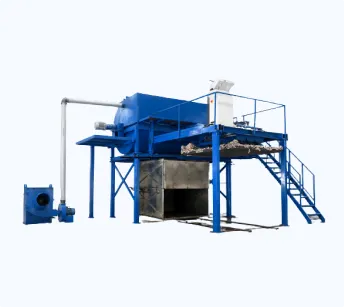
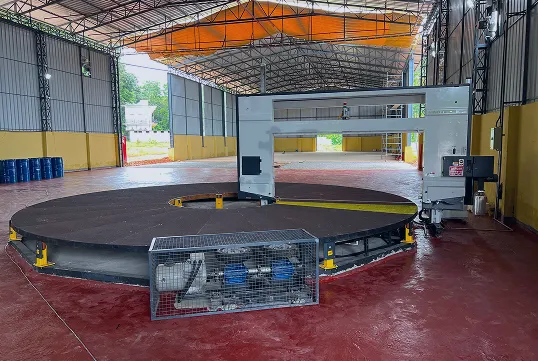
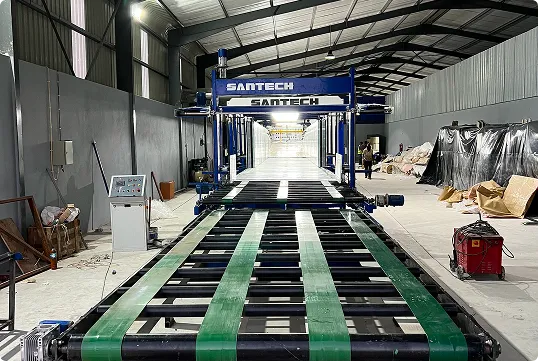
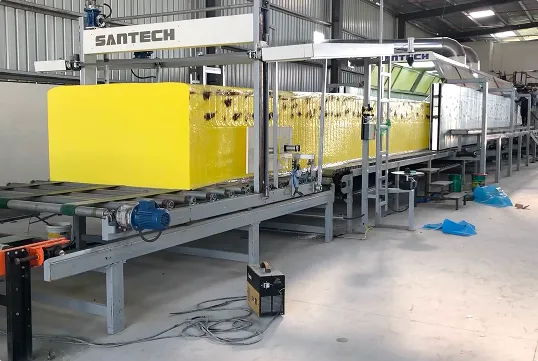
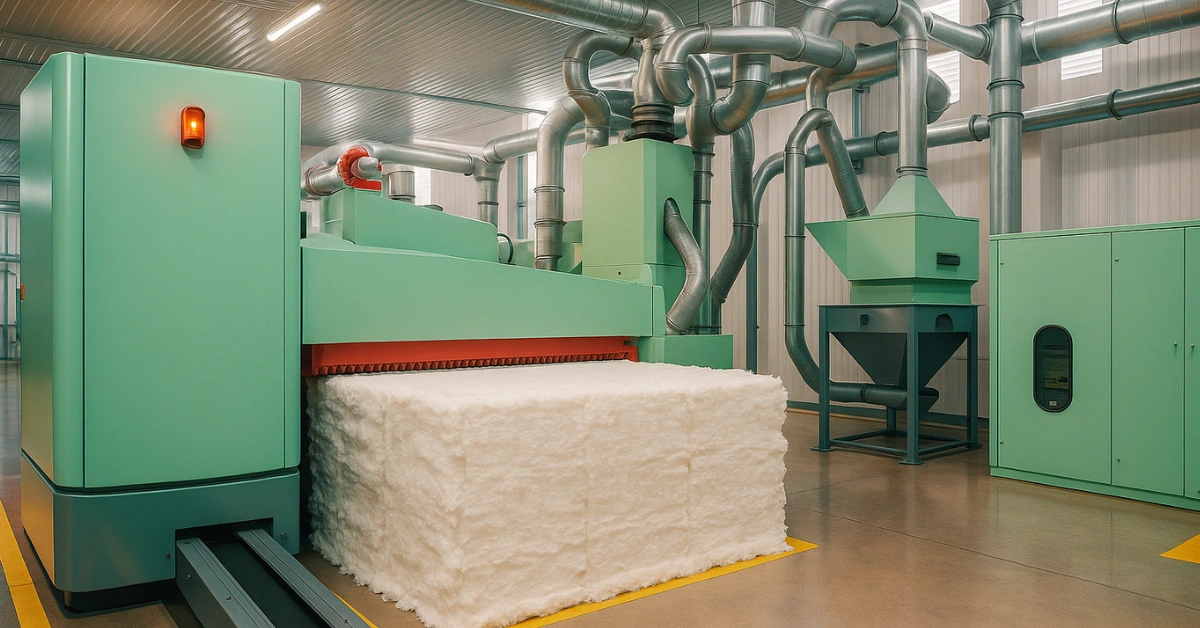
The quality of high-density foam depends on the correct formulation of raw materials and the precision of the PU foam machine. Modern batch and continuous foaming machines ensure uniform cell structure, consistent density, and minimal production variations, enabling manufacturers to produce foam that meets specific industry standards.
What Is Memory Foam?
Memory foam is a specialised type of polyurethane (PU) foam designed with viscoelastic properties that allow it to respond to body heat and pressure. Unlike traditional PU foam, memory foam slowly conforms to the shape of the body, helping distribute weight evenly and providing improved pressure relief and comfort. Once the pressure is removed, it gradually returns to its original shape, creating its well-known “memory” effect.
The key difference between PU foam vs memory foam is that PU foam offers versatility, affordability, and adjustable firmness, while memory foam provides enhanced contouring, pressure relief, and motion isolation. Both foam types are widely used in mattress manufacturing, with the ideal choice depending on comfort requirements, durability, and application needs.
The performance of memory foam depends on factors such as foam density, formulation, and manufacturing precision. Higher-density memory foam generally provides better durability, support, and long-term performance. During production, precise control over raw material ratios, mixing, temperature, and curing conditions is essential to achieve consistent foam quality.
Differences Between High-Density Foam and Memory Foam Feature
| Feature | High-Density Foam | Memory Foam |
|---|---|---|
| Composition | Standard polyurethane foam with a higher material density. | Polyurethane foam formulated with viscoelastic additives. |
| Primary Function | Provides structural support, strength, and durability. | Offers pressure relief and body contouring. |
| Density Range | Typically 30–80 kg/m³ or higher, depending on the application. | Usually 40–90 kg/m³, varying by comfort and performance requirements. |
| Recovery Time | Quickly returns to its original shape after compression. | Recovers slowly, creating the signature “memory” effect. |
| Comfort Level | Firm and supportive. | Soft, cushioning, and pressure-relieving. |
| Durability | Excellent resistance to wear, sagging, and deformation. | Highly durable when manufactured with the correct density and formulation. |
| Applications | Mattresses, furniture, automotive seating, packaging, and industrial products. | Mattresses, pillows, medical cushions, and healthcare products. |
| Manufacturing Process | Produced using standard PU foam formulations with controlled density. | Requires specialised formulations and precise process control to achieve viscoelastic properties. |
| Production Requirements | Requires accurate mixing and density control using advanced PU foam machines. | Requires strict control of raw material ratios, temperature, and curing conditions. |
| Cost | Generally more cost-effective for high-volume production. | Typically more expensive due to specialised raw materials and manufacturing processes. |
Why Choose High-Density Foam Over Memory Foam?
If you ask a foam machine manufacturer this question, the details will be technical, and you will end up in confusion. However, we would like to state the advantages of high-density foam, which will help you form a solid decision. This brief guide will enable you to opt for the mattress that closely matters to you and fits all your requirements.
The two main components of high density polyurethane foam are polyol, which is derived from petroleum, and diisocyanate, a group of chemical building blocks. These two components serve as the building blocks for polyurethane foams, which come in a variety of densities. In addition, to make a foam that is safer for usage in commercial and residential applications, fire retardants can also be added to the mixture
Foam Photos
High density polyurethane foams are a unique material used in products across several industries but are most frequently employed in the production of furniture. High-density foams are medium-quality industrial-grade foams that are highly dense and frequently provide good support and shock absorption when used in various applications, despite the fact that there are many different types of foam that come in varied densities.
High density polyurethane foams are well recognized for their viscoelastic characteristics, which allow them to resist deformation and reform after being subjected to stress. This makes them perfect for applications where steady forces are applied to them and removed from them numerous times throughout the product lifespan (e.g., cushioning applications).
In order to create a unique hybrid foam, producers can combine high density polyurethane foams with lower-density foams to achieve the desired firmness and comfort level for their products. Understanding foam density is important when selecting the right foam combination, as it directly affects durability, support, and comfort. For example, memory foam mattresses are frequently used as the bottom layer.
Bonus Advantage
Believe it or not, maintaining the correct sleeping posture can significantly impact your overall health, making it essential to choose the right mattress. When selecting a foam mattress, consider factors such as pressure relief, foam density, porosity, durability, and overall comfort. Understanding whether the mattress is made from high-density foam, memory foam, open-cell foam, or closed-cell foam can also help you make an informed decision. Open-cell foam offers better airflow, breathability, and pressure relief, while closed-cell foam provides greater firmness, moisture resistance, and structural support. Since comfort preferences vary from person to person, evaluating these characteristics along with the mattress’s ability to support easy movement and long-term performance will help you choose the best option for your needs.
Then, Which One To Get?
The answer to this question is purely subjective. While one might think they need a stiff mattress to support the back, they can opt for a high-density foam mattress. On the other hand, memory foam shall be the pick if one chooses to have a snugger.
Therefore, before finalizing your decision on which type of foam mattress you want, get to know the details from your mattress provider. For example, you can ask about foaming machines used, density, porosity, and overall comfort level of the mattress. These will help you reach the right decision.
Conclusion
Choosing between high-density foam and memory foam depends on factors such as durability, comfort, support requirements, and the intended application. High-density foam is preferred for strong support and long-term durability, while memory foam is valued for pressure relief, body contouring, and enhanced comfort. For consistent foam quality, manufacturers should consider the raw materials, production process, and precision of the equipment used to produce the foam.
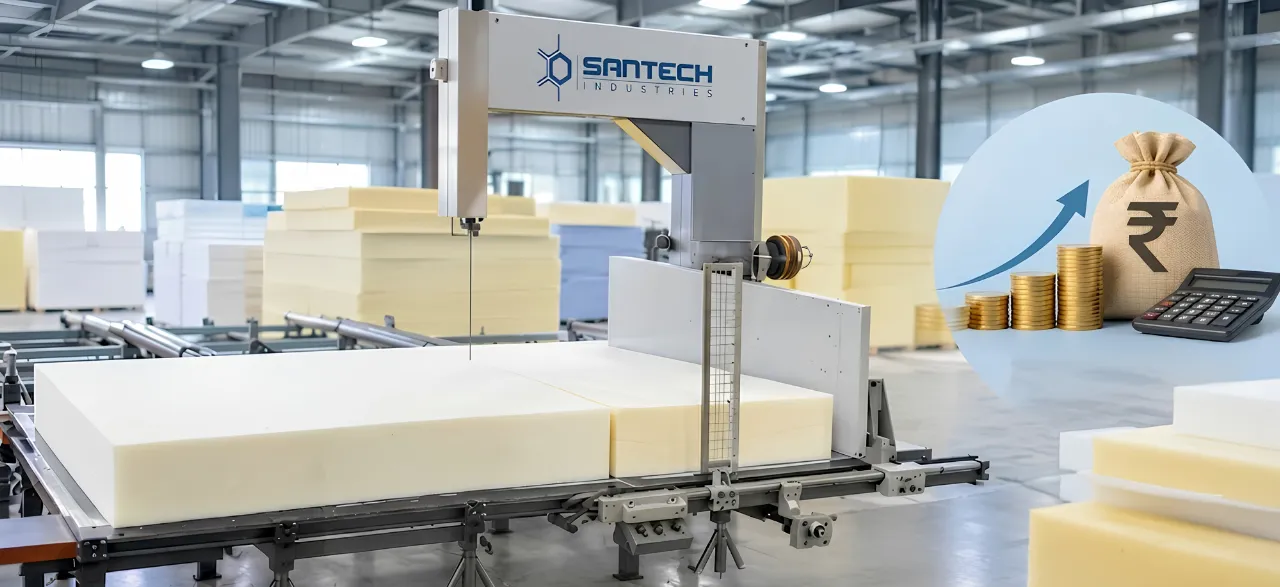
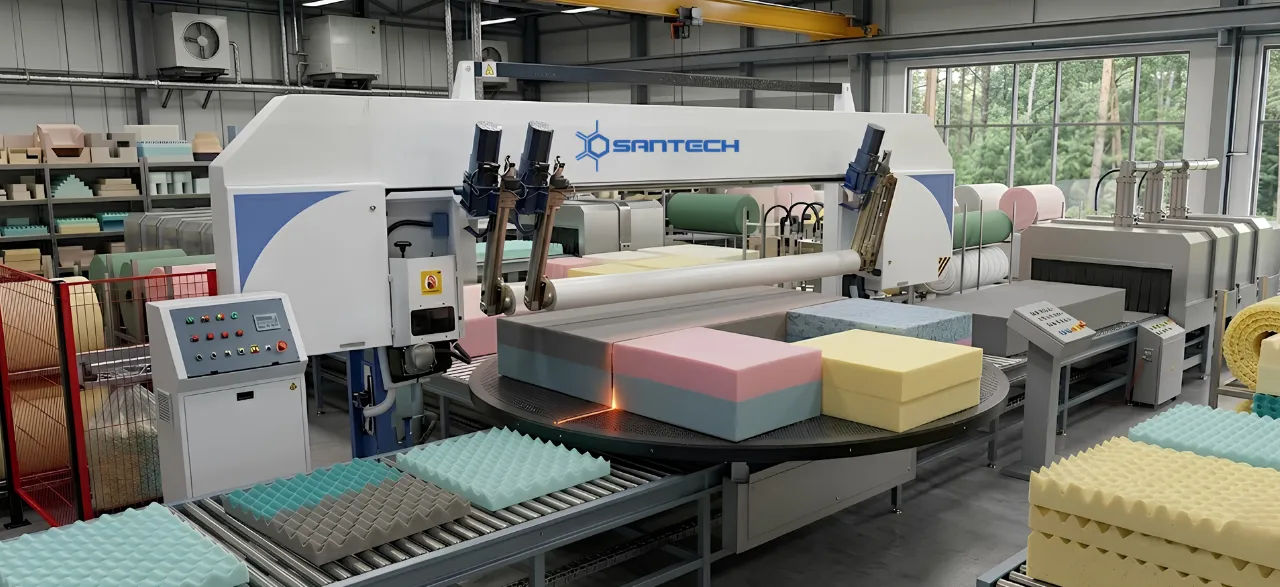
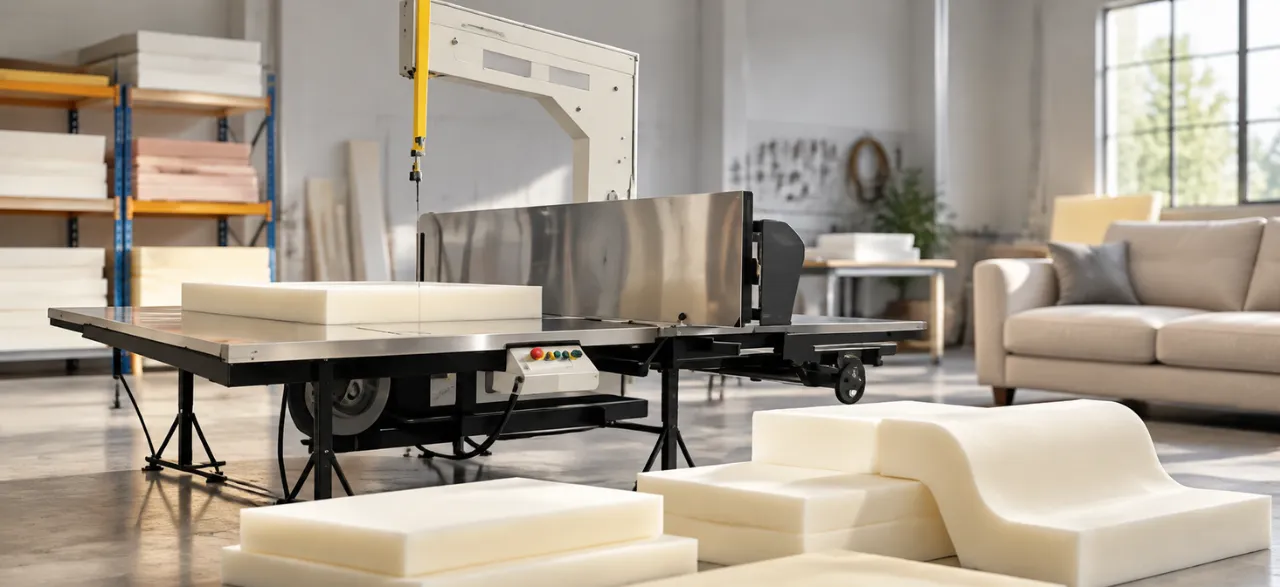
Santech Foam Machines provides advanced PU foam machines and foam cutting machines that help manufacturers achieve accurate mixing, uniform foam density, precise cutting, and reliable production performance. With efficient engineering, durable designs, and industry-focused solutions, Santech Foam Machines supports foam manufacturers in producing high-quality foam products that meet customer expectations.