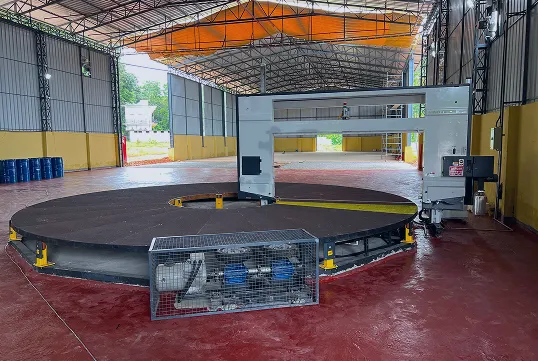
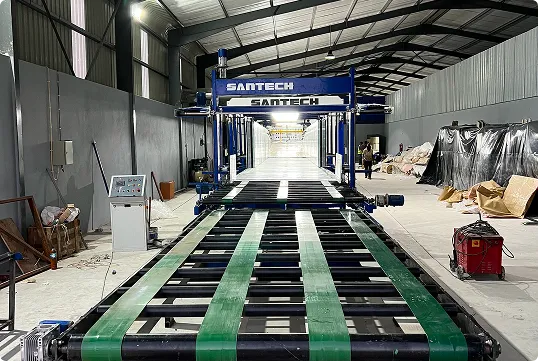
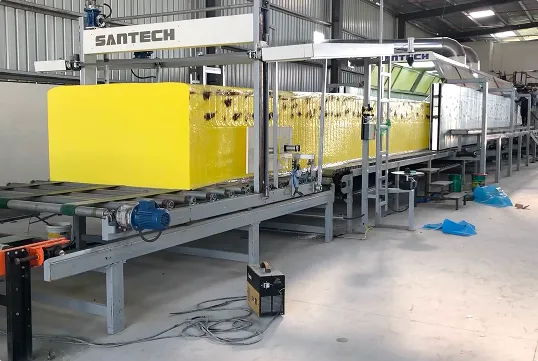
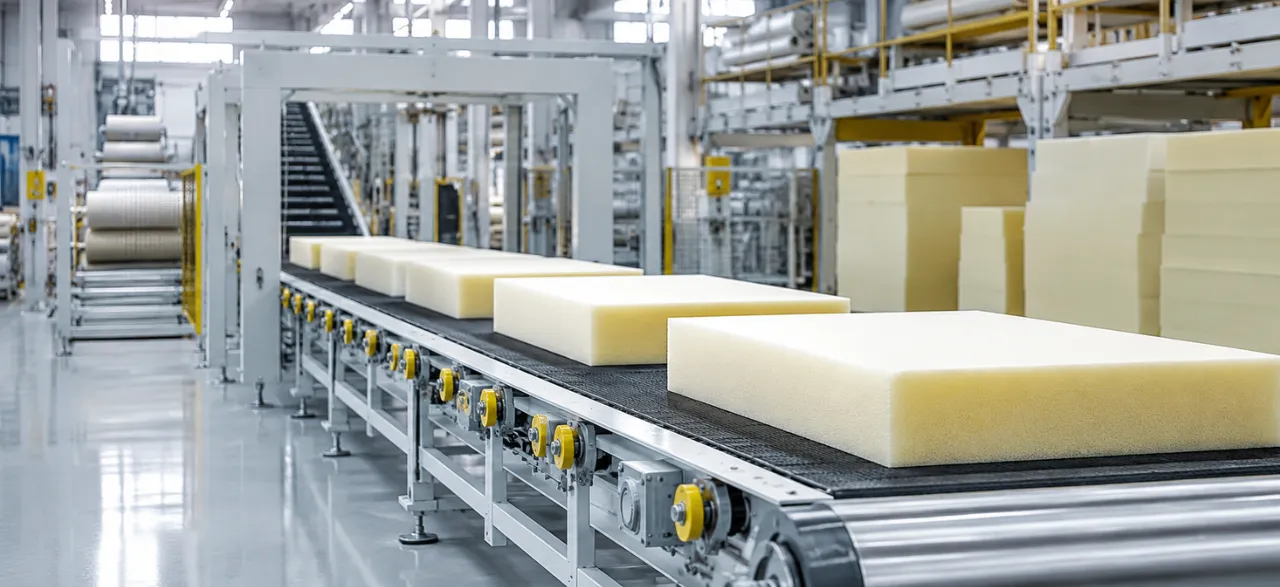


Modern foam production focuses a lot on speed, consistency, and efficiency. While certain machinery, like a foam-making machine, gets most of the attention, there is another component that works quietly behind the scenes, thereby ensuring that the production takes place smoothly, and that is the foam conveyor system.
From transferring freshly produced foam blocks to moving materials between cutting, curing, and storage areas, conveyors play an important role in maintaining a continuous workflow. Without them, production will depend largely on manual handling, leading to more delays, higher labour requirements, and an increased risk of product damage.
So, in this blog, we will explore why conveyor systems are important in foam manufacturing plants and how they contribute to a more productive operation.
Understanding the Role of a Foam Conveyor System
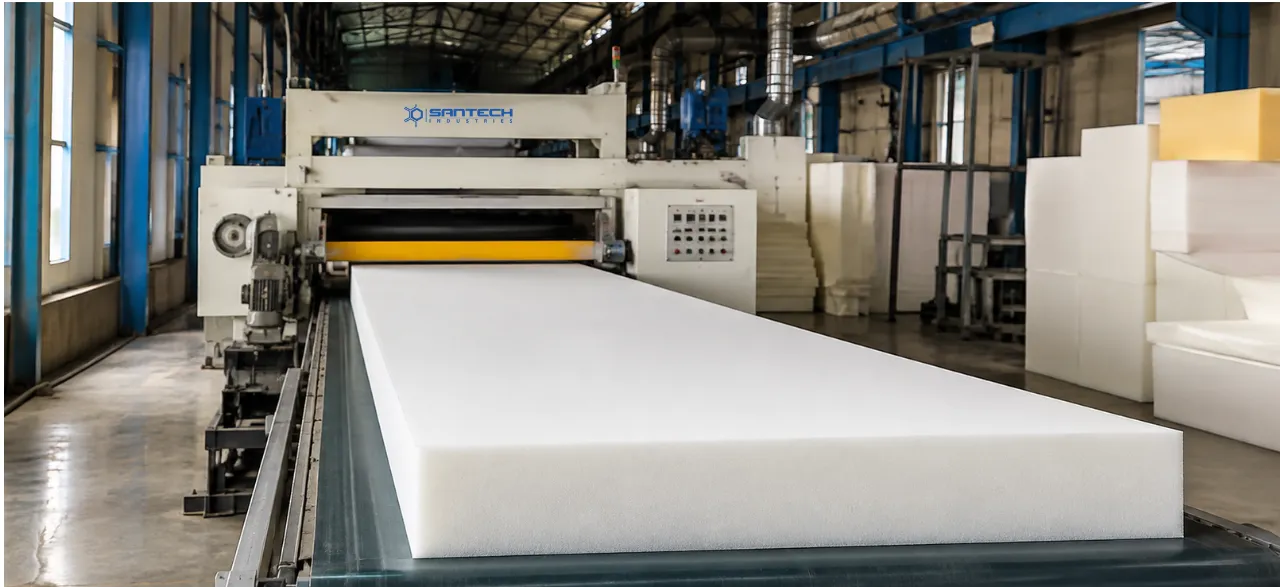
Well, a foam conveyor system is designed to transport foam blocks, slabs, and other materials safely between different stages of production. It generally acts as a link that seamlessly connects different types of foam manufacturing equipment, thus ensuring that the materials move smoothly without any unwanted interruptions.
An ideal foam plant consists of different stages, including the following:
- Generation of foam
- Curing
- Cutting
- Inspection
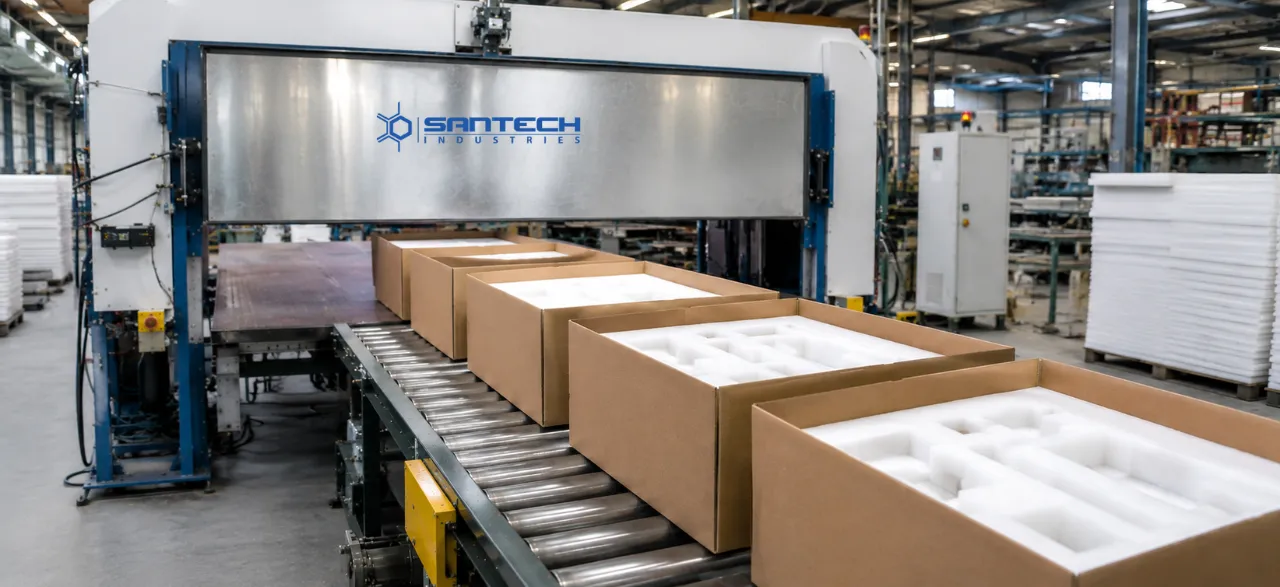
- Packaging
- Storage
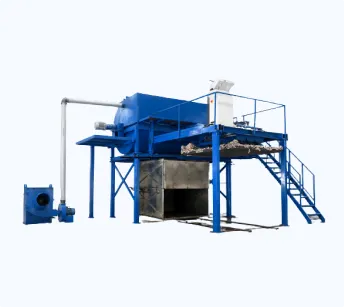
Conveyors play a key role in bridging these stages by offering controlled and continuous material movement throughout the facility. In large-scale production plants, they are often integrated with a Continuous Foaming Machine, allowing freshly produced foam to move efficiently through curing and subsequent processing stages without unnecessary delays. This helps create a more organised production flow, reduces bottlenecks, and improves overall manufacturing efficiency.
How Do Conveyors Support the Efficiency of Foam Production?
Efficiency in a foam plant depends largely on how smoothly each stage connects with the next. Even if the main machinery is working well, delays can happen, especially when the foam blocks are not moved properly from the production to the curing, cutting, and storage areas.
It is in these situations that a conveyor system becomes important. They help in creating a steady movement system that ensures that the entire production line works with better speed, safety, and coordination.
| Benefit | How It Improves Foam Production Efficiency |
|---|---|
| Improved Production Speed | A well-designed foam conveyor system maintains a consistent production pace by automatically transporting foam between different workstations. Continuous material movement eliminates delays caused by manual handling, allowing each production stage to begin immediately after the previous one. This results in faster production cycles and increased daily output. |
| Reduced Production Bottlenecks | Production bottlenecks often occur when foam blocks accumulate between processing stages. A properly integrated conveyor system for foam manufacturing ensures materials are transferred at the correct speed, preventing congestion around curing, cutting, packaging, and storage areas. This keeps the production line balanced and operating efficiently. |
| Better Space Utilisation | Conveyor systems follow predefined material flow paths, reducing the need to store foam blocks temporarily in work areas or walkways. This creates a cleaner, more organised factory layout while maximising the efficient use of available floor space. |
| Lower Operating Costs | By reducing manual labour, minimising product damage, and decreasing production downtime, conveyor systems help lower long-term operating costs. The increased operational efficiency also contributes to improved profitability and a stronger return on investment. |
| Supports Automation | Modern foam manufacturing equipment can be integrated with conveyor systems, robotic handling units, cutting machines, and packaging equipment. This creates a highly automated production line that improves consistency, reduces manual intervention, and increases overall productivity. |
| Improved Material Traceability | Advanced conveyor systems can integrate with sensors and production monitoring software to track foam blocks throughout the manufacturing process. This improves workflow visibility, helps identify production delays, and strengthens quality control and process management. |
Foam Conveyor System and Product Quality
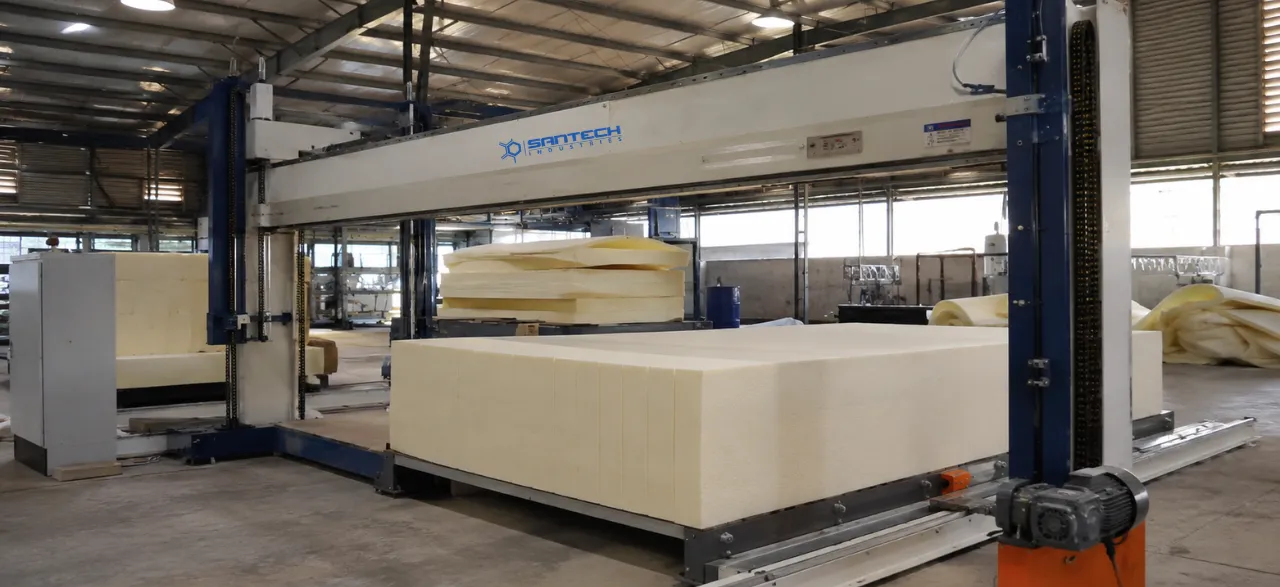
Product quality is a major concern in foam manufacturing. Improper handling can lead to deformation, surface damage, or alignment issues. After the curing process, foam blocks are often transferred to a Horizontal Foam Cutting Machine, where precise positioning is essential for achieving accurate and consistent cuts. A well-designed conveyor system ensures that the foam reaches the cutting machine smoothly and without damage, helping maintain product quality throughout the manufacturing process.
Stable Material Movement
Conveyor systems provide controlled transportation of foam blocks. They help maintain proper positioning during movement, reducing the chances of shifting or damage.
Stable movement is especially important when handling freshly produced foam, which may still be curing and more vulnerable to distortion.
Consistent Processing
When materials move through production stages at a controlled speed, downstream equipment can operate more effectively.
This consistency supports accurate cutting, trimming, and processing, helping manufacturers maintain uniform product quality across production batches.
Improving Workplace Safety
Safety should be the top-most priority for any manufacturing unit.
Heavy foam blocks often require lifting, carrying, and repositioning. These are some of the tasks that can create risks for workers, especially in high-volume production environments.
By seamlessly automating material transportation, a conveyor belt system can help in reducing its physical impact and also minimise the likelihood of accidents that are often connected with manual handling.
This helps in creating a safer and more efficient workspace.
Supporting Plant Expansion and Automation
As the production demand rises, manufacturers often look for different ways to scale their operations.
A flexible conveyor system for foam manufacturing can be customised to suit different factory layouts and production capacities. Moreover, conveyor systems can also connect with automated equipment, which helps in creating a more streamlined manufacturing process.
The scalability of this level makes conveyors a valuable investment for growing foam production facilities.
Why are Conveyors an Important Part of the Foam Manufacturing Equipment?
There are many people who think of mixers, cutters, and foaming lines while discussing foam manufacturing equipment. But conveyors are equally important, as they help in connecting these machines into a single production system.
Without reliable material movement, even the most advanced machinery can experience delays and inefficiencies.
Conveyors help manufacturers
- Improve the production flow
- Reduce downtime
- Enhance workplace safety
- Maintain product uniformity
- Support various automation initiatives
These are some of the reasons that make them an integral component of the modern foam manufacturing process.
Selecting the Right Conveyor Solution
Every foam manufacturing plant has different production requirements. Certain factors, like the size of the foam block, production volume, plant layout, and processing stages, influence the selection of the conveyor.
Whenever assessing the conveyor solutions, manufacturers should also consider:
- Load capacity
- Length and width of the conveyor
- Speed control options
- Integration with existing machinery
- Future expansion requirements
Well, teaming up with the experienced foam machine manufacturers in India can help businesses choose a reliable conveyor system that will easily align with their production goals and operational needs.
Wrapping Up
A foam conveyor system may not always be the first piece of equipment that comes to mind in a foam manufacturing plant, but it plays a vital role in keeping production running smoothly. From moving foam blocks safely between different stages to reducing manual handling, improving product consistency, and increasing overall efficiency, conveyors are an essential part of a modern production line.
As production demands continue to grow, investing in the right conveyor solution becomes just as important as choosing a reliable foam making machine. Working with experienced PU foaming machine manufacturers like Santech Foam Machines gives businesses access to complete foam manufacturing solutions that are designed for better productivity, smoother material flow, and long-term operational success. By combining high-quality machinery with an efficient conveyor system, manufacturers can build a more reliable, automated, and future-ready foam production facility.