

Maintaining foam manufacturing standards is essential for producing high-quality, safe, and consistent polyurethane (PU) foam products. These standards help manufacturers control raw material quality, optimize production processes, meet regulatory requirements, and deliver foam that performs reliably across industries such as mattresses, furniture, automotive, packaging, and insulation.
Whether you’re setting up a new foam production plant or upgrading an existing facility, understanding the key quality, safety, and manufacturing standards can reduce defects, improve efficiency, and strengthen customer confidence. In this guide, we’ll explain the most important foam manufacturing standards, best practices, and compliance requirements every manufacturer should know to build a more efficient and future-ready production process.
Looking to improve your foam manufacturing operations? Discover how Santech Foam Machines delivers advanced foaming and cutting solutions designed to help manufacturers achieve consistent quality, higher productivity, and long-term operational excellence.
Uniform Foam Quality
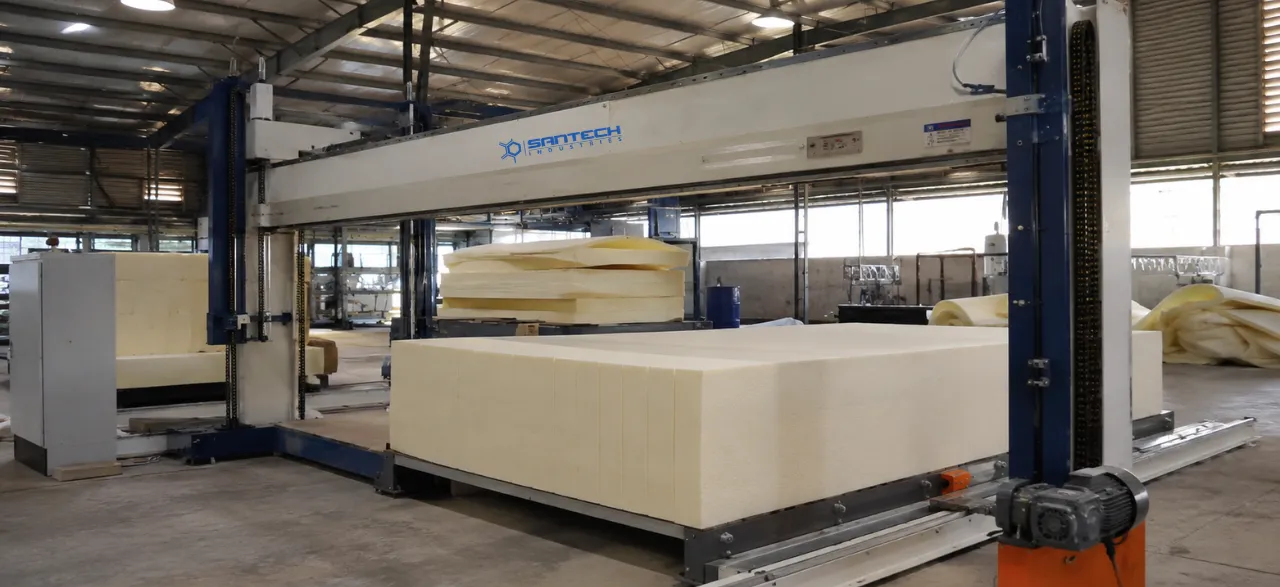
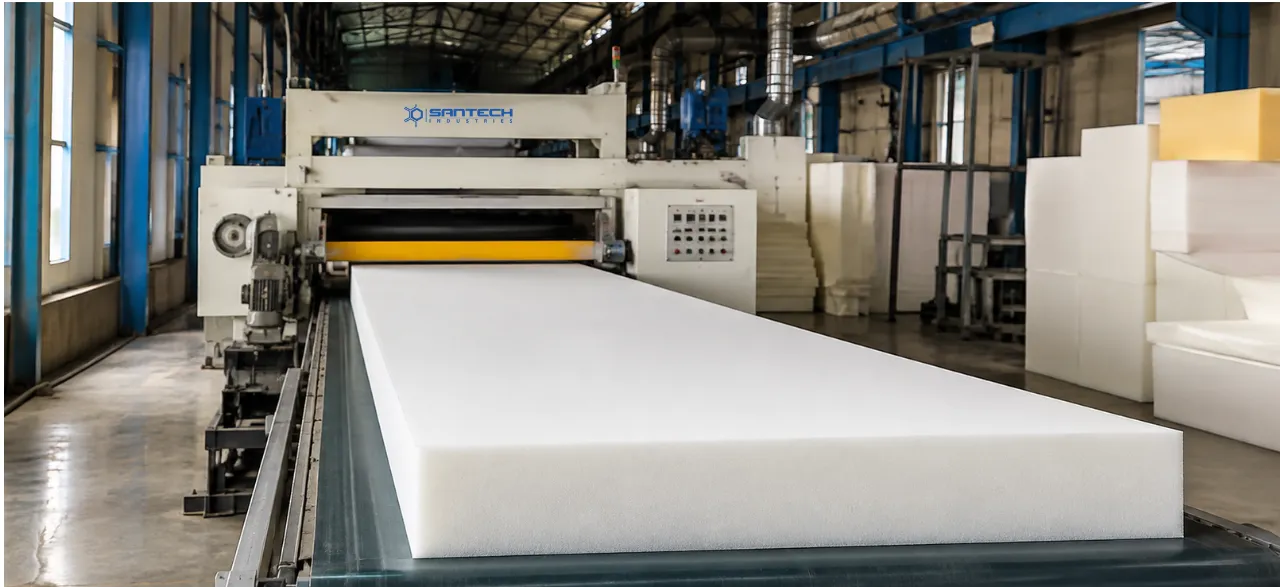
One of the biggest challenges in foam production is maintaining consistent foam density and uniform foam quality throughout the manufacturing process. Any variation in foam density, cell size, or elasticity can negatively impact product performance, leading to customer dissatisfaction, increased material waste, and a higher rate of product returns. These inconsistencies are often caused by fluctuations in raw material quality, incorrect chemical mixing ratios, improper machine calibration, or unstable processing conditions. Maintaining optimal foam density through precise process control and quality assurance is essential for producing high-quality polyurethane (PU) foam that meets industry standards.
How to Overcome It?
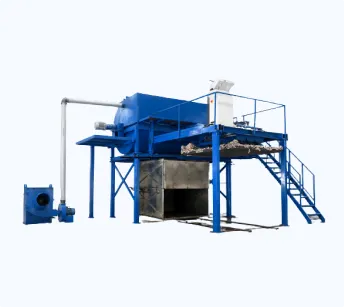
The companies should invest in high-quality automatic Foam machines with accurate dosing and temperature control. High-quality machines, which are offered by experienced batch foaming machine suppliers, provide accurate chemical composition and uniform mixing.
In addition, quality control checks, standardised processes, and monitoring processes also help in ensuring a uniform quality of foam.
Rising Raw Material and Production Costs
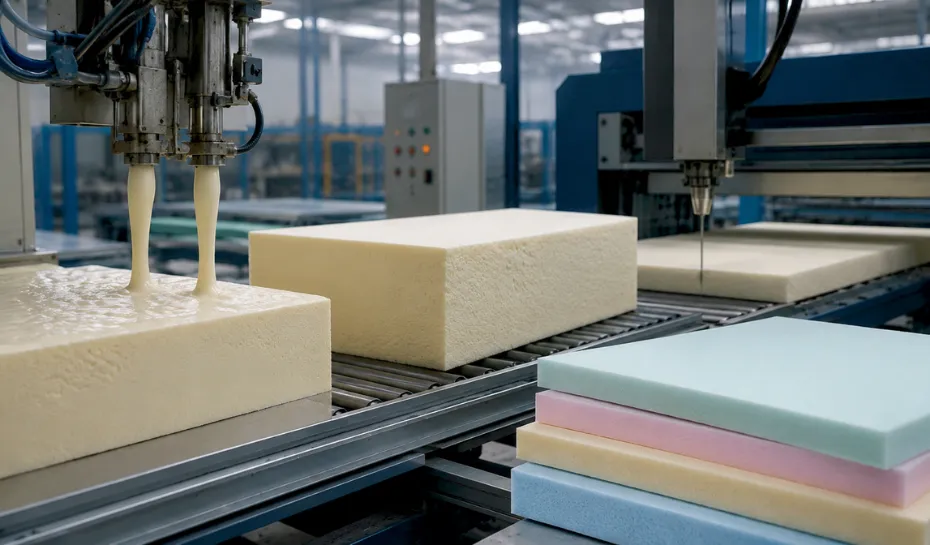
Different types of raw materials, like polyols, isocyanates, and additives, are subjected to frequent price fluctuations. Increasing energy costs and labour expenses further result in production overhead, thereby putting a lot of pressure on profit margins. However, for small-sized and mid-sized manufacturers, these costs can be very challenging.
How to Overcome It?
Cost optimisation starts with proper material usage and waste reduction. Since foam is made by accurately mixing chemicals such as polyols, isocyanates, water, catalysts, and additives, even minor errors in formulation or processing can lead to higher material waste and inconsistent product quality. Modern foam production equipment is designed to ensure precise chemical dosing, uniform mixing, and controlled foaming, helping manufacturers maximise yield while minimising waste.
Partnering with well-reputed batch foaming machine manufacturers enables businesses to access energy-efficient machinery that reduces power consumption while maintaining consistent foam quality. Similarly, advanced foam maker machine models support optimised formulations, allowing manufacturers to produce high-quality foam with fewer raw materials and lower operating costs. In addition, bulk purchasing, supplier negotiations, and alternative sourcing strategies can further help control raw material expenses and improve overall profitability.
Equipment Downtime and Maintenance Problems
Unplanned machine breakdowns and the need for frequent maintenance will not only affect production schedules but also lead to financial losses. Older equipment often requires manual calibration and is more prone to mechanical failures. So, inconsistent maintenance practices will increase the risk for downtime.
How to Overcome It?
Preventive and predictive programs are vital for reducing equipment failures. Manufacturers should adopt digital maintenance tracking systems that will help them with seamless scheduling of regular inspections.
Opting for reliable machinery from well-established batch foaming machine manufacturers ensures better durability and long-term performance. A well-designed foam maker machine with modular components will help with faster repairs and reduce operational costs.
Environmental Regulations and Sustainability Pressure
Environmental compliance is becoming stricter globally.Foam manufacturers are under a lot of pressure to reduce emissions, manage waste responsibly, and adopt eco-friendly production practices. Failure to meet regulatory standards will result in heavy fines and reputational damage.
How to Overcome It?
Sustainability should be properly integrated into the production process. This means that the manufacturers should switch to low-emission chemicals, water-based formulations, and recyclable materials.
The majority of the modern batch foaming machine manufacturers also provide eco-friendly equipment that is designed to reduce VOC emissions and energy usage. Investing in a next-generation foam maker machine with a closed-loop system also helps in reducing waste and environmental impact.
Skilled Workforce Shortages
Foam manufacturing often requires technical expertise in chemical processing, machinery operations, and quality control. However, many manufacturers still struggle to retain a skilled workforce. Well, a lack of trained staff leads to operational errors, low productivity, and safety risks.
How to Overcome It?
Continuous training and skill development programs are important for building a competent workforce. The manufacturers need to provide hands-on training, safety workshops, and technical certifications.
Modern equipment that is purchased from leading batch foaming machine manufacturers is designed with a user-friendly interface, which further helps in reducing dependency on highly specialised operators. An automated foam maker machine with automated controls will play a key role in simplifying production processes and reducing human error.
Meeting Customisation and Market Demands
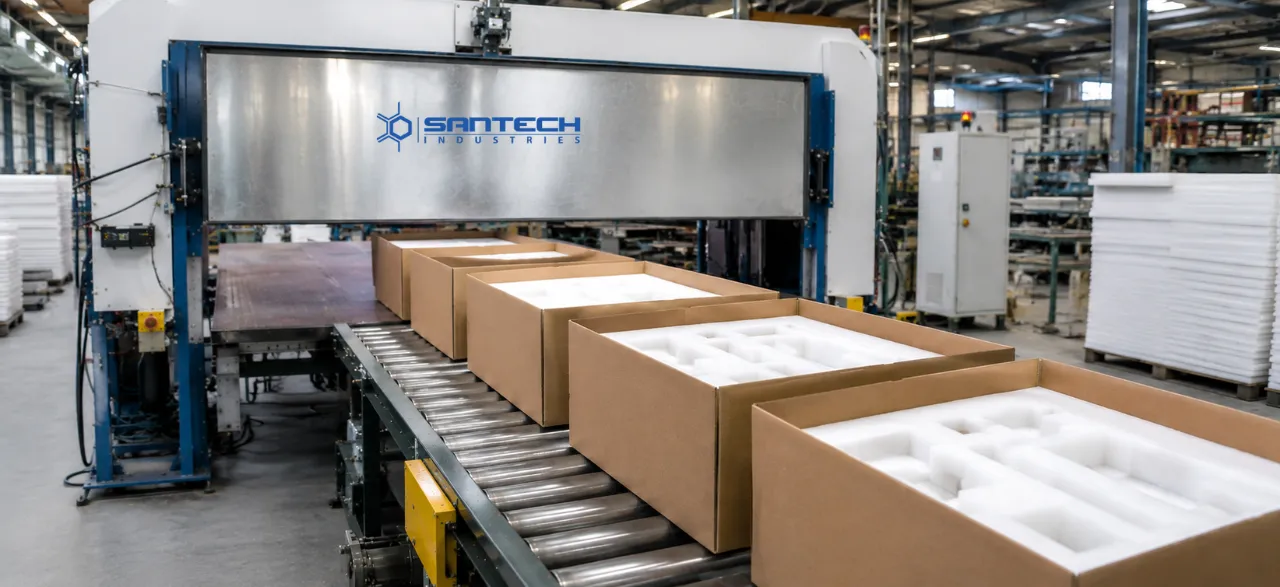
Today the customers are very much interested in foam products that are customised as per specific applications, including orthopaedic mattresses, automotive seating, and packaging solutions. Meeting different requirements while maintaining uniformity and efficiency can be a challenging task.
How to Overcome It?
Manufacturing systems that are flexible are a key to addressing customisation demands. Equipment that offers support for quick changeovers and adjustable formulations will enable the manufacturers to adapt effortlessly.
Leading foaming machine manufacturers offer customizable machines that support multiple product variations. A foam-making machine that is versatile with programmable settings will permit easy switching between different foam grades.
Final Thoughts
Foam manufacturers face numerous challenges, including quality control, cost management, workforce shortages, and increasing sustainability requirements. However, these challenges can be effectively addressed with the right strategies, advanced technology, and continuous process improvements.
Investing in a high-performance PU foam manufacturing machine and partnering with experienced batch foaming machine manufacturers enables businesses to improve production efficiency, maintain consistent foam quality, reduce material waste, and lower operational costs. Modern foam maker machines also support automation, precise chemical dosing, and energy-efficient production, helping manufacturers meet evolving industry standards and customer expectations.
By focusing on automation, workforce training, sustainability, and process optimization, foam manufacturers can build resilient operations, enhance profitability, and achieve long-term success in an increasingly competitive market.