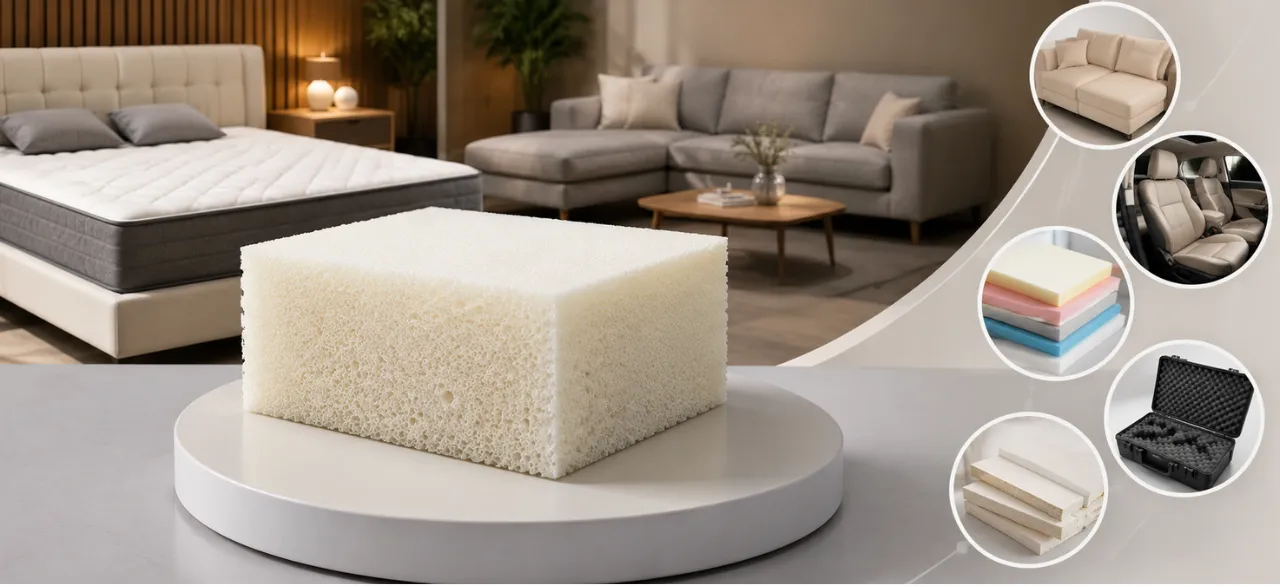


High density polyurethane foam is a durable, flexible foam used in furniture, mattresses, automotive seating, packaging, and industrial products because it provides excellent support, long-lasting comfort, and resistance to compression. Unlike standard foam, it contains more material per unit volume, allowing it to retain its shape and performance under repeated use.
The quality of high-density foam depends largely on its density, which is calculated by dividing the foam’s weight by its volume. It is important to understand that density and firmness are different high density foam can be soft or firm depending on its formulation. Knowing how foam is made and how to measure foam density helps manufacturers produce consistent, high-quality foam for different applications.
In this guide, you’ll learn what high density polyurethane foam is, how foam is made, how to measure foam density, its key benefits, common applications, and how advanced PU Foam Machines from a trusted Foam Machine Manufacturer help ensure consistent foam quality and efficient production.
What is Meant by High-Density Polyurethane Foam?
Polyurethane foam is a lightweight material that is created using a chemical reaction between polyols and isocyanates. During the course of manufacturing, gases are generated within the material, thereby creating a similar cellular structure that offers foam its flexibility and cushioning properties.
High-density PU foam consists of a greater amount of foam material within each cubic metre compared to lower-density varieties. This higher concentration of the material offers better durability, load-bearing ability, and resistance to wear.
It is also important to understand that density does not directly mean hardness.
A high-density foam can be soft, medium, or firm depending on its formulation and intended application. Densit is primarily used for indicating how much material is present, while firmness depends on other factors like chemical composition and cell structure.
| Foam Property | Meaning |
|---|---|
| Density | Amount of foam material present in a given volume. |
| Firmness | How soft or hard the foam feels when compressed. |
| Durability | Ability to maintain its shape and performance after repeated use. |
| Resilience | Ability to return to its original form after pressure is removed. |
Why is Foam Density Important?
Density plays an important role in determining the performance and the lifespan of the PU foam.
A higher-density foam will generally provide the following:
- Better resistance to compression.
- Longer service life.
- Improved support.
- Greater weight-bearing capacity.
- Better performance in high-use applications.
For instance, a sofa that is used every day in a home will require different foam properties compared to decorative furniture that is used rarely. Similarly, vehicle seats may need materials that can easily handle continuous pressure and vibration.
Manufacturers choose foam density based on expected usage, product design, and performance requirements.
How to Measure Foam Density?
One of the most common questions among manufacturers and buyers is how to measure foam density.
The process is quite simple, and it is based on a relationship between the foam’s weight and volume.
The basic formula is:
Density = Weight ÷ Volume
So, to measure the foam density, you’re supposed to follow the given steps:
- Cut a foam sample with known dimensions.
- Calculate the volume of the sample.
- Measure its weight precisely.
- Divide the weight by the volume.
The result is generally expressed in kilograms per cubic metre (kg/m³).
Example: If a foam block weighs 2 kg and has a volume of 0.05 cubic metres, the density is calculated as follows:
Density = 2 ÷ 0.05 = 40 kg/m³
| Density Range | Common Applications |
|---|---|
| Low-Density Foam | Packaging, light cushioning, and basic applications. |
| Medium-Density Foam | General furniture, mattresses, seating, and everyday cushioning. |
| High-Density Foam | Premium furniture, automotive seats, heavy-use products, and industrial applications. |
Therefore, the required density will depend on the final product. A higher number does not always mean better performance. The right density will depend on where the foam will be used.
Common Applications of High-Density Polyurethane Foam
High-density foam is generally preferred in industries where the products need reliable and longer durability.
Furniture Industry
Furniture manufacturers commonly use high-density foam in the following:
- Sofas
- Chairs
- Recliners
- Office seating
- Cushioned furniture
As furniture experiences repeated pressure daily, manufacturers require foam that can maintain its shape and comfort over time.
Mattress Manufacturing
Mattresses require a perfect balance between comfort and support. High-density foam is often used as a support layer since it helps in improving structural stability.
Different foam densities are chosen based on the design of the mattress, comfort level, and expected lifespan.
Automotive Seating
Vehicle seats often demand materials that can provide comfort during long journeys while also maintaining durability.
High-density PU foam is used in the following:
- Car seats
- Bus seats
- Commercial vehicle seating
- Luxury vehicle interiors
Its seamless ability to withstand repeated compression makes it an ideal choice for different transportation applications.
Industrial and Specialised Applications
High-density foam is also used in the following:
- Acoustic panels
- Protective packaging
- Medical cushioning
- Sports equipment
- Interior insulation solutions
Its versatility makes it an ideal option for products that require both cushioning and structural support.
How is High-Density Foam Manufactured?
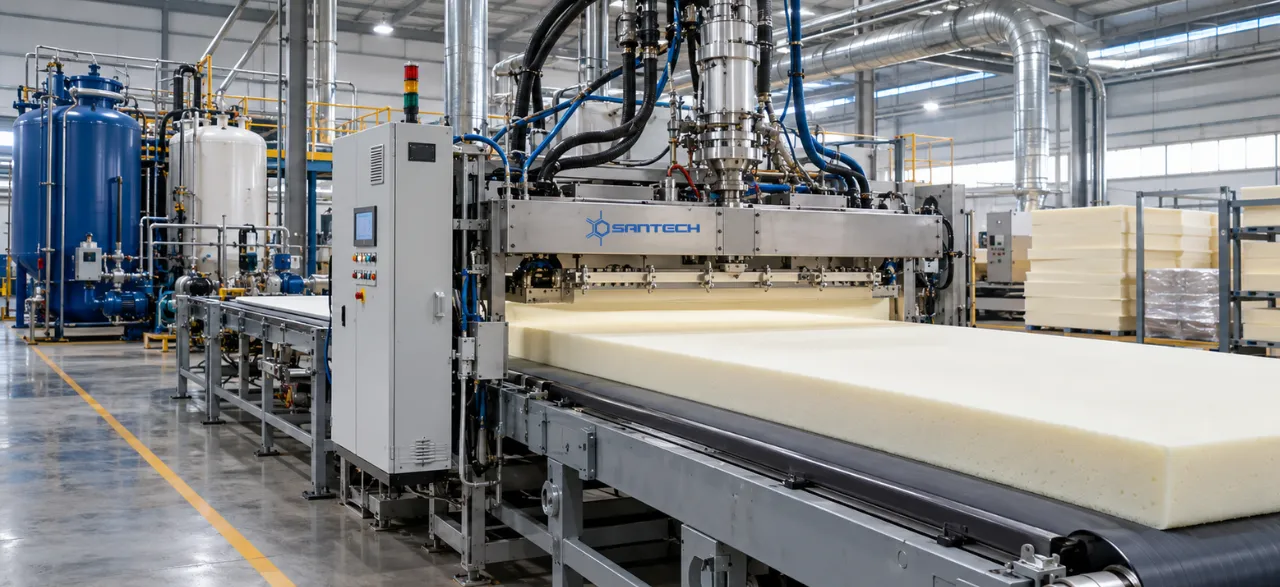
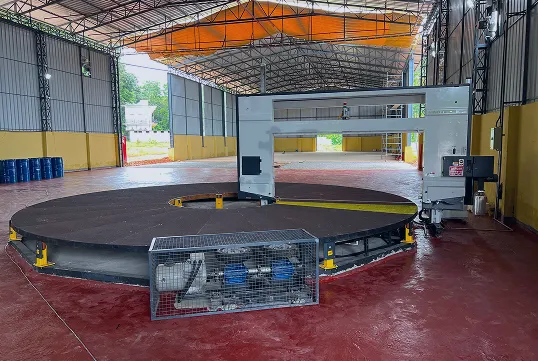
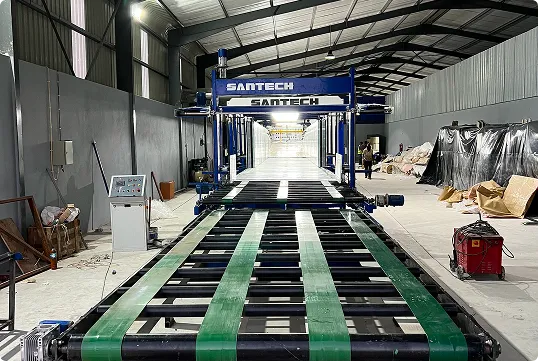
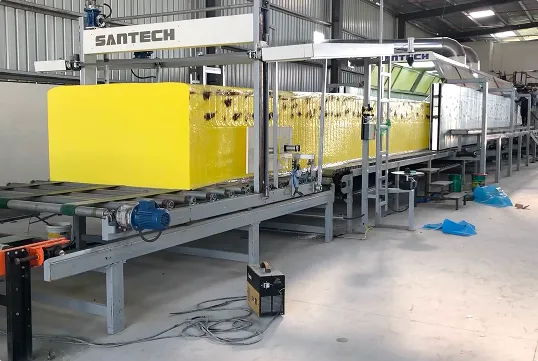
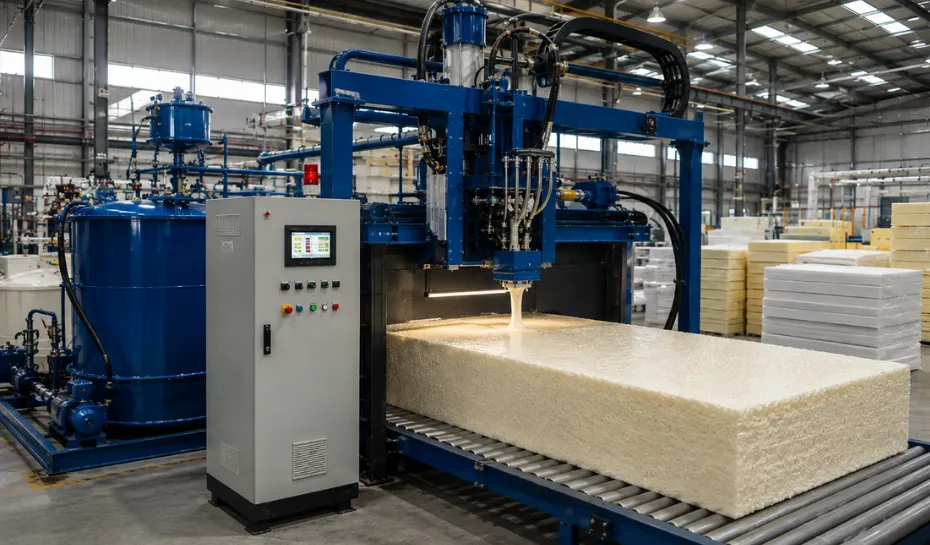
Producing uniform foam requires precise control of raw materials, chemical ratios, and processing conditions. A modern PU Foam Machine ensures accurate mixing and consistent foam quality. Trusted PU foaming machine manufacturers provide advanced equipment that improves production efficiency, reduces waste, and delivers uniform foam density.
For businesses setting up foam production facilities, choosing the right equipment is very important.
A reliable foam machine manufacturer will lay a strong emphasis on the given factors:
- Production capacity
- Chemical handling accuracy
- Automation levels
- Uniform foam quality
- Energy efficiency
- Maintenance requirements
The machinery used can vary significantly depending on whether a manufacturer produces flexible foam, rigid foam, or specialised foam products.
High-Density Foam vs. Regular Foam
Choosing the right foam will depend on where and how it will be used. White regular foam works well for basic cushioning needs; high-density foam, on the other hand, is designed for specific applications that demand better support, durability, and long-term performance.
The table below shows the key differences between the two types.
| Feature | Regular Foam | High-Density Foam |
|---|---|---|
| Material Concentration | Lower | Higher |
| Durability | Suitable for lighter use | Better for frequent use |
| Support | Moderate | Higher support capacity |
| Applications | Basic cushioning | Premium furniture, automotive seating, and mattresses |
| Cost | Usually lower | Generally higher due to greater material content |
Selecting the Right Foam Density
Choosing the right foam will depend on the product requirements, instead of opting for the highest available density.
Manufacturers should consider the following:
- Weight load
- Expected usage frequency
- Required comfort level
- Product lifespan
- Cost considerations
- Environmental conditions
For example, a commercial bus seat may require different foam characteristics compared to a home cushion. Therefore, understanding the application will help the manufacturers to achieve the right balance between performance and cost.
Wrapping Up
High-density polyurethane foam is widely used in furniture, mattresses, automotive seating, packaging, and industrial products because it delivers excellent durability, support, and long-term performance. Selecting the right foam density, understanding how to measure foam density, and using reliable manufacturing equipment are essential for producing consistent, high-quality foam products that meet customer expectations.
For foam manufacturers, achieving uniform density depends not only on the foam formulation but also on the accuracy of the production process. Advanced PU Foam Machines help maintain precise chemical mixing and consistent foam quality throughout production. As a trusted foam machine manufacturers india, Santech Foam Machines provides advanced PU foam production solutions that enable manufacturers to produce high-quality foam efficiently and reliably. By choosing the right foam density and the right machinery, businesses can improve product performance, reduce waste, and achieve consistent manufacturing results.