

Foam sheet rolls are manufactured by mixing polyurethane chemicals, allowing the foam to expand through a controlled foam generation process, curing the foam blocks, and cutting them into precise sheets using a foam cutting machine. These foam sheet rolls are widely used in mattresses, furniture, packaging, and automotive applications because they provide consistent comfort, durability, and support.
The comfort and performance of a mattress, sofa, or cushion largely depend on the quality of the foam used inside it. During foam sheet manufacturing, raw materials are carefully measured, mixed, expanded, cured, and converted into polyurethane foam sheet rolls with specific thicknesses and foam density to meet different application requirements.
Behind every high-quality foam product is a precise manufacturing process that combines advanced chemistry, automated machinery, and strict quality control. Understanding how foam sheet rolls are made helps manufacturers, furniture makers, and buyers appreciate the importance of accurate production techniques and reliable equipment. In this blog, we’ll explore the complete foam generation process, the role of a foam cutting machine, and the key factors that determine the quality of the finished foam sheet roll.
What is a Foam Sheet Roll?
A foam sheet roll can be defined as a continuous sheet of foam that is produced in varying thicknesses, densities, and sizes. Later, these rolls are converted into specific shapes and dimensions for their use in mattresses, cushions, furniture packaging, automotive interiors, and packaging materials.
One of the most commonly used materials is the polyurethane foam sheet roll, and it is well known for its flexibility, durability, and overall comfort.
Understanding the Foam Generation Process
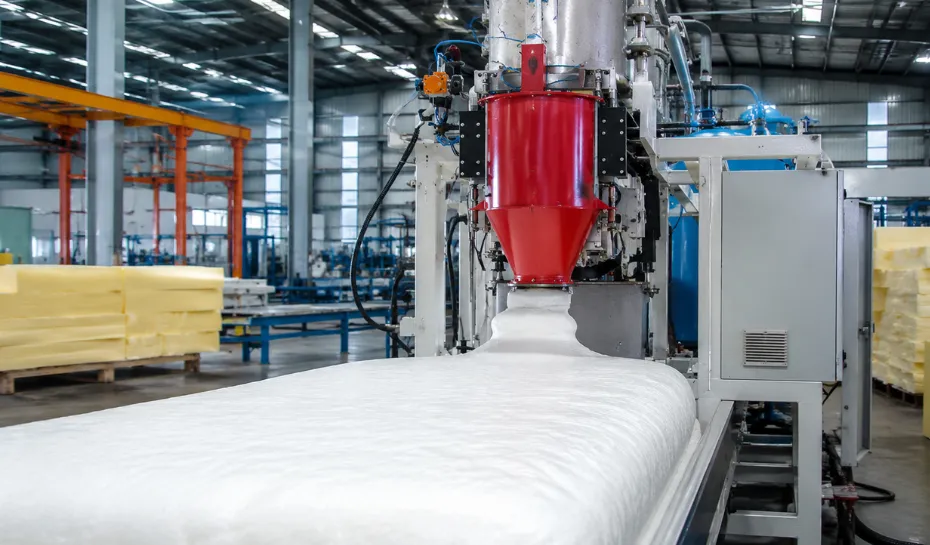
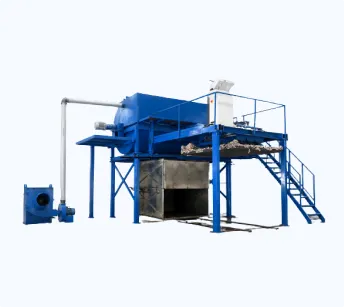
To understand how foam is made, it is important to begin with the foam generation process, where carefully measured liquid raw materials are combined to create flexible polyurethane foam. The primary ingredients used in this process include:
- Polyol
- Isocyanate
- Water
- Catalysts
- Additives and colourants
These materials are mixed in precise proportions using automated equipment to ensure consistent quality. As soon as they are combined, a controlled chemical reaction begins, producing carbon dioxide gas. This gas creates millions of tiny air cells within the mixture, causing it to expand and form foam.
The quality of this chemical reaction directly influences the foam’s cell structure, foam density, durability, comfort, and overall performance. Understanding how foam is made helps manufacturers optimise the production process and produce high-quality foam sheet rolls for mattresses, furniture, packaging, and other industrial applications.
The Role of Foam Density
One of the most important features in foam production is foam density.
Foam density refers to the total amount of material that is contained within a specific volume of the foam. It mainly affects:
- Comfort
- Durability
- Load-bearing capacity
- Longevity
- Performance uniformity
With better durability and comfort, high-density foam becomes a suitable choice for premium mattresses and furniture. On the other hand, lower-density foam is lighter, and it might be used for products where softness and cost efficiency are the top priorities.
How Does Foam Sheet Manufacturing Work?
From the mixing of raw materials to curing, this stage critically explains how foam takes its shape before being cut into usable sheets.
| Manufacturing Stage | Process Details |
|---|---|
| Raw Material Preparation | Polyol, isocyanate, water, catalysts, silicone additives, and colourants are accurately measured to ensure consistent foam quality and density. |
| Mixing and Pouring | Automated mixing systems blend the raw materials in precise proportions before pouring the mixture onto a continuously moving conveyor for uniform foam production. |
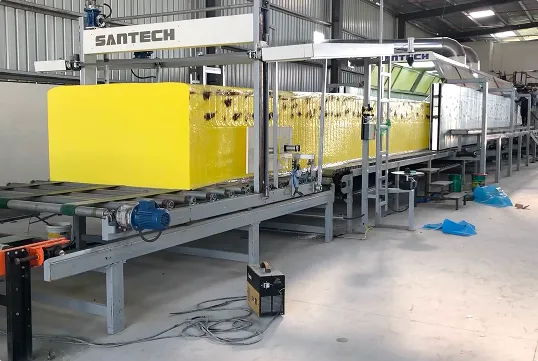
| Expansion and Foaming | A controlled chemical reaction creates millions of tiny air cells, allowing the foam to expand into large continuous slabs with a uniform cell structure. |
| Foam Rise Control | Temperature, airflow, conveyor speed, and rise height are continuously monitored to maintain consistent foam density and minimise production defects. |
| Curing Process | The foam is allowed to cure for several hours or days to complete the chemical reaction and improve strength, stability, and durability. |
| Quality Inspection | Manufacturers test foam density, thickness, hardness, compression performance, cell structure, and dimensional accuracy before further processing. |
| Precision Cutting | A foam cutting machine slices the cured foam blocks into sheets of precise thicknesses suitable for mattresses, furniture, and industrial applications. |
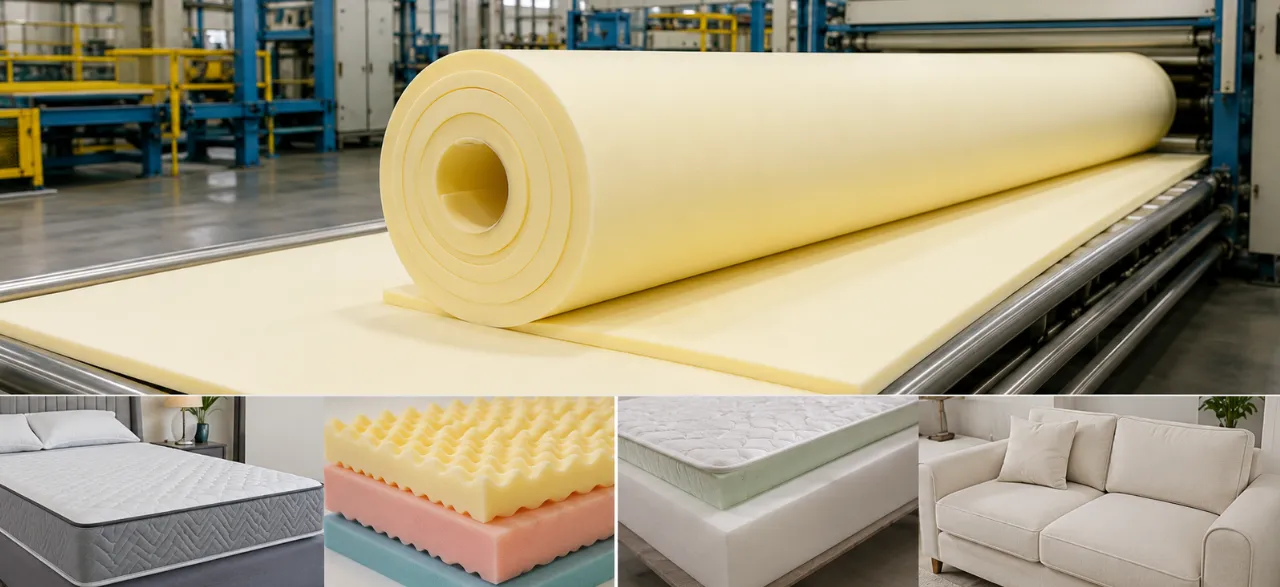
| Rolling and Packaging | Finished foam sheets are rolled, packed, labelled, and prepared for safe transportation or further conversion into finished products. |
Converting Foam Blocks into Sheet Rolls
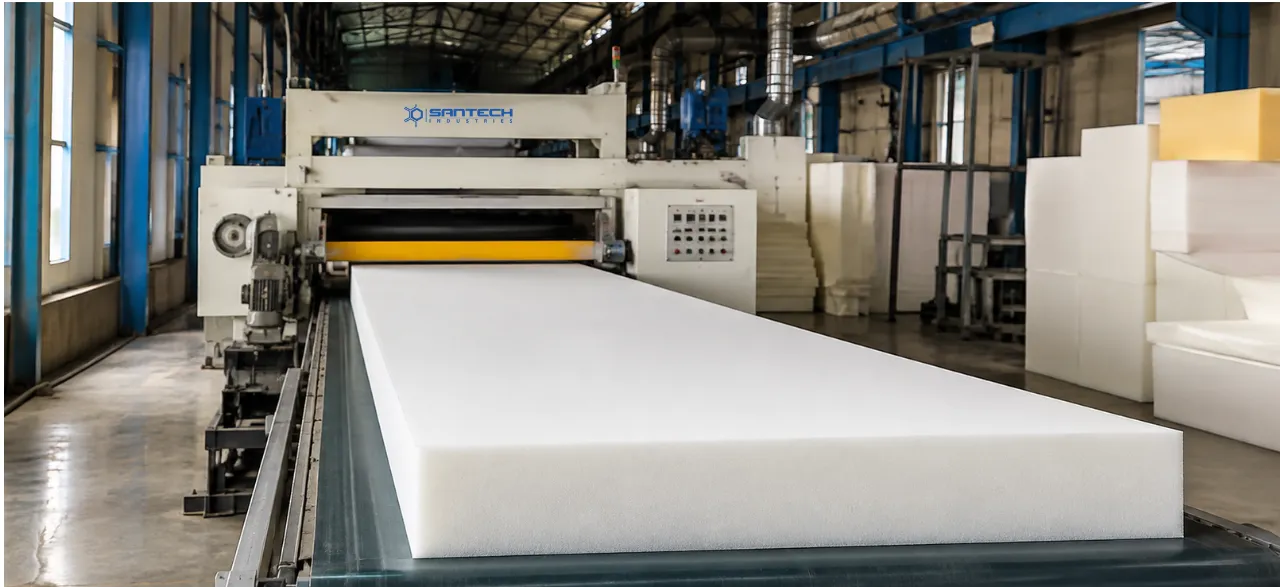
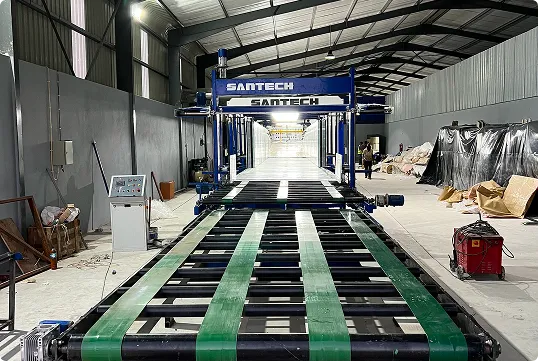
Once the foam block has fully cured, it is ready to be converted into usable foam sheets for various applications. At this stage, precision becomes essential to maintain consistent thickness, smooth surfaces, and dimensional accuracy. The cured foam block is carefully transferred using a foam converting belt, which ensures stable handling throughout the conversion process while minimizing damage and material waste.
Why is a Foam Cutting Machine Important?
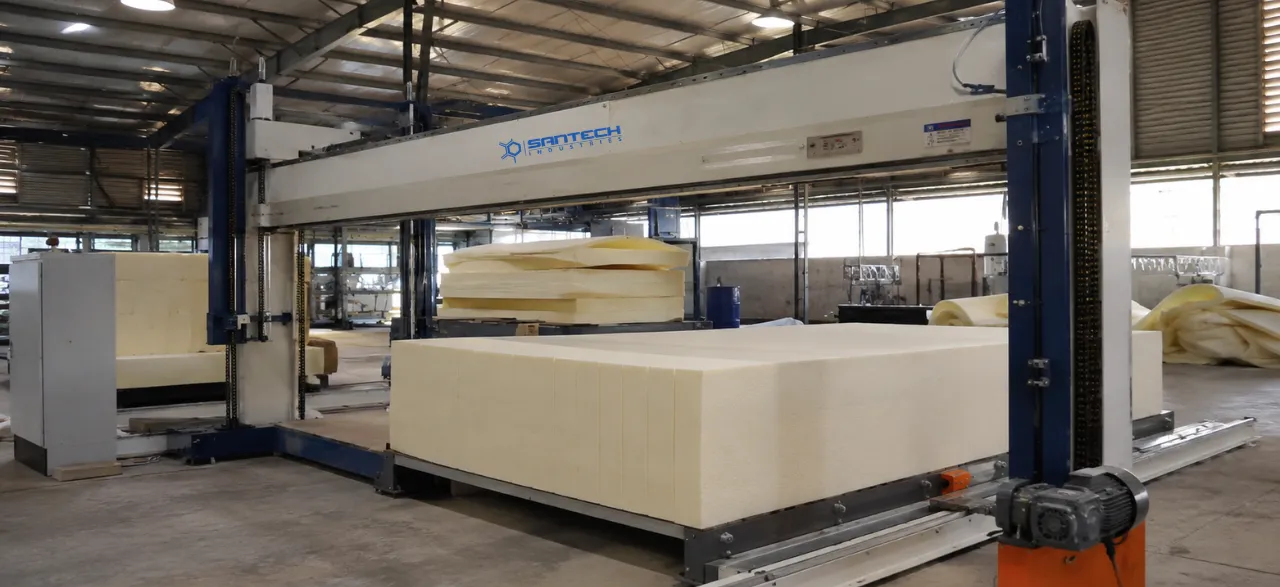
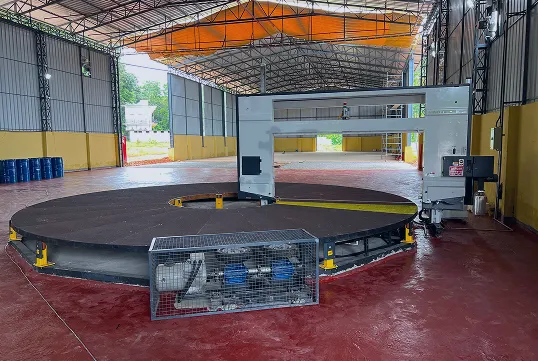
A foam cutting machine is used for slicing large foam blocks into sheets of accurate thickness.
Modern cutting systems provide several benefits, including:
- Uniform sheet dimensions
- Reduced material waste
- Higher production efficiency
- Improved surface quality
Well, the thickness of the foam sheets can slightly vary depending on whether they are intended to be used in mattresses, furniture cushions, packaging, or industrial applications.
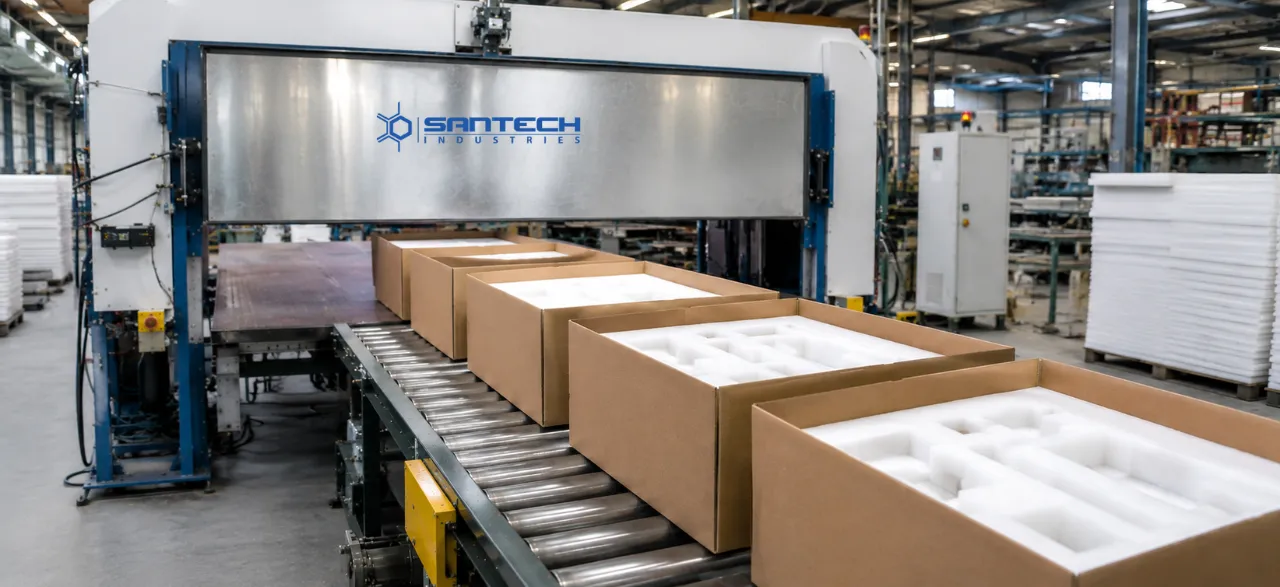
Once the cutting is completed, the sheets are rolled, packaged, and sent for further processing.
Machinery Used in Foam Sheet Manufacturing
| Machine | Role in Foam Sheet Manufacturing |
|---|---|
| PU Foaming Machine | Accurately mixes and dispenses polyurethane chemicals to initiate the foam generation process, ensuring consistent foam quality and density. |
| Continuous Foaming Machine | Produces continuous foam slabs with uniform density, thickness, and cell structure, making it ideal for high-volume foam sheet manufacturing. |
| Foam Conveyor System | Carries the expanding foam through the production line while maintaining controlled speed, airflow, and stability during the foaming process. |
| Horizontal Foam Cutting Machine | Cuts large cured foam blocks into sheets of uniform thickness for mattresses, furniture, and packaging applications. |
| Vertical Foam Cutting Machine | Trims foam blocks into accurate widths and lengths, ensuring precise dimensions and minimal material waste. |
| Circular Foam Cutting Machine | Converts foam blocks into continuous foam sheet rolls with consistent thickness, making it suitable for large-scale mattress and furniture production. |
Quality Control Throughout Production
Quality control is an important part of foam manufacturing. It enables the manufacturers to assess and examine the following:
- Foam density
- Thickness and uniformity
- Cell structure
- Compression performance
- Dimensional accuracy
With regular testing, you can easily identify variations early and also ensure that the foam meets the industry standards.
Applications in Mattresses and Furniture
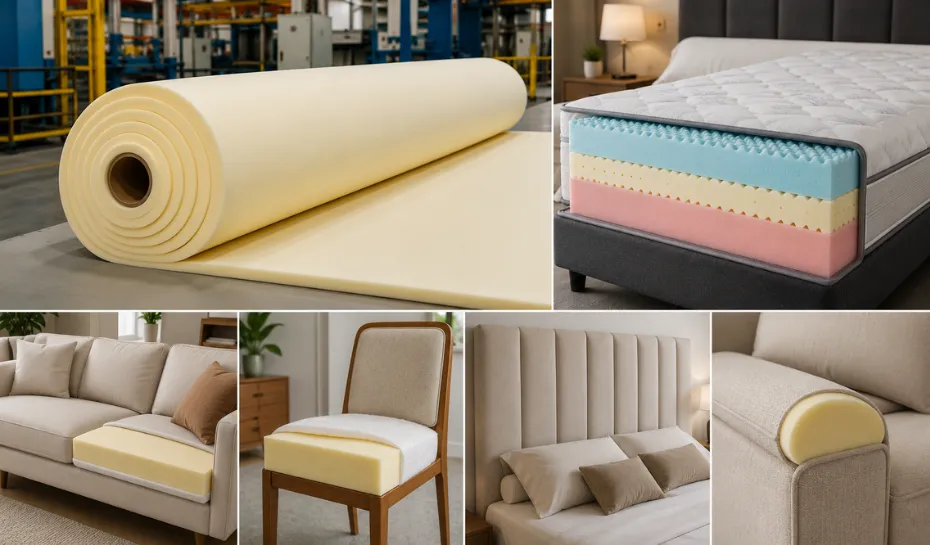
The finished PU foam sheet roll serves as a versatile material that is used across different industries.
Mattress Manufacturing
Foam sheets are used for creating:
- Support layers
- Comfort layers
- Components of memory foam
- Edge support structures
Different density levels are chosen to achieve specific comfort and performance characteristics.
Furniture Production
Furniture manufacturers use foam sheets in:
- Sofa cushions
- Chair padding
- Headboards
- Armrests
- Seating systems
Why is Precision Important in Foam Production?
Even slight fluctuations during the foam generation process can affect the quality of the final product. Accurate chemical dosing, controlled expansion, proper curing, and foam cutting accuracy are all essential for producing high-quality foam sheet rolls with consistent density, thickness, and dimensional precision.
In addition, modern manufacturing equipment helps maintain precise production tolerances while improving overall efficiency. High foam cutting accuracy reduces material waste, ensures uniform sheet dimensions, and delivers consistent quality for mattress, furniture, and industrial applications. As customer expectations continue to rise, precision manufacturing has become a critical factor in producing reliable foam products.
Conclusion
Manufacturing high-quality foam sheet rolls requires precision at every stage, from the foam generation process and foam density control to curing and accurate cutting. Advanced foam making machines and foam cutting machines help ensure consistent quality, higher efficiency, and minimal material waste.
Santech Foam Machines provides reliable PU foaming machines, foam making machines, and precision foam cutting solutions to help manufacturers produce high-quality foam for mattresses, furniture, and other industrial applications with confidence.